









This brief highlights the need to address the mental health crisis caused by the Russia-Ukraine war. Since February 2022, the European Commission (EC) has undertaken one of the most significant humanitarian operations under the EU Civil Protection Mechanism to provide vital aid and resources to Ukrainian citizens impacted by the ongoing war. Official figures indicate that 13.8 % of EU humanitarian funding has been directed to the health sector, with €31.2 million allocated under the EU4Health programme in collaboration with the International Federation of Red Cross. These funds have been instrumental in addressing the mental health and trauma needs of displaced Ukrainians, showcasing an understanding of the complex challenges arising from the Russian-Ukrainian conflict. In these efforts, the lack of awareness and understanding of mental health among the Ukrainian population arises as a core issue. To address this, the EC must combine incentivized voluntary testing for immediate relief with mental health education for systemic, sustainable change.
The Arrangement for Cooperation on Health between the European Commission and the Ministry of Health of Ukraine, signed on Jun 15, 2023, outlines clear objectives for both short- and long-term mental health initiatives. Despite these commendable efforts, a significant gap persists in the level of public knowledge about mental health. Many Ukrainians are unfamiliar with the concept and its relevance, or attach a certain stigma to it, which can hinder their ability to recognize or address mental health challenges effectively. Therefore, this gap not only limits the immediate impact of available services but also poses long-term risks to public well-being.
The underlying issue is rooted in historical and cultural factors. In much of Eastern Europe, mental health has traditionally been a stigmatized and misunderstood topic. Discussions about mental well-being often carry negative connotations, with psychological struggles seen as a sign of personal weakness rather than legitimate health concerns. This societal perspective has contributed to a delay in recognizing mental health as an essential component of overall health. While global health agendas have increasingly prioritized mental health in recent decades, the pace of this recognition has been slower in Eastern Europe, including Ukraine.
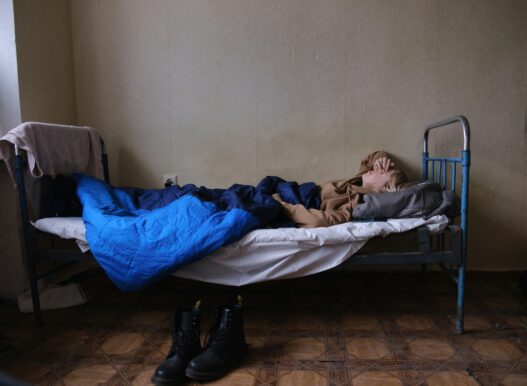
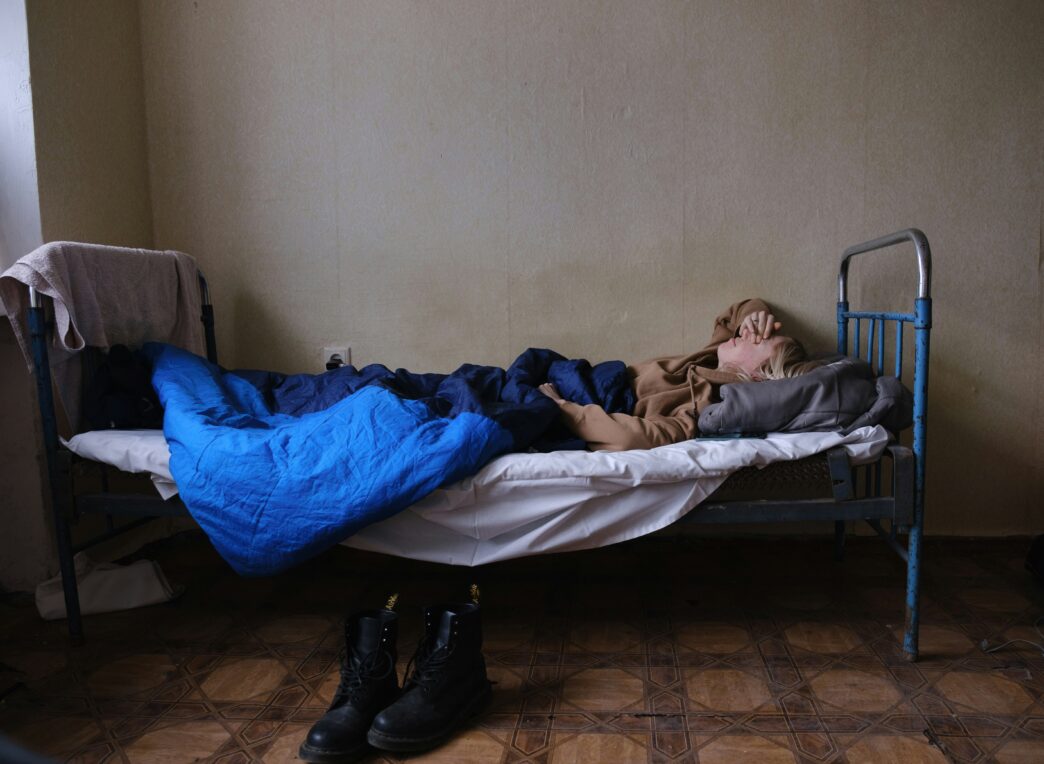
The consequences of this cultural lag are now evident in the context of the war. Displaced individuals and those affected by the conflict face heightened risks of mental health deterioration due to trauma, stress, and uncertainty. Yet, many remain unaware of the symptoms of mental health issues or the importance of seeking help. This can be seen by looking at the number of Ukrainians who actually took advantage of the resources facilitated by the EC and its partners. Only 30% of displaced Ukrainians had sought some form of psychological support since the escalation of the conflict in 2022, according to the International Federation of Red Cross and Red Crescent Societies (IFRC), an EC partner in this matter. The lack of awareness and usage of the resources available impedes the efforts of the EC and its partners, as individuals who do not perceive mental health as a priority may fail to utilize the resources made available to them, and many may also not know how or when to access these services effectively. 
While the initiatives undertaken by the EC and its partners have made progress by addressing immediate needs, the broader challenge of mental health awareness and education among the Ukrainian population demands further consideration for long-term care. By understanding the depth of this issue, we can better assess the impact of current efforts and identify areas where additional focus is required.
What can the European Commission do?
Mental health challenges among Ukrainian citizens, refugees, and displaced populations require comprehensive and structured solutions. These solutions must be evaluated based on their short-term and long-term benefits to ensure they address immediate needs while fostering sustainable improvement. This section outlines potential interventions, discussing their advantages and limitations before recommending the approaches that maximize impact.
- Short-term solutions:
Mandatory Mental Health Screening for Refugees
Several initiatives could be implemented to provide immediate relief and support. A financially supported mandatory mental health evaluation system in refugee camps and communities by the European Commission is one such solution. By systematically assessing psychological well-being, this initiative can identify individuals at risk and provide them with the necessary support. However, this approach could encounter resistance due to the stigma associated with mental health issues, as well as its mandatory nature, which often deters individuals from participating. Additionally, implementing such a system requires significant resources, including trained personnel and infrastructure, which may be challenging to mobilize quickly.
Incentivized Voluntary Mental Health Assessments for Refugees
Incentivizing voluntary psychological testing through a reward-based system could encourage participation and exposure to mental health services. That would be funded by the European Commission and its partners, mainly within the EU4Health programme, since it has the most funding allocated for such issues. By offering tangible incentives, such as vouchers or in-kind benefits, individuals may feel encouraged to participate in mental health evaluations either in person or online. This approach is cost-effective and addresses some of the stigma, as participation becomes a positive action rather than an obligation. However, it risks excluding those most in need of help, as individuals experiencing severe mental health issues might not be motivated by external rewards.
Community and Digital Awareness Campaigns to Promote Mental Health
Simultaneously, large-scale awareness campaigns in camps and communities can help educate people on the importance of mental health, its symptoms, and its potential impact on overall well-being. These campaigns, utilizing digital platforms and community networks, are relatively cost-efficient and scalable for the EC, since it already has access to significant online platforms that reach millions of people. Nevertheless, their effects may take time to materialize, particularly among individuals who are already struggling with severe mental health challenges.
- Long-term solutions:
Integrating Mental Health Education into School Curricula
Long-term solutions focus on systemic changes that ensure sustained improvement. One key intervention involves integrating mental health education into school curricula, and this should be done in collaboration with the European Commission and the government of Ukraine. By fostering awareness and resilience-building techniques among children and young adults, this strategy has the potential to create a culture of mental health understanding that spans generations. However, such reforms require extensive coordination between policymakers and educational institutions, and may take years to yield visible results, especially with the ongoing war and its aftermath.
Accessible Free Psychological Evaluations
This approach eliminates financial barriers and encourages routine mental health check-ups, making care accessible to all. Provision of free psychological evaluations at medical centers can improve early detection of mental health issues and reduce long-term psychological distress. This can be done by specialised personnel in a volunteering programme organised by the EC. However, despite its clear benefits, this solution demands significant investment in healthcare infrastructure and trained professionals, which may pose challenges in resource-limited settings, given the war and its aftermath context.
Policy recommendation
To effectively address the mental health challenges faced by the Ukrainian population, refugees, and displaced populations, the EC and its allies should focus on the most impactful solutions for both short-term and long-term needs, with the least consequences.
In the short term, the optimal solution is incentivized voluntary psychological testing. Offering rewards, such as food stamps in the refugee camps, since these are the least financially burdensome. This form of incentivization encourages individuals to undergo mental health evaluations without the pressure of mandatory participation. The approach not only increases engagement but also reduces the stigma associated with mental health testing by framing participation as a positive and beneficial action. It can be promoted swiftly across refugee camps, communities, and online platforms for displaced individuals within Ukraine, ensuring broad reach and adaptability. Through targeted awareness campaigns, using reusable resources and media, which is the least costly, can create an immediate pathway for psychological support while fostering a culture of openness around mental health issues without burdening the EuC’s funding programmes.
For long-term resilience, the most effective solution is integrating mental health education into school curricula, because it addresses the root causes of mental health stigma and promotes early awareness and resilience-building among children and young adults. By equipping younger generations with the tools to understand and manage mental health challenges, this strategy creates a ripple effect that will benefit communities for decades. Although implementation requires collaboration between EC policymakers, educators, and local Ukrainian healthcare providers, its potential to transform cultural attitudes toward mental health makes it a cornerstone of sustainable change.
By prioritizing this dual strategy, the European Commission and its allies can address urgent mental health needs while establishing a framework for long-term resilience. This integrated approach ensures immediate relief and lays the groundwork for systemic transformation.