










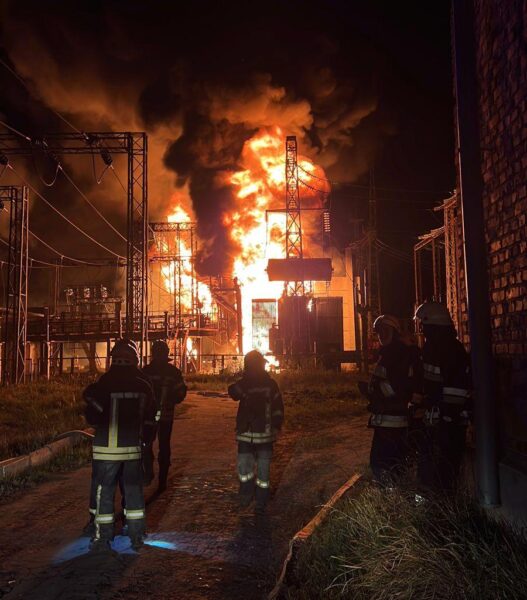
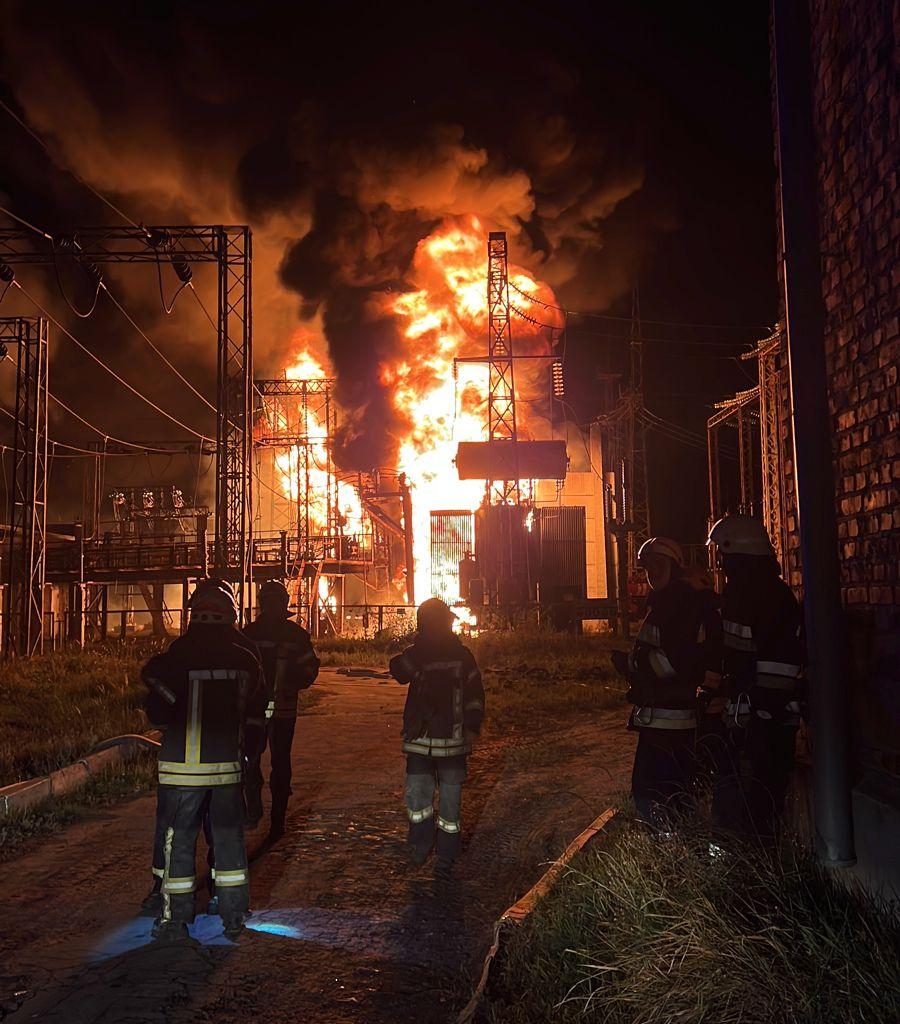
Each autumn and winter since Russia’s full-scale invasion of Ukraine began, a familiar pattern has emerged. As temperatures fall, Russian missile and drone strikes increasingly focus on Ukraine’s energy system: power plants, substations, heating facilities, and gas infrastructure. The result is widespread blackouts, disrupted heating, and mounting pressure on civilians during the coldest months of the year. These attacks are not incidental. Nor are they simply about damaging physical assets. Rather, Russia’s sustained campaign against Ukraine’s energy infrastructure reflects a deliberate strategy that exploits the centrality of energy systems to modern society to amplify civilian hardship during winter and impose political and economic costs on Ukraine for prolonged fighting. Understanding why energy infrastructure has become such a central target helps clarify both the logic of Russia’s war effort and its broader implications for Ukraine and Europe.
What Russia is targeting in Ukraine’s energy system
Ukraine’s energy system is built around a relatively centralized mix of large-scale generation and urban heating networks. Electricity production relies primarily on nuclear power, which in peacetime accounts for roughly half of total generation, with coal- and gas-fired thermal plants balancing demand, especially during peak hours. Combined heat and power (CHP) plants and district heating systems play a critical role in cities, supplying both electricity and heat to millions of households during winter. Natural gas underpins this system, fueling heating networks and acting as a backup when electricity supply is constrained.
Since 2022, Russia has repeatedly targeted nearly every component of this system. According to the International Energy Agency (IEA), around half of Ukraine’s power generation capacity was occupied, destroyed, or damaged during 2022–2023, along with roughly half of the country’s large network substations. Subsequent waves of attacks have further degraded the grid. Between March and May 2024 alone, Ukraine lost an additional 9 gigawatts of generation capacity, primarily from thermal and hydroelectric plants that are essential for balancing short-term fluctuations and meeting winter demand. Russian strikes have also hit district heating networks, gas infrastructure, and CHP plants that sustain urban life during the cold season. By 2024, 18 large CHP plants and more than 800 boiler houses had been damaged or destroyed, while early 2025 attacks reportedly affected around 40% of Ukraine’s gas production facilities. These targets are particularly critical because their loss directly translates into heating shortages, forcing reliance on electricity imports, emergency load shedding, or prolonged outages.
Recent attacks illustrate the cumulative impact. In January 2025, missile and drone strikes left around 70% of Kyiv temporarily without electricity, while repeated hits on thermal power plants reduced the system’s ability to stabilize supply. Similar disruptions have affected Kharkiv, Odesa, Dnipro, Zaporizhzhia, and other major cities, often leaving thousands of households without power or heat during subzero temperatures. All of this has left Ukraine with only around one-third of its pre-war energy capacity, while populations across the country face recurring blackouts and heating disruptions during the most vulnerable winter months.
Why energy infrastructure matters in war
Energy infrastructure occupies a unique position in modern warfare because it underpins nearly every aspect of civilian and military life. Electricity powers hospitals, water supply systems, communications networks, railways, and industrial production. Heating systems are essential for survival in winter, particularly in densely populated urban areas. Disrupting the power grid therefore produces cascading effects far beyond the immediate damage to individual facilities. Unlike dispersed civilian targets, damaging a limited number of substations or power plants can disable entire regions. As the IEA notes, attacks on transmission nodes and large generating units can destabilize the grid as a whole, forcing emergency load shedding, imports from neighboring countries, or rolling blackouts.
From a military perspective, energy strikes also affect Ukraine’s ability to sustain its war effort and economy indirectly. A weakened energy system constrains industrial output, complicates logistics, and strains state capacity, resulting in significant capital and production losses and an increased financial burden from the urgent need to import energy from abroad. While Russia has often justified these attacks by claiming that civilian infrastructure is a legitimate military target because it supports Ukraine’s ability to fight, the predictable and disproportionate impact on civilians underscores their coercive nature.
Moreover, the seasonal timing of Russia’s energy campaign is central to its logic. Energy systems are always critical, but their importance becomes existential during winter. As temperatures drop, dependence on electricity and heating increases sharply. Power outages that might be manageable in summer can become life-threatening in freezing conditions. Winter also slows repairs. Frozen ground, damaged transport infrastructure, and ongoing attacks make it harder for engineers to restore power quickly. Repeated strikes on the same facilities further complicate recovery efforts, as replacement components become scarce and repair crews are forced to work under constant threat.
As a result, civilian hardship intensifies precisely when resilience is most difficult. Prolonged unusually low temperatures, such as those experienced in early 2025, magnify the humanitarian consequences of blackouts and heating outages. This seasonal vulnerability helps explain why Russia has consistently intensified its infrastructure attacks in late autumn and winter since 2022.
Civilian pressure, political coercion, and negotiations
At its core, Russia’s energy campaign is aimed less at winning decisive military victories than at imposing costs. By degrading Ukraine’s energy system, Moscow seeks to undermine economic activity, exhaust state resources, and erode civilian morale. The expectation is not that hardship alone will produce immediate capitulation, but that sustained pressure will gradually narrow Ukraine’s political and strategic options, destabilize society, and increase incentives for its leadership to accept terms that would otherwise be unacceptable.
Civilian suffering functions as indirect leverage on Ukrainian leadership. As energy shortages deepen, the government must divert resources toward emergency measures, imports, and repairs, while managing public frustration and humanitarian needs. At the same time, the broader effects of energy disruption — such as increased refugee flows or higher reconstruction costs — are intended to resonate beyond Ukraine’s borders, particularly in Europe.
Analysts at the Institute for the Study of War have described this approach as an effort to “freeze out” Ukraine during winter, compelling both Kyiv and Western governments to reconsider their policies. Russian messaging often frames infrastructure strikes as retaliation or military necessity, but the timing and scale of attacks suggest a broader coercive strategy aimed at shaping political decisions rather than achieving battlefield breakthroughs.
It is important to notice that the underlying logic of infrastructure targeting is not new in Russia’s military practice. During the Second Chechen War, Russian forces systematically destroyed civilian infrastructure in Grozny (Chechnya’s capital city), including electricity, heating, and water systems. Indiscriminate aerial bombardment and artillery fire reduced much of the city to rubble. The effect was not only to defeat armed resistance but to make civilian life impossible, encouraging displacement and breaking organized opposition through collective punishment.
A similar pattern emerged in Syria, where Russian air power supported the Assad regime by targeting life-sustaining civilian infrastructure in opposition-held areas. Investigations by human rights organizations documented repeated strikes on hospitals, schools, water systems, and markets. In Idlib alone, Syrian-Russian offensives displaced more than a million people, with infrastructure destruction playing a central role in forcing civilians to flee and facilitating territorial control.
Limits of the Russian energy campaign and its broader implications
Despite the severity of Russia’s energy campaign, its effectiveness has been limited by Ukrainian adaptation and the support provided by its allies. Ukraine’s rapid synchronization with the European electricity grid in March 2022 enabled greater energy trade with the EU, allowing imports to partially offset domestic shortfalls. Western assistance, improved air defenses, and round-the-clock repair efforts have further bolstered resilience.
Ukraine has also begun decentralizing its energy system, deploying small gas-fired units, rooftop solar installations, and battery storage to reduce vulnerability to large-scale attacks. By early 2024, nearly 1,500 megawatts of consumer-installed solar capacity had been added, reflecting a shift toward flexibility and redundancy. These measures have not eliminated hardship, but they have blunted Russia’s coercive leverage.
Russia’s campaign against Ukraine’s energy infrastructure highlights a broader trend in contemporary warfare: the transformation of civilian systems into strategic battlegrounds. As societies become more interconnected and energy-dependent, infrastructure becomes a means of imposing pressure without territorial occupation or decisive military engagement.
For Europe, the implications extend beyond solidarity with Ukraine. Energy security, grid resilience, and the protection of critical infrastructure have become central to national and collective security. The war has demonstrated how vulnerabilities in civilian systems can be exploited during conflict, and how resilience, diversification, and cooperation can limit the effectiveness of coercive strategies. Understanding why Russia targets Ukraine’s energy infrastructure, especially in winter, is therefore about recognizing how modern conflicts increasingly blur the line between civilian life and the battlefield.