








Melting Ice, Missile Shields, and the New Arctic Power Game
Greenland, the world’s largest island, lies between the Arctic and Atlantic Oceans and is increasingly assuming geopolitical significance. It covers about 2.16 million square kilometres and is geographically closer to North America than Europe, though it remains politically tied to Denmark. Nearly 80–85 per cent of the island is covered by ice, making it one of the most inhospitable regions in the world.
Despite its enormous size, Greenland’s population is around 56,000 people. Nearly nine out of ten Greenlanders are Inuit. Their culture, language (Kalaallisut), and identity are deeply Arctic, rooted in survival, community, and coexistence with nature. This demographic reality is often ignored when Greenland is discussed merely as a strategic asset or a mineral warehouse.
Greenland’s history is marked less by successful invasions and more by failed ambitions. Norse settlers arrived around the 10th century, but their colonies vanished by the 15th century, mainly due to climate change, isolation, and an inability to adapt. European powers found it difficult to conquer Greenland, not only because of popular resistance, but also due to extreme climatic conditions.
Eventually, Denmark established control in the 18th century, and Greenland remained a Danish colony until 1953, when it was formally integrated into the Kingdom of Denmark. Over time, Greenland gained Home Rule in 1979, and Greenland today functions under a Self-Government arrangement within the Rigsfællesskabet (the Realm of Denmark), as established by the 2009 Greenland Self-Government Act, granting Nuuk control over domestic affairs while Denmark retains responsibility for defence and foreign policy. Greenland also retains the right to seek independence through a referendum. 
However, it is economically dependent on Denmark, which provides substantial annual subsidies. While many Greenlanders aspire for independence, the lack of infrastructure, economic diversification, and human capital makes complete sovereignty difficult in the short term. This dependency becomes crucial when external powers, especially the US and China, show interest in Greenland’s resources and geography.
Greenland’s strategic relevance dramatically increased during the Cold War. In 1951, Denmark and the United States signed a defence agreement that allows the US to establish and operate military facilities in Greenland. This agreement, still valid, gave Washington extensive rights to use Greenland for defence purposes while formally respecting Danish sovereignty.
The centrepiece of this arrangement became Thule Air Base, now known as Pituffik Space Base. It hosts missile-warning radars, space surveillance systems, and early-warning infrastructure crucial for detecting ballistic missile launches over the Arctic. Greenland’s location places it near the GIUK Gap (Greenland-Iceland-UK), a critical maritime corridor for naval movements between the Arctic and the Atlantic. Control or surveillance of this gap has been central to NATO planning since the Cold War. It is also geographically positioned along the shortest missile and air routes between Russia, China, and North America, making it indispensable for early-warning systems. The base plays a vital role in US homeland defence and is directly linked to the logic of nuclear deterrence. For the US, Greenland is not optional—it is structural.
As Arctic ice melts, Greenland’s geography becomes even more strategic. New sea routes are opening that were previously inaccessible. The irony is saddening, instead of focusing on stopping Arctic melting, global powers are rushing to exploit the opportunities it creates.
The melting Arctic has opened or partially opened major sea routes– The Northern Sea Route, running along Russia’s Arctic coast, significantly shortens shipping time between Europe and Asia. Russia has invested heavily in ports, navigation systems, and infrastructure along this route. The Northwest Passage, another emerging route, through Canada’s Arctic archipelago, is legally contested. In the longer term, trans-polar routes across the Arctic Ocean could become economically viable, fundamentally impacting global trade flow.
Access to Arctic routes depends on icebreakers. Here, the dominance is clear. Russia dominates, operating the world’s largest and most powerful icebreaker fleet, including nuclear-powered vessels such as Arktika and Vladivostok. Russia treats icebreakers as strategic infrastructure, not just commercial tools.
The United States, by contrast, has not invested much in the Arctic economic infrastructure owing to its greater prioritization of military facilities, as well as the region’s harsh environment and high operational costs. For years, it operated only a handful of ageing icebreakers, such as Polar Star and Healy. This gap has become a major concern for the Trump administration. China has enlarged its presence in the Arctic with research icebreakers like Xue Long and Xue Long 2, claiming them as scientific and research-oriented, but they clearly serve its long-term strategic interests.
Beijing calls itself a “near-Arctic state” and has been involved in the Arctic through its Belt and Road Initiative, through the concept of a Polar Silk Route. Greenland attracted Chinese interest due to its mineral wealth and strategic location. Chinese firms attempted to invest in airports, mining projects, and infrastructure in Greenland. Several of these projects were stalled or blocked due to security concerns raised by Denmark and the United States.
The fear was not merely economic but strategic, owing to the Chinese dual-use infrastructure, long-term leverage over rare earth supplies, and its increasingly visible presence along the critical US defence installations.
Greenland hosts significant mineral resources. It is home to large deposits of rare earth elements, essential for electric vehicles, wind turbines, missiles, and advanced electronics. Estimates suggest Greenland may have some of the largest untapped rare earth reserves outside China. In addition, it has deposits of iron ore, zinc, copper, nickel, gold, uranium, graphite, and possibly oil and gas.
Projects like Kvanefjeld, which involved Chinese-linked ventures in the extraction of rare earths and uranium, became politically contentious. Greenlanders expressed environmental and health concerns, leading to stricter regulations and stalled investments.
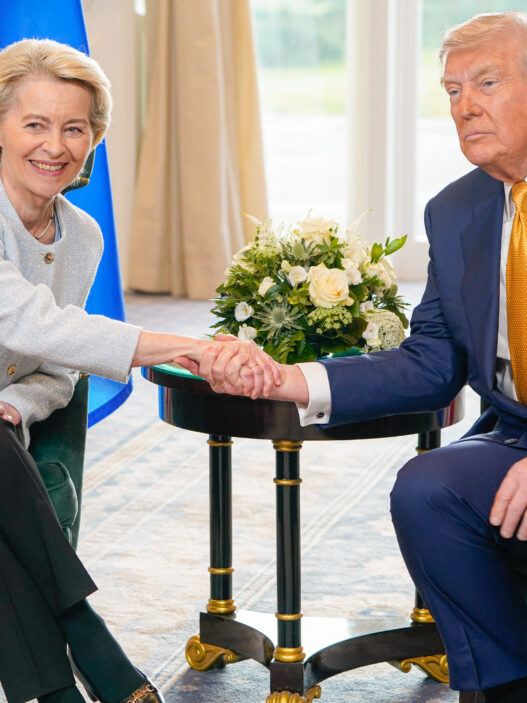
For Trump, Greenland represented a wholesome deal combining geography, minerals, and defence. His administration openly discussed acquiring Greenland, offering financial incentives to Greenlanders, reportedly in the range of hundreds of thousands of dollars per person annually, framed as economic uplift rather than colonisation.
Greenland is also crucial to Trump’s vision of the “Golden Dome”, a missile defence architecture, and he asserts that any military shield against Russian or Chinese missiles must include Greenland because these missiles travel over the Arctic. This logic ties directly back to the 1951 agreement and existing US infrastructure on the island.
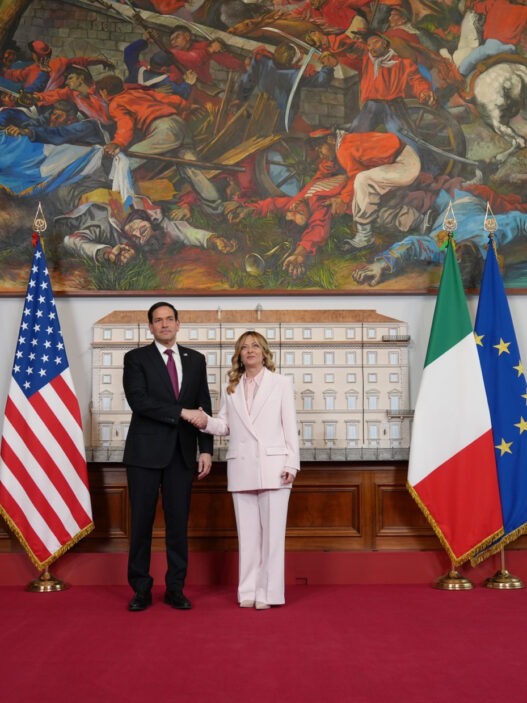
However, Trump’s approach strained NATO’s unity. His latest National Security Strategy downgraded the significance of Europe and introduced the “Trump Corollary” to the Monroe Doctrine, where he emphasised the regional hegemony of the US in the Western Hemisphere. He repeatedly criticised European allies for “ripping off the US”, demanding they spend 5 per cent of GDP on defence. While Europe was initially slow, countries like Germany and France significantly increased defence budgets, expanded troop numbers, invested in advanced weapons systems, and debated or reintroduced forms of conscription.
NATO strongly backed Denmark when Trump revived his demands to acquire Greenland. Eight NATO allies, including Denmark, France, Germany, Sweden, Norway, the Netherlands, Finland, Iceland, Belgium, and the United Kingdom, launched Operation Arctic Endurance as a symbolic show of unity, but notably involved only around 50 troops, highlighting Europe’s limited Arctic capacity and continued reliance on the US security umbrella. The US’s actions in Venezuela and threats to Cuba, Colombia, Mexico, and Iran further triggered alarm in the continent.
Despite European efforts, the reality remains obvious: the US funds 15.8% of the military alliance’s yearly expenditure of around $3.5 billion. NATO states know that without American leadership, NATO’s coherence, and perhaps its survival, would be in question, as many of these nations are grappling with their own internal fractures on key issues, including their military and financial support to Ukraine.
Russia’s response to the Greenland question has been complex. On one hand, Moscow noted that Greenland is “not naturally part of Denmark,” and distanced itself from the issue, on the other hand, Moscow understands that an expanded US presence in Greenland strengthens American power in the Arctic, right on Russia’s northern doorstep. A weakened NATO triggered by any American attack on Greenland might suit Russia, given its very existence was due to the Russian threat, but a US-dominated Greenland does not serve its interests. This creates a strategic dilemma for the Kremlin.
Greenland’s story unfolds in a world where the liberal, rules-based order is visibly eroding. The use of force or coercion is increasingly normalised, the case of Venezuela being a recent example. Borders, sovereignty, and consent are no longer sacred in the way they once were. International law is being trivialised by its very own supporter, the US, as Trump himself claimed his actions are based on his “morals”, not international norms.
Against this backdrop, Canadian Prime Minister Mark Carney’s speech at the World Economic Forum stood out. He spoke of a changing world order, the role of middle powers, and the need for cooperation rather than coercion. Europe, too, is recalibrating, pursuing the Mercosur deal, a free-trade deal with India, and seeking partners beyond the US. These moves indicate its urge to reduce its dependence on the US, and this requires robust economic backing.
At Davos, temperatures were reduced temporarily. Trump indicated he would back down on the immediate tariffs he threatened to impose on the eight NATO allies who sent troops to Greenland, assured to avoid the use of force, and remain open to long-term deals. Yet uncertainty continues to persist.
Amid all this, one cannot ignore the people of Greenland, who do not want to be pawns of this geopolitical rivalry. Their identity, environment, and political aspirations matter. The talks in Davos between the European leaders and Trump seemingly excluded Denmark and Greenland, sparking concerns.
Greenland today stands at the intersection of melting ice and hard power politics. Whether it becomes a battlefield of rival powers will depend not just on Washington, Beijing, Moscow, or Copenhagen, but on whether the world remembers that sovereignty ultimately belongs to people, not geography.