







As an Arctic stakeholder, the EU pursues both long-term strategic objectives and day-to-day interests in the European Arctic and the broader Arctic region. Recent comments by EU leaders on the renewed US discourse about Greenland have drawn attention to the EU’s broader stance on the territory and how the EU Council balances Arctic geopolitics, sovereignty, and EU unity.
EU Council Reaffirms Support for Greenland
On January 7, the EU Council President António Costa made the organization’s stance clear at the opening ceremony of the Cyprus Presidency of the Council of the European Union:
“Greenland belongs to its people. Nothing can be decided about Denmark and about Greenland without Denmark, or without Greenland. They have the full solid support and solidarity of the European Union. Europe will remain a firm and unwavering champion of international law and multilateralism,” said Costa in Nicosia.
This statement follows intense discussions in the US concerning a potential purchase deal for Greenland, which is deemed necessary for “national security” issues, according to Donald Trump. While Trump has not ruled out using military force in the US’s ambitious plans, the suggested ploy has already been rejected by Greenland’s leaders as well as the Danish government, of which the island is a semi-autonomous territory.
Greenland’s Status and EU’s Strategic Interest
Although Greenland is not an EU Member State, it is an autonomous territory within Denmark, an EU Member State. Following a 1982 referendum, Greenland withdrew from the European Communities, primarily due to fisheries policies, and is today considered an Overseas Country and Territory (OCT). While this arrangement placed Greenland outside EU law, it has not prevented the structured partnership between the two, including financial assistance and sectoral cooperation. Therefore, the EU’s strategic interest in Greenland remains significant.
The EU’s commitment to a stable, sustainable, and peaceful Arctic is reflected not only in Leaders’ remarks but also in their Arctic policies. The EU’s updated Arctic policy, published on October 13, 2021, aims to preserve the Arctic as a region of peaceful cooperation alongside efforts to slow the effects of climate change. These priorities are regularly reaffirmed by the Council and the European Council, which provide political direction on Arctic engagement despite the EU’s limited formal competencies.
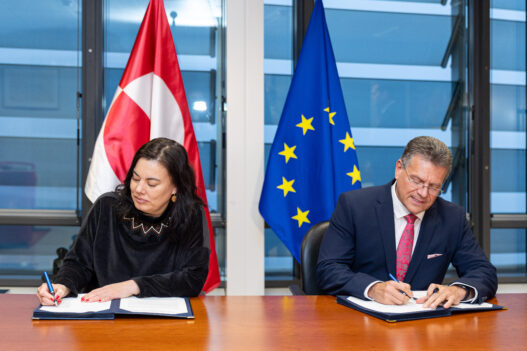
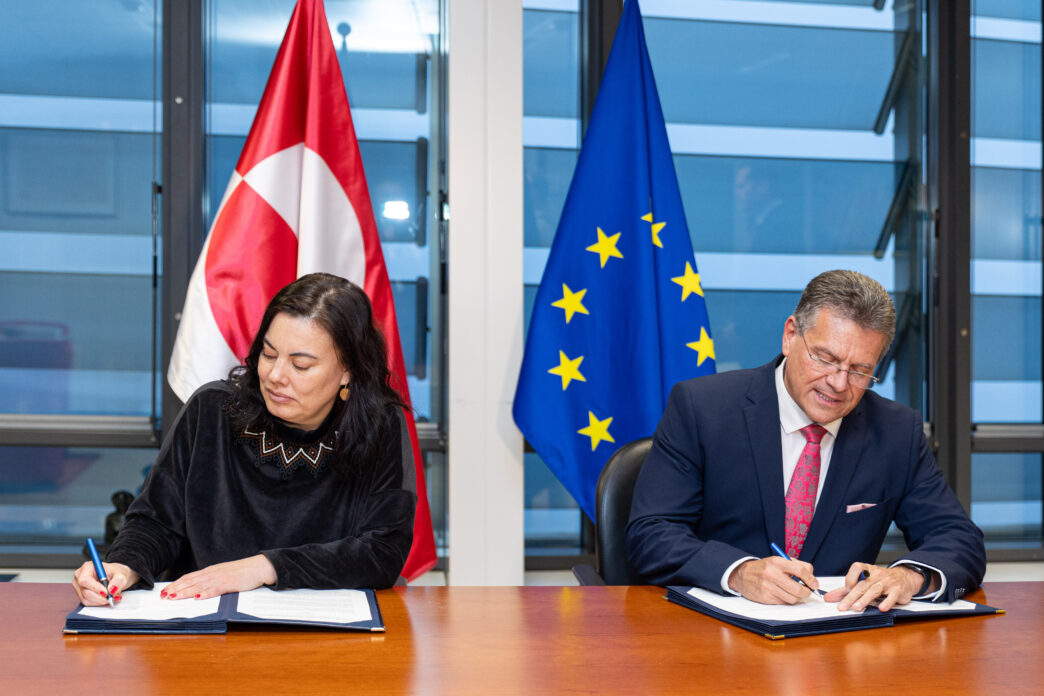
Under the Overseas Association Decision, Greenland has a wide-range of political and policy dialogue with the EU and is one of the largest recipients of EU support per capita in the Overseas Countries and Territories, foreseeing EUR 225 million between 2021 and 2027. The 2024 renewed protocol implementing the EU-Greenland Sustainable Fisheries Partnership Agreement (SPFA) covers the next few years through 2030. This agreement will permit EU vessels to fish key species in Greenland, aimed at a mutual commitment to sustainable fisheries and economic progress between the two sides. The EU’s permanent presence in Greenland promises enhanced partnership and visibility of EU actions on the ground, as stated by the European Commission. This can manifest itself through the establishment of a European Commission office on Greenlandic territory.
Greenland in a Changing Arctic
Climate change has increased Greenland’s strategic relevance, increasing accessibility to the Arctic and revealing potential reserves of critical raw materials essential for green and digital transitions. At the same time, the presence of the US Thule Air Base, which is part of NATO’s missile defense system, proves the territory’s long-standing security importance to the US.
Against this backdrop, the EU Council and the European Council have consistently emphasized respect for Greenland’s sovereignty, self-determination, and territorial integrity, aligning with the EU’s Arctic policy. Recent EU statements, therefore, reflect not only immediate diplomatic positioning but also its long-standing effort to assert political unity in Arctic affairs. By reaffirming the EU’s commitment to Greenland’s sovereignty and international law, the EU Council seeks to reinforce stability in the Arctic while signaling solidarity with Denmark and Greenland.
EU Council Council of the European Union EEAS Arctic Portal European Commission