










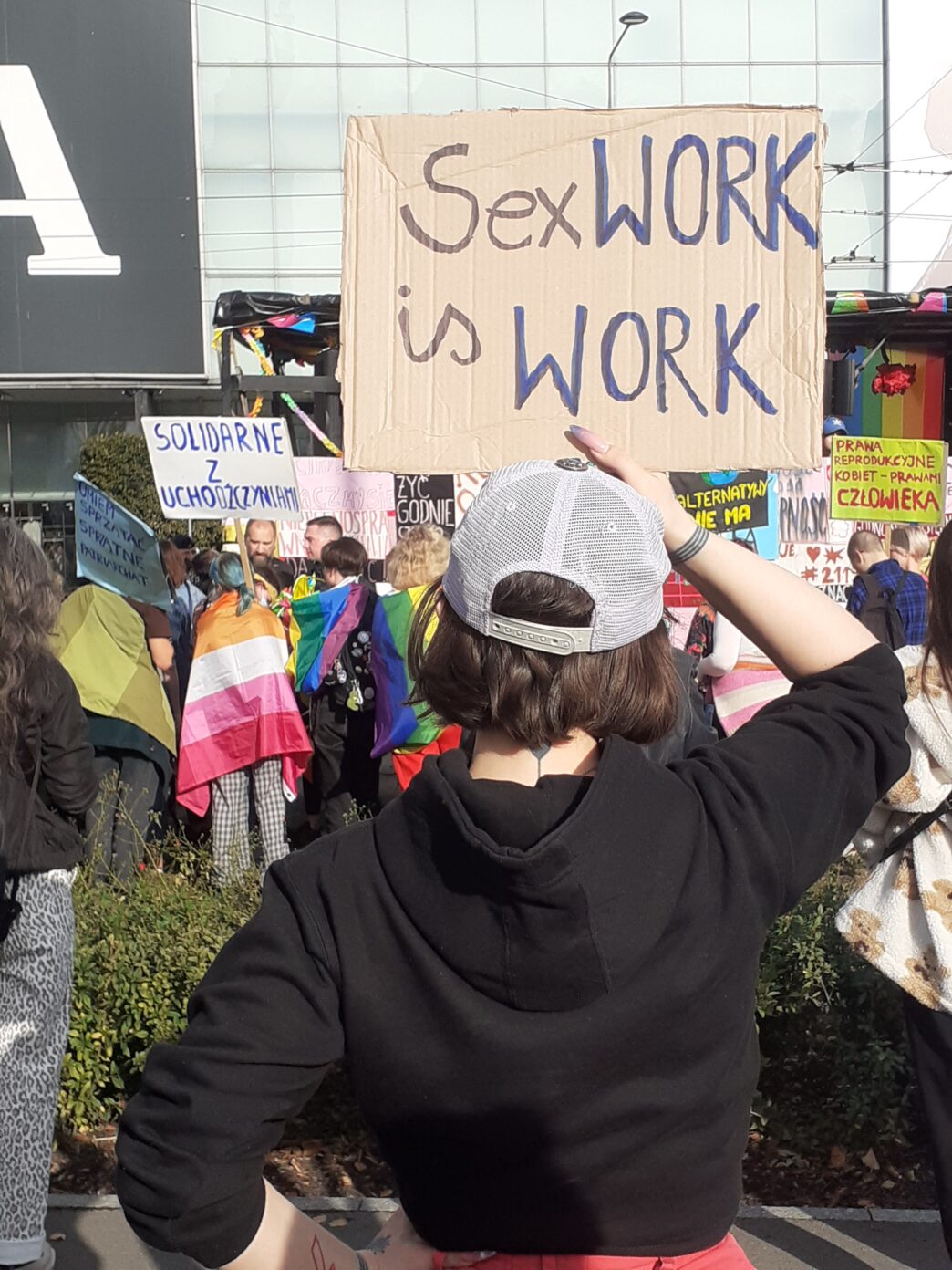
Sex work has always existed, and in the following decades, it is quite plausible to say that it will continue to exist. Nevertheless, different ideas and conceptions of sex work conforming our social imaginaries have been redefined and evolved over time, from the old Roman Lupanarias to contemporary sugar dating, and have influenced its management at a social and political level, whether formally or informally. How does European modern lawmaking currently address sex work? What are the premises informing and defining policy regimes? Is there a consensus among EU states on how to legislate on sex work? In this article, we will analyse different sex work policy regimes across the EU as well as the issues and dilemmas stemming from them, which directly affect the health and safety of sex workers.
Conceptualising sex work
According to the European Parliament, prostitution is defined as “the purchase of a sexual act, which can be defined as the solicitation, acceptance or obtainment of a sexual act from a person in a situation of prostitution in exchange for remuneration, the promise of remuneration, the provision of a benefit in kind or the promise of such a benefit”.
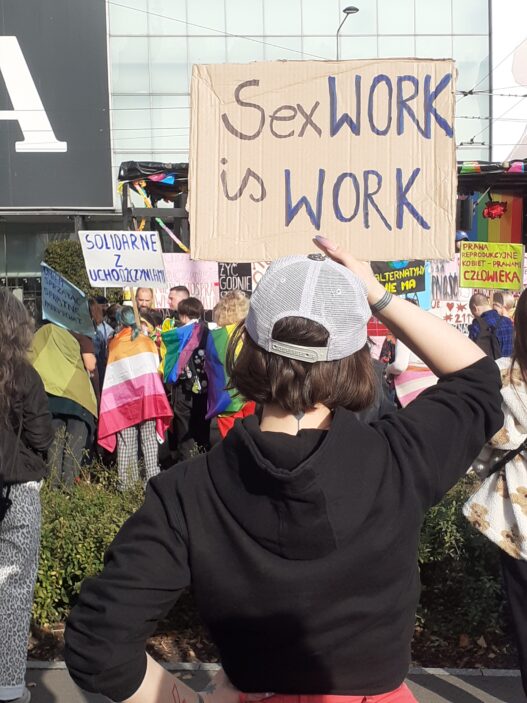
In recent decades, the term “sex work” has gained traction and become the preferred term of many sex worker associations and international human rights organisations, intensifying the ongoing debate between abolitionist and regulationist feminist factions on the most appropriate term to describe the phenomenon.
Regulationists argue that the main reason for women to resort to sex work is economic: sex work appears as the most convenient option considering resources and existing alternatives, aside from cases of human trafficking. However, this choice is not fully free; it is conditioned by the resources and possibilities available under capitalism, pushing women from lower social classes to consider sex work as the only option to survive. Therefore, sex work is another form of feminised labour exploitation, but socially disapproved. Abolitionists believe sex work embodies the patriarchal system and that men socialise and normalise a natural right to access women’s bodies. Hence, sex work inherently perpetuates gender inequalities: any argument that justifies sex work as a free choice where there is consent is a fallacy and legitimates men’s right to satisfy sexual desires. 
For this article, we use the term sex work and sex workers. We deliberately exclude pornography, even though it has been classified as another form of sex work. In pornography, the purchase and consumption of bodies and the relation between actors is mediated by technology, making it a distinct phenomenon not regulated under the same frameworks as prostitution.
It is also essential that we differentiate sex work and human trafficking, as these terms are often conflated. Sex work refers to the purchase of sexual services, which can be done voluntarily or coerced, while human trafficking refers to the “recruitment, transportation, transfer, harbouring or receipt of people through force, fraud or deception, with the aim of exploiting them for profit, either for labour or sexual purposes”. Even if both terms are deeply interrelated, with many sex workers trapped in trafficking, not all sex workers are part of trafficking networks and enter the industry voluntarily or under economic coercion. However, the lack of reliable data on the number of sex workers and victims of trafficking handicaps our ability to estimate the extent of these phenomena.
So, what are the main sex work policy regimes in Europe, and how have these been categorised? After reviewing the existing literature and understanding that categorisation of policy regimes is not straightforward and depends on which aspect of sex work is considered – whether legal, illegal or alegal, regulated or unregulated, or the premises upon which policies are defined – we have opted for a five-fold classification aiming to cover these aspects.
Criminalisation
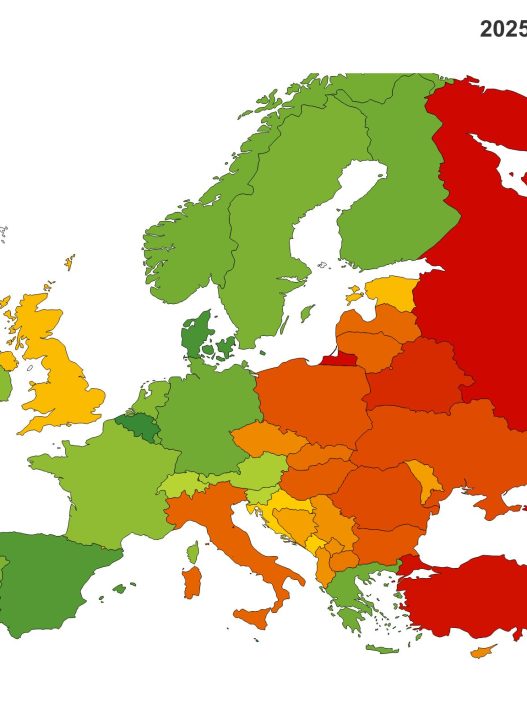
Under a criminalisation regime, buying, selling, or brokering sex are all criminal offences. Linked to a prohibitionist stance towards sex work, this approach treats all participants as “immoral” actors whose behaviour violates socially sanctioned norms of femininity and sexuality. Its aim is to eliminate sex work by deterring purchase and reducing demand. Full criminalisation is uncommon in Europe: only Lithuania applies it, with Croatia as an outlier where selling sex is illegal but buying is not.
While theoretically attractive to prohibitionists, evidence does not show that criminalisation eradicates the sex industry. A comparative Australian study found similar rates of men’s use of commercial sex across different legal regimes, suggesting that criminalisation alone does not significantly affect demand. Other studies show that even during COVID movement restrictions, people continued purchasing sex, highlighting persistent demand. Overall, research is not only inconclusive but also insufficient: the criminalised context makes sex workers hard to reach for researchers, and there are simply not enough longitudinal, cross-country analyses to measure whether this regime produces any meaningful deterrent effects.
Criminalisation tends to prompt market restructuring rather than disappearance. Sex work shifts to online platforms or indoor spaces, reducing visibility but not prevalence. This invisibility makes sex work far more hazardous. Firstly, criminalisation reduces access to healthcare, HIV prevention, STI testing, and reliable information. Secondly, the concealed nature of the market exposes sex workers to high levels of violence, including murder and assault. These harms mostly affect the most marginalised women of the sex market, while wealthier buyers and higher-end sex workers experience minimal impact.
All of this shows that even if we could prove that criminalisation deters sex work in the long term —and even if we could prove that is what everybody wants, including sex workers themselves— this model obscures sex workers’ rights and safety needs. It frames sex workers as morally deviant rather than recognising them as right-holders whose safety, well-being, and dignity matter.
Partial Decriminalisation or Nordic Model
Also known as neo-abolitionism, the partial decriminalisation regime is guided by the assumption that sex work is a normalisation of men’s violence against women and a reflection of patriarchal relations. Thus, this model adopts a gendered perspective where sex work is perceived as a form of exploitation, and considering the power imbalance present in the relation, this regime aims to tackle the side of demand, which is overwhelmingly masculine, by penalising the purchase but not the sale of sexual services.
Pioneered by Sweden in 1999 with its Sexual Purchase Act, this regime was later adopted by other states, such as Norway and Iceland, but also France and Ireland, distancing itself from mainstream approaches at the time, which either criminalised sex work altogether or regulated it as a labour activity that required special legal provisions. By penalising the purchase of sex work and offering complementary exit strategies and employment alternatives for sex workers, this law was expected to discourage the growth of the sex industry, decrease street prostitution, deter human trafficking, and change broad societal behaviours of violence against women.
However, early enthusiasm about the potential positive effects of this law soon stumbled upon criticism from organisations of sex workers, which considered that the law, while designed in good faith, dismissed their needs and demands, stigmatised and degraded sex work, and increased the vulnerabilities of sex workers. As clients risk being prosecuted, sex workers lose bargaining power when negotiating the conditions of the service and accept more dangerous outcalls, pushing sex work to clandestine and precarious working environments. What’s more, the decline in the number of clients drives sex workers to rely on third parties such as landlords or venue owners, putting them at risk of eviction if the third party is caught and charged with pimping offences. Moreover, hostile policing and controlling of clients leads irregular and undocumented migrants, who constitute a significant part of sex workers, to face more hazards than nationals, such as lack of access to healthcare or drug treatments, difficulties in entering the mainstream labour market, or being deported.
Similar issues have been raised in France since the “Loi sur la Prostitution” was passed in 2016: the fact that demand shrank meant less visibility and worse living conditions for sex workers. Organisations of sex workers also point out that the role of technology has largely displaced sex work and that they are observing a disturbing increase in younger girls engaging in sex work online, a dimension that neither the Swedish nor the French legislations have been able to address. Overall, these organisations indicate that neo-abolitionist approaches focus excessively on reducing the demand and transforming the sex industry instead of protecting and safeguarding the health, safety, and wellbeing of sex workers, an exclusionary “feminist” governmental discourse that only perpetuates structural violence against women under new kinds of risks.
Legalisation or Regulation
The legalisation regime allows people to sell, buy, or organise consensual sexual services, but only within a regulated system to protect public health and public order. Under this model, sex-work activities are not illegal, but they remain conditional and regulated rather than fully free. They are tightly controlled through specific legal provisions: sex workers can only work in licensed brothels or designated areas, must follow rules on soliciting, and any third-party involvement in their earnings is strictly controlled.
Legalisation is applied unevenly across Europe. Countries with legalised systems include Austria, the Netherlands, Germany, Greece, and Hungary, yet their systems differ significantly. In Germany, the state runs a strict registration and permit system, which offers formal recognition but also creates administrative burdens and stigma for sex workers. Austria, by contrast, gives more power to local governments, so protections vary by province in rules on registration, health checks, and designated street-prostitution zones. These differences have real consequences for sex workers, affecting their safety, access to rights, and everyday working conditions.
Compared to criminalisation, the legalisation regime is thought to improve health and safety while recognising sex workers’ right to work. In some regulated systems, brothels can cooperate with healthcare services, potentially lowering STI/HIV transmission risks and enabling faster treatment. Likewise, regulation can make violence, threats, and abuse easier to detect than in clandestine settings, where fear of criminal charges often discourages sex workers from seeking help.
Even if preferable to criminalisation, legalisation raises concerns: does it truly serve sex workers’ interests? Regulatory burdens seem to prioritise public order over workers’ needs, benefitting brothel managers more than sex workers. Compliance can be costly, pushing people into unlicensed —and more dangerous— work. The risk of fines for working in unlicensed brothels can force sex workers to work alone, making the promised violence-reduction effects of legalisation questionable. Undocumented migrants are most likely to remain in illegal environments, occupying the most vulnerable positions. Some studies also link legalised sex work industries with higher reported human trafficking inflows —though this research is contested.
Decriminalisation
Decriminalisation treats sex work as ordinary labour, governed by general workplace, health and safety standards rather than prostitution-specific criminal or regulatory regimes. Its premise is that labour rights are the only effective safeguard against exploitation, and these are unattainable unless sex work is first recognized as work. The key difference from legalisation is not access to legal employment or social protection —which both systems can provide— but the absence of burdensome licensing and sector-specific controls.
Belgium is the only country in Europe to implement this model. Its 2022 law reform ended the criminalisation of third parties, allowing sex workers to access essential services such as bank loans, insurance, or accountants, while the 2024 labour law created the option of formal employment contracts with an authorised employer, alongside the existing self-employment option.
Decriminalisation strengthens agency by allowing workers to choose their preferred working arrangements —independent, collective, or employed— and to operate more safely within them. Significant challenges persist: exploitative managers continue to operate, human trafficking still occurs, and undocumented workers often lack representation. Nonetheless, by affirming autonomy and enabling workers’ participation in policy-making, decriminalisation establishes a framework in which exploitation can be addressed, non-voluntary work identified, and migrant perspectives integrated, laying the groundwork for stronger human rights protection.
Alegalisation
As opposed to all approaches explained above, the alegalisation regime is defined by the absence of legal frameworks on sex work, that is, in these states sex work is neither criminalised nor legalised. Although the term “alegalisation” has not yet been coined as a category for these cases, it will be used here to refer to the jurisdictional limbo under which sex work is exercised.
As stated above, this regime is characterised by legislative incoherence in which sex workers and clients cannot be prosecuted for selling or buying sex. Nonetheless, under this grey area, both actors can be charged with different criminal offences since states prohibit other forms or aspects of sex work such as brothel keeping or third-party activity, pandering, soliciting, procuring, pimping, street prostitution, advertising or purchasing sexual services from minors.
However, legislation can vary among states and even municipalities: in Finland and Romania, street prostitution is banned, while in Spain, Italy or Slovakia, it is mainly legislated at the local level and usually punished under public order laws. Meanwhile, in Poland, brothels are allowed to operate as escort agencies, presuming they do not offer sexual services, even if they do, but in Slovenia, Estonia, and Denmark, organised forms and third-party activity are heavily prohibited – though in the latter case, sex workers are obliged to pay taxes and have limited access to benefits. Other countries falling in this category include Bulgaria, Cyprus, the Czech Republic, Luxembourg, Malta, and Portugal.
As raised by sex workers organisations, even if sex work is not prohibited, it is not recognised either, a situation in which sex workers lack protection from the state and whose rights are directly denied and dismissed. Since sex work is not regulated, contracts are therefore null and void before the state, labour, social security, tax, or well-being laws do not apply to sex workers: they cannot claim unpaid wages or compensation as they are not entitled to benefits, exacerbating their legal insecurity and socioeconomic precarity.
Furthermore, by deeming certain behaviours as a threat to public order, sex workers are criminalised and stigmatised, risking criminal proceedings if discovered, even if sex work itself is not punishable, and hiding their activities due to fear of state forces. This discourages sex workers from pursuing legal actions in cases of abuse or violence from clients and pushes them to work in more dangerous settings.
Legislation at the EU level
Variation in sex work policies across the EU, and the persistence of legal grey zones, can be partly explained by the fact that the EU does not regulate sex work directly. Sex work remains largely a national competence (Art. 5 TEU). Still, there have been attempts to link it to EU-level concerns such as criminal law (Art. 83 TFEU), especially human trafficking and sexual exploitation, as well as gender equality and non-discrimination (Art. 19 TFEU; Arts. 2-3 TEU; Art. 8 TFEU). Yet these initiatives are often resisted by the Commission and the Council, and they typically focus on exploitation rather than on guaranteeing broader labour and human rights for sex workers themselves.
Debates have mainly taken place in the European Parliament. Its 2023 Resolution argued that excessive divergence in national laws undermines efforts to address human trafficking and protect fundamental rights. While the text seems to favour the Nordic regime, highlighting gender equality and the vulnerability of migrant sex workers, it was also deeply contested within the Parliament.
Ultimately, this persistent debate raises a fundamental question: should Europe pursue greater harmonisation, or continue deferring to national priorities —and, perhaps most crucially, whose voices are shaping the future of sex-work policy?