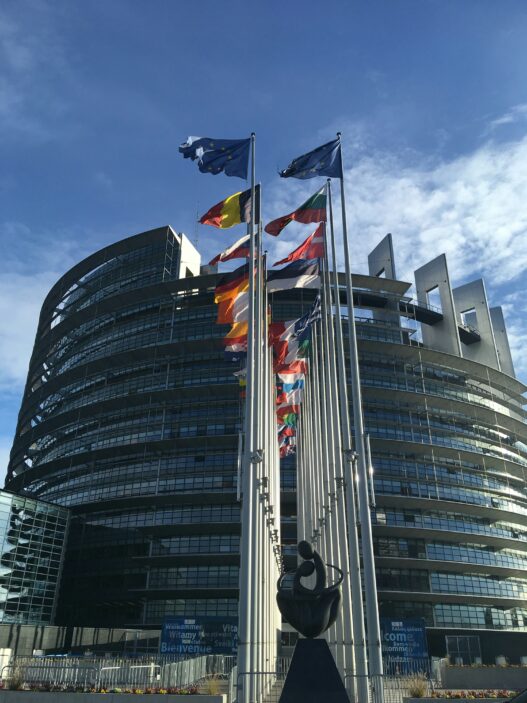









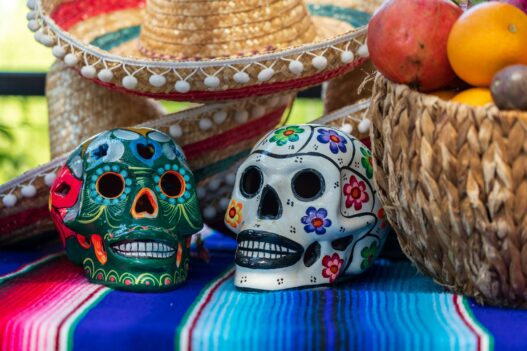
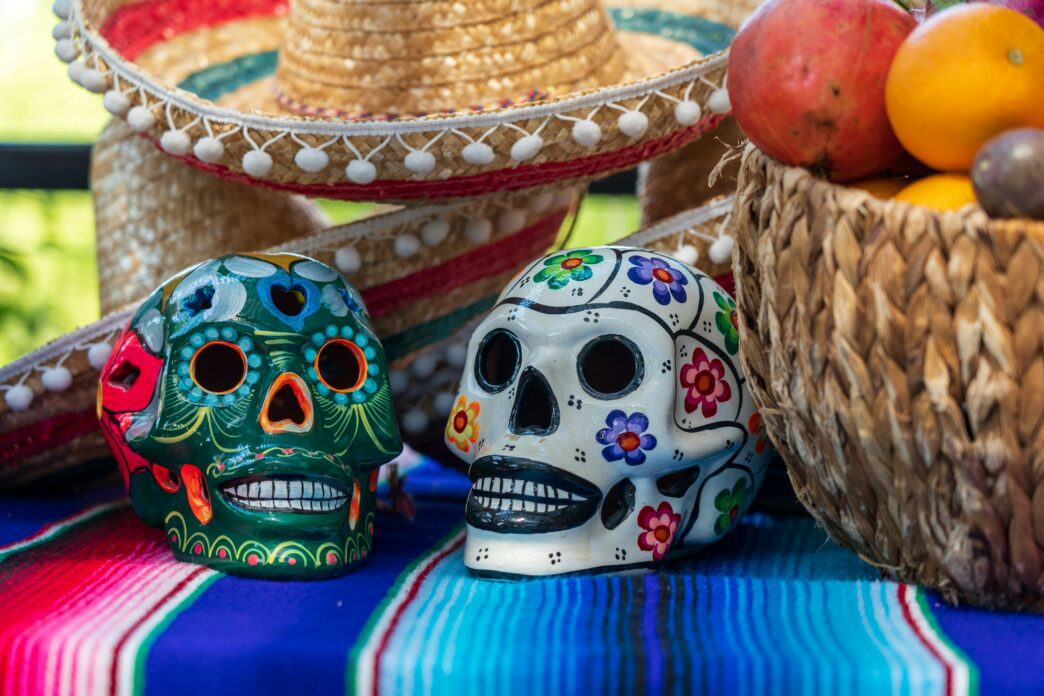
On the occasion of the recently concluded agreement between the European Commission, the European Parliament, and Mexico, a celebration of Mexico’s Día de los Muertos (“Day of the Dead”) was held at the European Parliament in Strasbourg. In parallel, President Ursula von der Leyen announced her upcoming visit to Mexico, expected to take place later in October, to personally sign the new modernised agreement.
During the event in Strasbourg, the European Parliament highlighted the cultural connection between both partners: the Día de los Muertos celebration underscored the significance of symbolism, exchange, and openness in the EU–Mexico partnership.
Some background information on the new agreement
Trade between the EU and Mexico is currently still governed by the trade pillar of the so-called Global Agreement (officially: EU–Mexico Economic Partnership, Political Coordination and Cooperation Agreement), which entered into force in 2000 and included a part on trade, which mostly opened up trade in goods.
As early as 2018, both sides issued a declaration of intent to modernise these pillars, to bring them in line with contemporary global standards and expand their scope to include updated provisions on intellectual property rights, trade, and sustainable development.
The EU concluded negotiations on a modernised Global Agreement with Mexico on 17 January. On 3 September 2025, the European Commission adopted proposals for Council decisions on the signature and conclusion of the EU–Mexico Modernised Global Agreement (MGA) and of the Interim Trade Agreement (iTA). Once ratified (by Ursula von der Leyen in Mexico), the EU’s modernised Global Agreement with Mexico will replace the one currently in force.
Why was a new agreement necessary?
The revised framework aims to generate new commercial opportunities for European exporters and investors while reinforcing relations with a long-standing strategic partner. Against the backdrop of rising protectionism worldwide, the agreement also conveys a strong commitment by both sides to open trade and fair competition based on high standards and international rules.
Mexico, the second-largest economy in Latin America and the twelfth-largest globally according to the International Monetary Fund, shares with the EU a commitment to open, rules-based, and fair trade. With a population of around 131 million, it represents a dynamic and expanding market that offers significant potential for European businesses. The economic ties between both partners are already substantial: in 2023, trade in goods reached €82 billion, and trade in services amounted to €23 billion in 2022. The EU is Mexico’s second-largest export destination and its third-largest trading partner, while Mexico ranks as the EU’s second-largest trading partner in Latin America after Brazil. In 2023, EU companies exported goods worth €53.1 billion and services worth €15.2 billion to Mexico, while imports from Mexico amounted to €28.6 billion in goods and €7.9 billion in services.
Contents of the New Agreement
The new agreement introduces several key innovations that mark a significant deepening of economic and regulatory cooperation between the European Union and Mexico. It foresees enhanced exports of agricultural and food products from the EU to Mexico through the reduction of high tariffs, thereby expanding market opportunities for European producers. At the same time, it provides improved access for EU companies to public procurement in Mexico and facilitates market entry and service provision in sectors such as telecommunications, finance, and transport.
In addition, the agreement simplifies standards and procedures, particularly to the benefit of small and medium-sized enterprises (SMEs), which are expected to gain from a more predictable and transparent regulatory environment. It also strengthens safeguards for climate and labour rights and seeks to enhance supply chain integrity concerning critical materials that are central to the green and digital transitions.
Beyond these economic and sustainability provisions, the agreement includes new chapters addressing sub-national public procurement in Mexico, rules of origin, technical barriers to trade, animal and plant health, animal welfare, and anti-corruption measures, reflecting a comprehensive and modernised framework for EU–Mexico relations.
Stakeholder views
Several civil society organisations have voiced criticism regarding the proposed inclusion of certain provisions, pointing to a perceived lack of transparency throughout the negotiation process and the apparent omission of a human rights conditionality clause. Further concerns have centred on the notion that the agreement prioritises EU commercial interests over the safeguarding of human rights as well as social and environmental standards in Mexico. Following the announcement of the agreement in principle, additional objections emerged, highlighting the absence of protection for specific geographical indications and the exclusion of the Trade and Sustainable Development chapter from the general dispute settlement mechanism.
Further reading:
Legislative Train Schedule of the European Parliament, Zocalo, the European Commission’s Presscorner and page on the Agreement, the Commission’s 2016 Impact Assessment, and the Commission’s interactive trade relations map