











Europe has moved from vision to execution in space and security: a proposed EU Space Act, a concession contract for the IRIS² secure satellite system, and ESA’s Resilience from Space Program all advanced in 2024–2025, signalling a pivot to integrated security, connectivity, and crisis management from orbit. Together, these initiatives aim to make Europe’s space activities safer and more resilient, and sustainable, while reducing regulatory fragmentation and boosting industrial competitiveness across the single market for space.
A single market for space
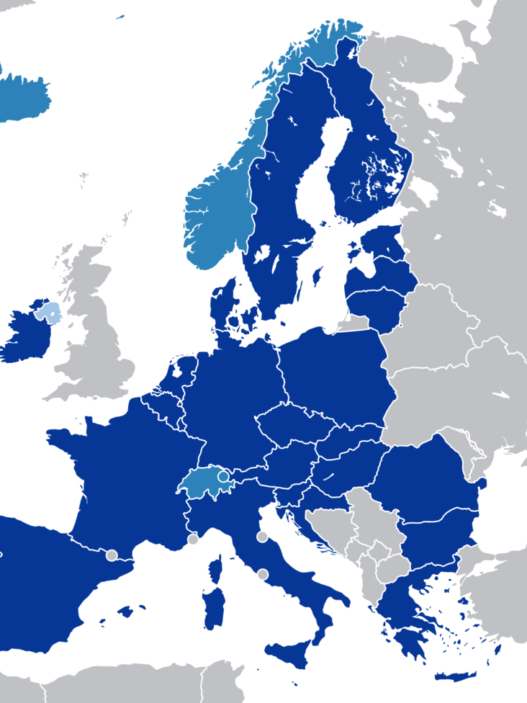
The European Commission published its proposal for an EU Space Act on 25 June 2025, launching a regulatory path to harmonise national licensing, set standard safety and sustainability rules, and establish a genuine EU single market for space activities. The EU Commission’s preferred “Option 2+” combines binding requirements with complementary, non-binding measures (such as labels), and could be paired with international arrangements to foster regulatory convergence with like‑minded partners. Legal analyses underline how the draft regulation targets debris mitigation, space traffic management, and cybersecurity as core pillars to address congestion, interference, and systemic risks in orbit.
IRIS² moves from plan to build 
On 16 December 2024, the Commission signed the concession for IRIS² with the SpaceRISE consortium, paving the way for a multi‑orbital constellation comprising approximately 290 satellites to deliver secure connectivity to EU and Member State users and extend broadband to hard‑to‑reach areas. IRIS² integrates LEO, MEO (and interfaces with GEO) orbits, leveraging EuroQCI quantum cryptography and a secure‑by‑design approach to support governmental missions from border surveillance to crisis management and protection of key infrastructure. By design, IRIS² will underpin strategic autonomy in secure communications while stimulating commercial services and closing connectivity gaps across Europe and parts of Africa via North–South orbits.
From observation to resilience
ESA’s Resilience from Space Program is advancing through feasibility studies awarded in January 2024, with a funding request planned for the November 2025 ESA ministerial conference (CM25). If approved, the program would enter its first implementation phase in close coordination with the EU’s Earth Observation Government Service. Beyond this initial step, sustained development and deployment are expected to be supported through the EU’s next Multiannual Financial Framework (MFF), which will run from 2028 onwards, providing the long-term budgetary foundation needed to scale and maintain the constellation. The concept envisions much more frequent Earth observations, potentially every half‑hour, to support crisis response, complement ground systems, and harden Europe against natural disasters and hybrid threats. The programme also marks a notable evolution of ESA’s civil mandate toward explicit security applications, reflecting Member States’ push to close Europe’s defence-space gap relative to global peers.
Strategic implications
Taken together, the EU Space Act, IRIS², and the Resilience from Space Program create a mutually reinforcing framework of common rules and standards, sovereign secure connectivity, and rapid sensing for decision‑makers across crises. This integration could lower barriers to scale for industry, accelerate dual‑use innovation, and enhance Europe’s deterrence and response posture, from cyber‑secure satcoms to space traffic safety and debris control. It also positions the Union to shape international norms while strengthening interoperability with partners through calibrated regulatory convergence.
Europe’s bet is clear: a rules‑based single market in space, sovereign secure links from IRIS², and persistent orbital sensing for crisis management will anchor competitiveness and resilience in an era of global competition. The next milestones, legislative negotiations on the Space Act, the IRIS² build‑out, and ESA’s CM25 decision on Resilience from Space, will determine how quickly ambition translates into operational advantage for Europe’s strategic autonomy.