










Russia’s invasion of Ukraine has given new urgency to the EU’s enlargement agenda, particularly regarding countries like Ukraine, Moldova, and Georgia. As these countries look toward accession, the EU must also look inward. Recent experiences with democratic backsliding and erosion of the rule of law in member states such as Hungary and Poland highlight the risks of admitting new members without sufficient institutional safeguards. Yet, in the face of growing geopolitical pressure, the EU cannot afford inaction. It must act quickly to expand while simultaneously strengthening its internal mechanisms to protect democratic norms and ensure long-term cohesion. How can the EU balance democratic integrity with geopolitical urgency in its next phase of enlargement?
The New Urgency Behind Enlargement
For much of the past decade, EU enlargement has been stalled, overshadowed by internal crises, democratic backsliding, and declining political will among existing member states. The accession process for countries in the Western Balkans slowed significantly, and enlargement fatigue became a defining feature of EU discourse. What changed was Russia’s full-scale invasion of Ukraine in 2022. Suddenly, enlargement was no longer only about gradual integration and reforms; it became a geopolitical necessity.
Ukraine, Moldova, and Georgia are now framed as more than candidate countries. They are seen as part of a larger struggle between authoritarianism and liberal democracy. Supporting their accession is no longer just a matter of solidarity, but also a matter of strategic self-interest for the EU. Enlargement has returned to the agenda, not only as a value-driven project, but as a tool of foreign policy and security. But it is not driven by Brussels alone. Candidate countries like Ukraine and Moldova are actively pursuing accession, not just for protection, but driven by a strong political will to join the European community. The question is no longer whether the EU should enlarge, but how to do so responsibly in a way that respects both urgency and shared democratic commitments.
This shift in urgency presents an opportunity, but also a risk. Moving too fast without addressing the EU’s own internal weaknesses could undermine the very values that enlargement is meant to defend. Yet delaying integration comes with serious strategic costs. Russia’s aggression has turned Eastern Europe into a geopolitical fault line, and countries like Ukraine, Moldova, and Georgia are caught in the middle. Prolonged uncertainty not only weakens pro-European governments but opens space for authoritarian influence, hybrid interference, and public disillusionment. 
Enlargement is no longer just a project of idealism, it has become a question of regional stability and long-term security. If the EU fails to respond with credibility and timeliness, it risks letting genuine democratic aspirations in neighbouring countries fade or falter. In countries where the commitment to European integration is real but fragile, the absence of a clear pathway can tip the balance. Democratic will, if not met with meaningful engagement, can wither under external pressure. Russia has shown that it can exploit political hesitation and pull vulnerable states away from the democratic path they have chosen.
The challenge for the EU is not only to protect itself from internal backsliding, but to demonstrate that it is still capable of offering a meaningful political home to those who seek one before it is too late.
A History of Misplaced Confidence
The EU’s previous rounds of enlargement, particularly the 2004 “Big Bang” expansion, were widely seen as a political success. Countries like Poland and Hungary were welcomed into the Union after completing substantial reforms, fulfilling the Copenhagen criteria, and demonstrating political alignment with EU values. However, in the years following accession, both countries began drifting away from key democratic principles. Hungary, under Viktor Orbán’s leadership, adopted increasingly illiberal policies, including restrictions on media freedom, judicial independence, and civil society. Poland followed a similar path, with concerns over judicial reforms and political interference.
The issue was not enlargement itself, but the belief that democratic consolidation, once achieved, would be self-sustaining without continued safeguards. Once inside the Union, member states are much harder to discipline. The EU lacked robust post-accession enforcement mechanisms, relying instead on political dialogue, soft pressure, and the rarely used Article 7 procedure. This reactive and slow-moving approach proved insufficient to counter long-term democratic backsliding. The lesson is clear: accession should not be treated as the endpoint of democratic reform. Without credible tools to uphold the rule of law after membership is granted, the EU risks legitimising illiberal tendencies that undermine the Union from within.
When Enforcement Exists But Action Fails
While the EU does possess legal tools to respond to democratic backsliding among its member states, these instruments have proven either too weak, too slow, or too politically constrained to be effective. The most prominent example is Article 7 of the Treaty on European Union, which allows for the suspension of a member state’s voting rights in cases of serious and persistent breaches of EU values. Although the procedure has been launched against both Hungary and Poland, it has failed to produce concrete outcomes. Political realities, such as the requirement for unanimity in the European Council, have rendered the mechanism largely symbolic.
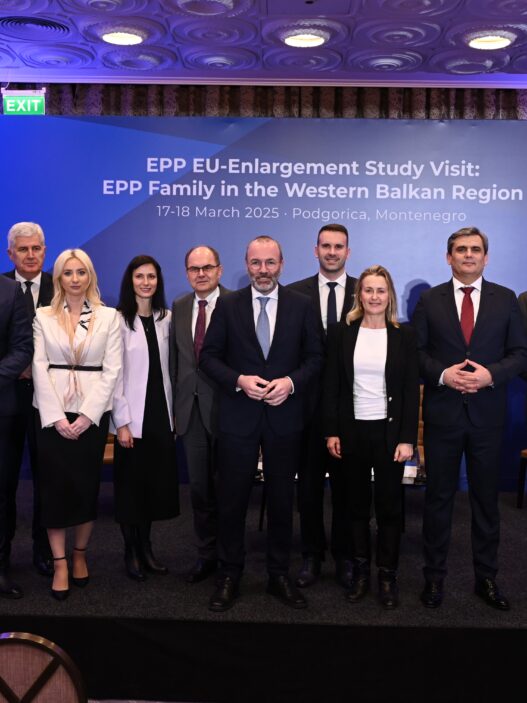
Beyond legal limitations, a lack of political will has also played a central role. European leaders have consistently emphasized the importance of democracy, rule of law, and shared values, yet have repeatedly failed to act when those principles are violated. Former German Chancellor Angela Merkel, for instance, was widely criticised for shielding Viktor Orbán’s government from consequences during key moments of democratic decline in Hungary. At the time, both belonged to the European People’s Party (EPP) in the European Parliament, and party loyalty frequently took precedence over enforcement of EU norms. This dynamic sent a clear signal: rhetorical commitments to EU values are not always matched by institutional action.
Even newer instruments, such as the rule of law conditionality regulation linking EU funds to democratic standards, have been slow to operationalise and are often diluted through political compromise. The result is a reactive, rather than preventive, approach, one that struggles to deter illiberal shifts once a country has entered the Union. What is lacking is not just stronger enforcement mechanisms, but a genuine political commitment to uphold the principles that define the European project.
Membership Is Not the End of the Journey
One of the most difficult scenarios to address in EU enlargement is not what happens before a country joins, but what happens after. Membership is based on a candidate’s institutional readiness and political commitment to EU values at the time of accession. But political trajectories can shift rapidly, especially in fragile democracies. During Moldova’s recent presidential election and EU referendum, which I observed as part of an international election monitoring mission, the pro-European candidate Maia Sandu narrowly secured a win. But the referendum result revealed how divided the electorate remains. The opposition, led by pro-Russian figures, has deep roots and substantial support.
What if a country like Moldova joins the EU under a pro-European government, but a few years later elects a leadership that is openly anti-EU and begins undermining the rule of law, media freedom, or minority rights, all while being shielded by EU membership? This is not an abstract concern. The cases of Hungary and Poland have shown how difficult it is for the EU to intervene once a member state turns illiberal. Without stronger post-accession enforcement mechanisms, the EU may find itself constrained in addressing future internal challenges to its democratic standards.
How to Defend EU Values Without Derailing Enlargement
If the EU is serious about expanding its membership in the coming years, it must first demonstrate that it can uphold its core values internally. This requires going beyond symbolic gestures and investing in more credible, consistent enforcement mechanisms. The Union should build on its existing rule of law toolbox and ensure that breaches of democratic norms, including judicial interference, media suppression, or electoral manipulation, are met with timely and tangible consequences. Financial conditionality linked to EU budget funds must be strengthened, made more automatic, and less vulnerable to political bargaining.
In parallel, sanctions for democratic backsliding should be accompanied by clear accountability for institutional inaction. When the EU’s response is delayed or blocked not by legal limitations, but by political hesitation, the damage is compounded. A credible values-based Union must also expect responsibility from those who enable silence. Creating political or procedural pressure for those who consistently refuse to act on documented violations could help shift the culture from reactive management to proactive safeguarding. A European Parliament briefing has already highlighted the political constraints around rule of law enforcement and called for stronger, more reliable instruments.
At the same time, the geopolitical urgency is real and cannot be ignored. Russia’s aggression has changed the stakes, and there is a clear strategic interest in integrating countries like Ukraine, Moldova, and Georgia into the European project. But urgency cannot become an excuse for abandoning principles. If enlargement is to succeed, it must be tied not only to reforms in candidate countries but also to reforms within the EU itself. Otherwise, the Union risks expanding its reach while weakening its foundation.
The Real Test of Enlargement Lies Within
EU enlargement is no longer just a long-term policy ambition; it has become a short-term geopolitical imperative. But urgency must not come at the expense of democratic integrity. If the EU is to successfully integrate new member states while safeguarding its own cohesion, it must treat the rule of law not as an ideal, but as a non-negotiable condition before and after accession. This means reforming internal mechanisms, confronting political inaction, and acknowledging that the credibility of the Union abroad depends on its resilience at home. Enlargement, done responsibly, can strengthen the EU. Done carelessly, it risks weakening the very values it seeks to protect. The moment calls not just for strategic boldness but for institutional maturity.