


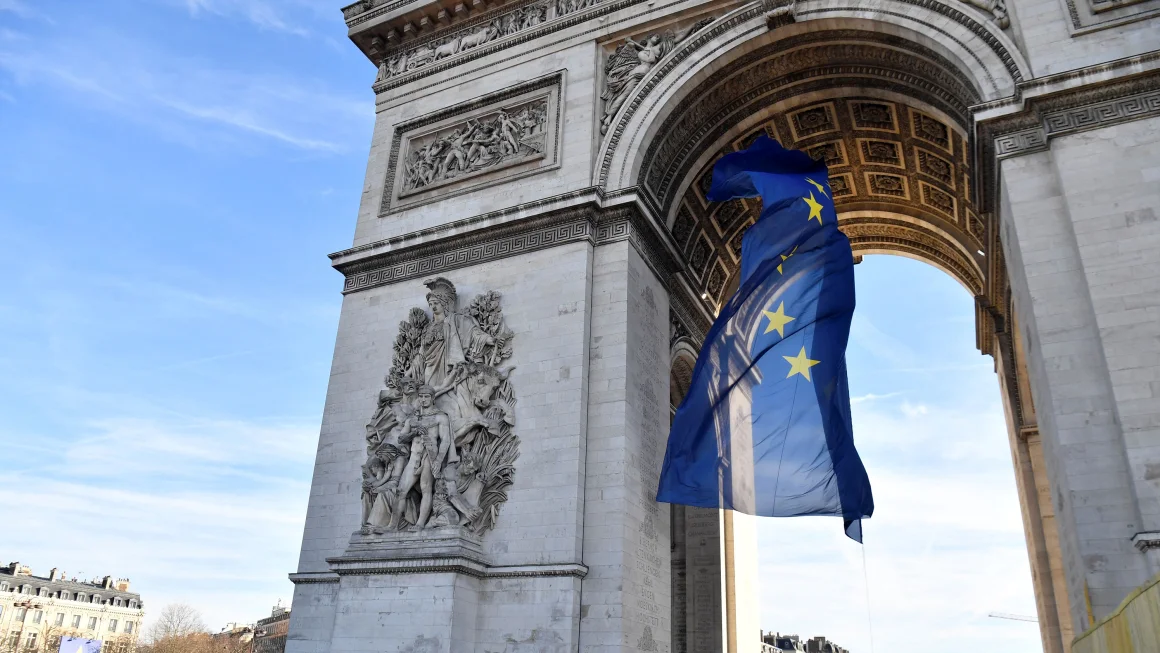





European Union member states are divided over the planned January 2028 launch of ETS2
ETS2 is the bloc’s emissions trading system for road transport and building heating fuels
Eight member states, including Germany, Denmark and Spain are pushing to keep the 2028 timeline
Several other member states, including Poland, Italy and Greece are pushing to delay it until at least 2030
Source: euronews
More Quick Briefs:
·Inside Europe·2027 Parliamentary Elections·ECHR·Peter Pellegrini·Postal Voting·Slovakia
·Inside Europe·2027 Parliamentary Elections·ECHR·Peter Pellegrini·Postal Voting·Slovakia
Slovak parliament votes to end overseas postal voting ↗︎
Slovak lawmakers voted 79-71 on 24 November to replace postal ballots for parliamentary elections with in-person voting at diplomatic missions, ahead of elections due in 2027.
→Voting from abroad: The bill would replace postal voting in parliamentary elections with in-person voting at diplomatic missions. It would also allow Slovaks to vote in presidential elections from abroad for the first time, using the same in-person system.
→Opposition’s concern: Critics say the change would make voting harder for citizens who live far from a diplomatic mission. Nearly 59,000 voted by post in 2023, with about 62% backing Progressive Slovakia and 6% backing Fico’s Smer.
→What happens next: The bill still needs President Peter Pellegrini’s signature. Opposition figures have said they intend to challenge it before Slovakia’s Constitutional Court.
→European standard: The European Court of Human Rights has ruled that the European Convention does not generally require states to offer voting from abroad. The Slovak dispute centres on how accessible that option would be in practice.
→Sources: EUobserver, Reuters, ECtHR
→AI-assisted: Reviewed by the Briefing Team.
·Economic Policy·Inside Europe·Housing Crisis·Maricarmen Abascal·Matrid·Pedro Sánchez·Protests·Spain
·Economic Policy·Inside Europe·Housing Crisis·Maricarmen Abascal·Matrid·Pedro Sánchez·Protests·Spain
Snap Elections on 29 November in Spain: Between Housing Crisis, Deadly Train Crash, Corruption and Ceuta ↗︎
The eviction of an elderly pensioner in Madrid has sparked wider debate over Spain’s housing crisis, while a deadly train crash, growing concerns over public safety and political disputes ahead of the upcoming election have intensified pressure on the government.
Updates
→Analysis: Spain’s Economic Gains Fail to Reach Voters as Sánchez Seeks Re-election (Reuters)
→Analysis: Alberto Núñez Feijóo Positions Himself as Sánchez’s Political Alternative (Rapporteur)
→Analysis: Spain’s Snap Election and Its Implications for NATO Spending (EUobserver)
→Analysis: Spain’s Civil War Legacy Resurfaces in Election Campaign (POLITICO)
→Analysis: Sánchez Puts Foreign Policy Centre Stage as Spanish Rivals Offer Alternatives (Rapporteur)
→News: Sánchez and Feijóo Clash Over Corruption, Migration and Rail Disasters Ahead of Spanish Elections (RTVE)
→Analysis: Spain’s Foreign Policy Faces an Uncertain Future (ECFR)
→Analysis: Sánchez’s Potential Exit Threatens Europe’s Political Left (Rapporteur)
→Analysis: Vox Reshapes Spanish Politics Ahead of Parliamentary Elections (Rapporteur)
→News: Spanish opposition leader Alberto Núñez Feijóo pledges an audit of Spain’s public finances, questioning the reliability of official economic figures (POLITICO)
→Analysis: Spanish Prime Minister Pedro Sánchez faces setbacks in his efforts to win over Generation Z voters (Rapporteur)
→News: Spanish opposition leader Alberto Núñez Feijóo calls for Spain to withdraw from hosting the 2030 FIFA World Cup if Morocco is awarded the final (POLITICO)
→Analysis: Spanish Prime Minister Pedro Sánchez seeks to capitalise on opposition to US President Donald Trump at home and abroad (Rapporteur)
→Analysis: EU support for Morocco’s Western Sahara position remains conditional, while Spain’s upcoming election could prove decisive for the territory’s future (EUObserver)
→News: Spanish Prime Minister Pedro Sánchez’s Latin American allies skip Madrid summit (Rapporteur)
→News: Spanish Prime Minister Pedro Sánchez pledges to restore public trust in railway safety following deadly train crash (Rapporteur)
→News: Deadly rail disaster reignites Spain’s political crisis ahead of national elections (Rapporteur)
→News: Growing support for the radical right among young Spaniards signals shifting political attitudes (Rapporteur)
→Commentary: Spain’s deepening political divisions put public trust in democracy to the test (The Brussels Times)
→News: Spain’s conservative People’s Party (PP) and far-right Vox agree to coordinate Senate candidates in 23 constituencies ahead of November elections (EFE, PP)
→Update (25.10.2026): News: French-inspired youth protests turn violent in Barcelona, with 128 arrested, including 72 minors (Euronews, EFE)
→Update (23.10.2026): News: Alberto Núñez Feijóo pledges sweeping conservative reforms if he wins Spain’s November 29 election (POLITICO)
→Update (21.10.2026): News: Spain’s Vox rallies international allies ahead of elections (Rapporteur)
→Update (20.10.2026): News: Spain grants amnesty to Catalan separatist leaders ahead of November election (Catalan News)
→Update (20.10.2026): News: Spain’s conservatives hold coalition talks with far-right Vox (POLITICO)
→Update (19.10.2026): Commentary: Why Spain’s left failed to unite ahead of November’s snap election (EUobserver)
→Update (14.10.2026): News: Spain’s ruling Socialists lead state-run poll amid snap election speculation (Reuters)
→Update (14.10.2026): Polling: Spain’s latest voting intention trends (POLITICO)
→Update (12.10.2026): Interview: Spanish Socialist MEP sees no alternative to Sánchez as housing and immigration dominate snap election (EUobserver)
→Update (09.10.2026): Podcast: Sánchez’s snap election gamble raises questions about Spain’s political future and its implications for Europe (ECFR)
→Update (08.10.2026): News: Maricarmen, the 87-year-old woman whose eviction sparked major protests in Spain, dies in hospital (Euronews)
→Update (08.10.2026): News: Spain’s far-right Vox, led by Santiago Abascal, gains ground in election polls (POLITICO)
→Update (07.10.2026): News: Spanish unions call general strike for November 11, weeks before snap parliamentary election (Reuters)
→Update (06.10.2026): Analysis: Spanish election threatens political balance in Brussels as Sánchez’s Socialists face potential losses (POLITICO)
→Update (05.10.2026): Analysis: Sánchez bets on housing agenda to keep far right out of government in Spain’s snap election (EUobserver)
→Update (05.10.2026): News: Sánchez calls snap Spanish election for November 29 (POLITICO)
→Update (03.10.2026): News: Tens of thousands protest across Spain over deepening housing crisis (The Guardian)
→Update (02.10.2026): News: Sánchez loses key housing crisis vote after eviction of 87-year-old woman (BBC)
→Update (30.09.2026): Podcast: Did Spain’s government address protesters’ demands on housing? (EUobserver)
→Update (29.09.2026): News: Spain moves to stem housing protests (Rapporteur)
→Quick Brief:
→Maricarmen Abascal was evicted on 23 September from the Madrid apartment where she had lived for more than 70 years, turning her case into a symbol of Spain’s housing crisis
→The eviction prompted protests in Madrid, amid wider concerns over rising rents and access to affordable housing
→The property owner has agreed to let Abascal return under a new eight-year rental contract, with rent capped at 30% of her net income. She still has to approve the agreement formally
→Prime Minister Pedro Sánchez explicitly referred to Maricarmen’s case while calling for parliamentary support for new housing measures aimed at strengthening tenant protection and addressing Spain’s housing crisis
→Sources: BBC, Reuters, El País
→Transparency Note: Use of AI
·EU Enlargement·Geopolitics·Inside Europe·Western Balkans·António Costa·Council of the EU·Croatia·EU-Western Balkans Summit·European Commission·Integration·Jakov Milatović·Montenegro
·EU Enlargement·Geopolitics·Inside Europe·Western Balkans·António Costa·Council of the EU·Croatia·EU-Western Balkans Summit·European Commission·Integration·Jakov Milatović·Montenegro
EU summit puts Montenegro and Albania’s accession progress in focus ↗︎
EU leaders reaffirmed the Western Balkans’ path to membership in Brussels on 25 November, pointing to progress in Montenegro and Albania as Russia’s war against Ukraine adds urgency to enlargement.
→Montenegro: Drafting of its accession treaty began this year. President Jakov Milatović is targeting membership in 2028, while Croatia wants outstanding issues resolved, including their land and maritime border dispute.
→Albania: Tirana has begun provisionally closing negotiating chapters. Further progress depends on meeting benchmarks, including rule-of-law and public administration reforms.
→Integration before membership: Four partners have joined Europe’s single euro payments area, and talks on extending EU-style roaming have begun. The Commission plans to open talks with each partner in early 2027 on closer integration with the EU single market.
→Regional ties: European Council President António Costa said reconciliation, regional cooperation and resolving bilateral disputes remain key conditions for joining the EU.
→Sources: Council of the EU, European Commission, 2EU Brussels
→AI-assisted: Reviewed by the Briefing Team.
·Economic Policy·Monetary Policy·Security & Defence·Budget·Council of the EU·EU Borrowing·European Commission·General Affairs Council·Multiannual Financial Framework
·Economic Policy·Monetary Policy·Security & Defence·Budget·Council of the EU·EU Borrowing·European Commission·General Affairs Council·Multiannual Financial Framework
Frugals vs. Friends of Cohesion: EU Budget Battle Intensifies ↗︎
Six fiscally conservative EU countries are demanding major cuts to Brussels’ proposed €2 trillion budget for 2028–2034, setting up a difficult fight over Europe’s future spending priorities. The 27 member states want to have a decision by the end of the year.
Updates
→News: EU Leaders Discuss Seven-Year Budget and Ukraine Financing (Reuters)
→News: EU Leaders Discuss Budget Cuts and Rising Ukraine Funding Needs (EUobserver)
→News: EU Budget Set to Shrink Amid Rising Inflation (Rapporteur)
→News: Visegrád Four and Austria Criticise EU Budget Proposal (Rapporteur)
→News: Digital Tax Could Generate More EU Revenue Than Expected (Rapporteur)
→News: European Firms Warn EU Leaders Against Competitiveness Budget Cuts (Reuters)
→News: Costa’s EU Budget Cuts Deepen Divisions Between Member States (EUobserver)
→News: Campaigners Warn Soil Degradation Could Cost EU €509 Billion (Euronews)
→News: António Costa Proposes €204 Billion Cut to EU Budget (Rapporteur)
→Analysis: EU Struggles to Introduce New Budget Revenue Sources (Rapporteur)
→News: Austria Urges Costa to Make Deeper EU Budget Cuts (Rapporteur)
→Interview: Czech MEP Niedermayer Criticises Babiš’s Opposition to EU Budget Revenue (EUobserver)
→News: Support grows for a digital levy to help finance the EU’s next long-term budget (Rapporteur)
→Official Announcement: Council of the EU and European Parliament reach an agreement on the EU’s 2027 annual budget (Council of the EU)
→News: European Council President António Costa plans to present a new compromise on the EU’s long-term budget within 10 days (Rapporteur)
→News: German Chancellor Friedrich Merz and Hungarian Prime Minister Péter Magyar clash over EU financial support for Ukraine and the bloc’s next long-term budget (Rapporteur)
→Interview: Estonia rejects Germany’s calls for cuts to the EU’s next long-term budget (Rapporteur)
→News: German Chancellor Friedrich Merz warns that failure to agree on EU aid for Ukraine could block negotiations on the bloc’s next long-term budget (Euronews)
→Interview: EU’s real deadline for reaching an agreement on its next long-term budget comes into focus (Rapporteur)
→News: EU budget disputes stall key Brussels priorities, including AI chips, Arctic policy and agriculture (POLITICO)
→News: Finland warns that EU financial support for Ukraine must not depend on negotiations over the bloc’s long-term budget (Rapporteur)
→News: Firefighters from 19 countries protest proposed EU disaster response budget cuts in Brussels (EUObserver)
→Update (02.11.2026): News: European cultural organisations warn of severe consequences as proposed EU budget cuts threaten to reduce cultural funding by 30% (EUObserver)
→Update (30.10.2026): News: EU tobacco tax revenue forecasts fall sharply amid negotiations over the bloc’s next long-term budget (Rapporteur)
→Update (27.10.2026): Analysis: Ukraine’s €70 billion funding shortfall threatens to complicate negotiations over the EU’s next long-term budget (Euronews)
→Update (26.10.2026): News: Austria threatens to veto the EU budget (Rapporteur)
→Update (26.10.2026): News: EU foreign aid chief says little is changing in Africa despite development efforts (Rapporteur)
→Update (26.10.2026): News: Rising debt costs and fraud allegations increase pressure on the EU budget (Rapporteur)
→Update (23.10.2026): Interview: António Costa targets November agreement on EU budget (Rapporteur)
→Update (22.10.2026): News: MEPs seek €7 billion more for Erasmus despite opposition from budget-conscious EU governments (EUobserver)
→Update (21.10.2026): Analysis: Who will stand up for Global Europe? (PubAffairs Bruxelles)
→Update (20.10.2026): News: EU budget negotiations raise questions over costs and funding (Rapporteur)
→Update (19.10.2026): Analysis: EU faces a perfect political storm amid mounting challenges (POLITICO)
→Update (16.10.2026): Interview: Irish minister says EU budget deal still possible by Christmas (YouTube)
→Update (16.10.2026): Interview: Cyprus president proposes shortening EU budget to three or four years (POLITICO)
→Update (16.10.2026): News: Costa targets November EU budget showdown (POLITICO)
→Update (16.10.2026): News: Costa proposes new EU taxes to break budget deadlock (Rapporteur)
→Update (15.10.2026): Podcast: Europe faces a new battle over the EU budget (ECFR)
→Update (15.10.2026): News: 17 European leaders issue joint statement on EU cohesion funding (Italian Government)
→Update (14.10.2026): News: EU leaders consider deep budget cuts as joint borrowing expands (EUobserver)
→Update (14.10.2026): News: EU capitals weaken budget deal deadline (POLITICO)
→Update (13.10.2026): News: France sets EU budget red lines on tech taxes and Buy European (Rapporteur)
→Update (13.10.2026): Interview: Austrian EU Affairs Minister Claudia Bauer rejects artificial budget deadline (Rapporteur)
→Update (13.10.2026): News: Spain hosts Friends of Cohesion meeting on next EU budget (Spanish Ministry of Foreign Affairs)
→Update (12.10.2026): Opinion: Will MEPs challenge €141bn in EU budget cuts? (EUobserver)
→Update (11.10.2026): News: MEPs warn Irish EU budget plan risks historic failure as €141 billion in cuts spare agriculture and cohesion funds (EUobserver)
→Update (11.10.2026): News: European Commission warns that EU budget cuts could undermine funding for crisis response (POLITICO)
→Update (10.10.2026): EU's Irish presidency wants 8% cut to proposed 2028-2034 budget plan (Reuters)
→Update (08.10.2026): Opinion: Cut the EU budget and we all lose (EUobserver)
→Update (08.10.2026): News: EU countries brace for €100B-€200B smaller budget (Politico)
→Update (08.10.2026): Analysis: EU’s 2028-2034 budget proposal creates new conflicts over spending priorities and financial burden-sharing (SWP)
→Update (08.10.2026): News: EU auditors warn of major budget shortfall unless the EU introduces new sources of revenue (Rapporteur)
→Update (07.10.2026): News: Iran war shock expected to shrink next EU budget (Rapporteur)
→Update (06.10.2026): News: Von der Leyen rebukes EU budget frugals over demands for deeper spending cuts (Rapporteur)
→Update (29.09.2026): News: EU governments brace for €100 billion cut to long-term budget proposal (POLITICO)
→Update (29.09.2026): News: EU cuts funding for women’s rights groups amid wider budget reductions (EUobserver)
→Update (29.09.2026): News: MEPs back €47 billion in new Erasmus funding as frugal states seek EU budget cuts (EUobserver)
→Update (29.09.2026): Commentary: EU budget cuts risk hurting member states’ own regions (EUobserver)
→Update (29.09.2026): News: EU leaders battle over budget as Parliament prepares resistance (Rapporteur)
→Update (25.09.2026): News: 12 countries oppose French push for EU defence preference (Euractiv)
→Update (23.09.2026): News: EU governments consider cutting development aid by up to 40 percent (EUobserver)
→Update (23.09.2026): News: Greece proposes EU-wide telecoms levy to fund budget and high-tech investment (Euractiv)
→Update (22.09.2026): News: France opposes cuts to foreign aid in next EU budget (POLITICO)
→Update (22.09.2026): News: Results of the General Affairs Council (Irish EU Presidency)
→Update (22.09.2026): News: France opposes cuts to foreign aid in next EU budget (POLITICO)
→Update (22.09.2026): News: Germany rejects Costa’s push for new EU budget taxes (POLITICO)
→Update (22.09.2026): News: EU ministers meet in Brussels for General Affairs Council (Council of the EU)
→Update (21.09.2026): Analysis: EU budget could strengthen rule of law safeguards but member states may blunt reforms (CER)
→Update (21.09.2026): News: Costa says EU budget needs new taxes governments are not already raising (POLITICO)
→Update (18.09.2026): News: Germany and Spain go head-to-head in EU budget fight (POLITICO)
→Update (17.09.2026): News: MEPs deadlocked over CAP’s place in next EU budget (Euractiv)
→Update (15.09.2026): News: Metsola urges Europe’s political centre to hold against extremes (Euractiv)
→Update (14.09.2026): News: EU plans cuts to staff and salaries in next long-term budget (POLITICO)
→Update (14.09.2026): News: EU countries split over scale of long-term budget cuts (Euractiv)
→Update (09.09.2026): News: Germany calls for hundreds of billions in EU budget cuts (Reuters)
→Update (09.09.2026): News: Costa says new EU taxes would reduce national contributions (POLITICO)
→Update (08.09.2026): News: France backs business tax to fund EU budget (Euractiv)
→Update (07.09.2026): News: Le Pen backs tobacco retailers against EU tax hikes (Euractiv)
→Update (07.09.2026): News: Ireland secures EU tax deal on carbon imports and e-waste (POLITICO)
→Update (04.09.2026): News: Spain urges EU climate adaptation fund and binding targets (Reuters)
→Update (04.09.2026): Commentary: EU budget could loosen China’s grip on critical raw materials (Euronews)
→Update (03.09.2026): News: EU budget negotiators criticise frugal states over cuts (EUobserver)
→Update (03.09.2026): Interview: Lithuania says eastern flank needs must shape EU budget (Euractiv)
→Update (02.09.2026): News: Spain worried by EU budget debate (Euractiv)
→Update (02.09.2026): News: EU budget camps remain deadlocked (EUobserver)
→Update (31.08.2026): News: Ireland seeks to break EU budget deadlock (POLITICO)
→Update (27.08.2026): Europe’s defence promise meets budget reality (ECFR)
→Quick Brief:
→Germany, Denmark, the Netherlands, Austria, Finland and Sweden want cuts of several hundred billion euros
→The European Commission has proposed a nearly €2 trillion seven-year budget for 2028–2034
→The six still want priority spending on defence, competitiveness, migration and European sovereignty
→They reject new joint EU borrowing and demand cuts across spending areas as national budgets face consolidation
→Sources: Euractiv, Reuters, Council of the EU
→Transparency Note: Use of AI
·China·Economic Policy·Security & Defence·Competiveness·Deficit·European Commission·Trade
·China·Economic Policy·Security & Defence·Competiveness·Deficit·European Commission·Trade
China’s Economic Power and China 2.0: Relaxation or Trade War? ↗︎
The EU trade deficit with China grows higher every day. As Germany and France take harder stance toward China, how will China react?
Updates
→News: EU Imposes Import Quotas on Chinese Hybrid Vehicles (DW)
→News: EU Launches New Trade Defence Investigation Into Chinese Imports (Euronews)
→News: China launches anti-dumping investigation into ethylidene norbornene (ENB) imports from the EU and Japan amid ongoing trade tensions (Reuters)
→News: China warns the EU against deploying trade defence measures targeting Beijing amid growing economic tensions (Rapporteur)
→Analysis: China’s growing dominance in clean energy could reshape global economic and geopolitical power (Euronews)
→News: European Commission proposes exploring an anti-China deterrence pact amid growing geopolitical tensions (Rapporteur)
→Update (28.10.2026): Commentary: China’s technological rise offers lessons for Europe’s pursuit of digital sovereignty (Rapporteur)
→Update (28.10.2026): News: EU business chief cautions against focusing solely on China’s trade surplus (Rapporteur)
→Update (26.10.2026): News: German President Frank-Walter Steinmeier prepares China visit amid growing trade tensions and calls for fair competition (South China Morning Post, Pollar News)
→Update (20.10.2026): Analysis: How economic chokepoints risk trapping the US in geopolitical confrontation (Foreign Affairs)
→Update (20.10.2026): News: China threatens retaliation if UK follows EU tariffs (POLITICO)
→Update (19.10.2026): Commentary: Europe’s new trade instrument cannot come soon enough (Rapporteur)
→Update (15.10.2026): Analysis: Beijing seeks to reduce European influence over Chinese systems (ECFR)
→Update (15.10.2026): News: Von der Leyen considers new restrictions on Chinese chemicals and machinery (POLITICO)
→Update (15.10.2026): Interview: China expert Noah Barkin sees growing EU unity on tougher China trade policy after Germany’s shift (Euronews)
→Update (15.10.2026): News: UK signals possible alignment with EU tariffs on Chinese EVs (POLITICO)
→Update (14.10.2026): Interview: MEP Bernd Lange calls EU-China talks a ‘good starting point’ (YouTube)
→Update (14.10.2026): Analysis: Šefčovič’s China trade breakthrough (POLITICO)
→Update (12.10.2026): News: EU says hybrid car deal with China will not prevent further trade measures against Beijing (Rapporteur)
→Update (12.10.2026): News: China gives more details about trade talk with EU trade chief Maroš Šefčovič (Reuters)
→Update (11.10.2026): News: Macron calls for EU preference in the automotive industry amid growing Chinese competition at Paris Motor Show (Euronews)
→Update (10.10.2026): Analysis: EU faces mounting pressure from China amid escalating trade tensions (Rapporteur)
→Update (09.10.2026): News: EU trade chief hails crucial first step as talks with Beijing help avert a trade war (EUobserver)
→Update (09.10.2026): News: EU and China reach understanding to curb Chinese hybrid car exports to Europe (POLITICO)
→Update (08.10.2026): Analysis: EU trade chief Maroš Šefčovič faces Brussels’ limited leverage in trade negotiations (EUobserver)
→Update (07.10.2026): Analysis: Europe faces three tests in reducing dependence on China and countering Chinese economic coercion (ECFR)
→Update (06.10.2026): News: EU trade chief heads to China with low expectations(EUobserver), Rapporteur)
→Update (05.10.2026): News: Merz and Macron push tougher EU trade response to China (POLITICO)
→Update (04.10.2026): News: Britain expected to impose tariffs on Chinese electric vehicles (Reuters)
→Update (01.10.2026): Commentary: EU unity and leverage will determine whether it can stand up to China on trade (Carnegie Europe)
→Update (30.09.2026): News: China vows response if EU introduces measures targeting Chinese trade (Reuters)
→Update (29.09.2026): News: EU eyes tariffs on Chinese goods with new trade weapon (Rapporteur)
→Update (28.09.2026): Analysis: EU-China trade showdown increasingly appears inevitable (Internationale Politik Quarterly)
→Update (18.09.2026): News: Beijing urges EU to weaken ‘Made in Europe’ industrial bill (EUobserver)
→Update (17.09.2026): Analysis: EU firms redesign supply chains amid geopolitical risks (EIB)
→Update (17.09.2026): News: EU asks China to voluntarily limit hybrid car exports (Financial Times)
→Update (16.09.2026): News: Von der Leyen warns EU-China trade deficit has hit ‘tipping point’ (POLITICO)
→Update (15.09.2026): Analysis: European businesses caught between US-China trade and tech war (POLITICO)
→Update (11.09.2026): News from China: Chinese experts warn EU protectionism cannot fix industrial woes (Global Times)
→Update (09.09.2026): News: EU spirits exports squeezed by US-China trade tensions (Euractiv)
→Update (08.09.2026): News: EU warns China to buy more European goods or risk trade war (Euractiv)
→Update (08.09.2026): News: China’s exports accelerate on autos and high-tech goods (Euronews)
→Update (07.09.2026): News: Commission proposes anti-China EU procurement rules (Euractiv)
→Update (02.09.2026): Interview: Šefčovič warns China of harsher measures by October (YouTube)
→Update (02.09.2026): News: Think tank urges UK-EU cooperation against China (POLITICO)
→Update (01.09.2026): Analysis: EU split over courting Chinese factories (EUobserver)
→Update (31.08.2026): News: EU seeks to curb Chinese exports (POLITICO)
→Update (31.08.2026): Commentary from China: Europe risks miscalculating a trade war with China (Global Times)
→Update (31.08.2026): News: Hoekstra says Beijing weaponised clean-tech dominance (Euractiv)
→Update (31.08.2026): Interview: Hoekstra says China isn’t playing by trade rules (YouTube)
→Update (27.08.2026): Dutch think tank urges tougher China tariffs (EUobserver)
→Update (27.08.2026): Von der Leyen warns China on trade (Euractiv)
→Quick Brief:
→The EU recorded a €21.8 billion goods deficit in Q2 (April–June) 2026, after a €6.7 billion surplus in Q1 (January–March)
→The main driver was energy: the deficit in energy products widened to €101.1 billion
→Imports rose by €63.4 billion, considerably more than the €34.9 billion increase in exports
→The EU’s trade deficit with China reached €103.3 billion in Q2, adding to concerns over European industrial competitiveness
→Sources: Eurostat, Euractiv
→Transparency Note: Use of AI
·Cyber Security·Russia·War in Ukraine·Cyberattacks·Hacking·Rosstat·War Deaths
·Cyber Security·Russia·War in Ukraine·Cyberattacks·Hacking·Rosstat·War Deaths
Russian Statistics Hack Exposes the War’s Uneven Toll ↗︎
Belarusian Cyber Partisans and the pro-Ukrainian group Silent Crow say they obtained Russian death records that point to a disproportionate toll in poorer regions during Russia’s war against Ukraine.
Updates
→Investigation: Meduza and Mediazona Estimate Over 700,000 Russian Military Deaths (Meduza)
→The attack: Rosstat confirmed cyberattacks, said it found no evidence of a database breach and extended some reporting deadlines to 13 November.
→The death toll: The groups estimate 394,000 to 450,000 war-related deaths using different criteria. The Moscow Times verified a sample, and the full dataset remains unverified.
→Regional losses: Through mid-2024, the war accounted for about one in three deaths among men aged 18 to 49 in Buryatia, Tuva and Zabaykalsky Krai, versus one in ten in Moscow and St. Petersburg.
→Recruitment: Military pay and signing bonuses helped draw recruits from poorer regions. How many of those killed were called up remains unclear.
→Sources: The Guardian, The Moscow Times, German Institute for International and Security Affairs
→Transparency Note: AI-assisted. Reviewed by the Briefing Team.
·Europe in the world·Foreign Policy·International Right·Ukraine·Arrest Warrant 2023·Assembly of States Parties·ICC·Immunity·Rome Statue·Tajikistan·Vladimir Putin
·Europe in the world·Foreign Policy·International Right·Ukraine·Arrest Warrant 2023·Assembly of States Parties·ICC·Immunity·Rome Statue·Tajikistan·Vladimir Putin
EU criticises Tajikistan for hosting Putin despite ICC warrant ↗︎
The EU said Tajikistan breached its obligations to the International Criminal Court (ICC) by hosting Russian President Vladimir Putin on 19-20 November without arresting him.
→The warrant: The ICC issued an arrest warrant for Putin in 2023 over the alleged unlawful deportation and transfer of children from occupied areas of Ukraine.
→Tajikistan’s obligation: As a party to the Rome Statute, Tajikistan must cooperate with ICC requests to arrest and surrender suspects. The court has ruled that serving heads of state have no immunity from those requests.
→A repeat visit: In March 2026, ICC judges found that Tajikistan had already failed to comply with the court’s request to arrest Putin during an earlier visit. They referred the matter to the Assembly of States Parties.
→EU response: The EU reaffirmed its support for the ICC’s investigations in Ukraine and urged countries to act promptly on outstanding warrants. The court relies on national authorities to carry out arrests.
→Sources: EEAS, ICC, ICC
→News (23.11.2026): Tajikistan Announces Withdrawal From the International Criminal Court (Reuters)
→AI-assisted: Reviewed by the Briefing Team.
·Europe in the world·EU·European Commission·European Union·ICC·USA
·Europe in the world·EU·European Commission·European Union·ICC·USA
The EU Backs ICC After US Sanctions ↗︎
The EU has joined growing international criticism of US pressure on the International Criminal Court after Washington sanctioned its president and a senior prosecutor.
Updates
→News: Tajikistan Announces Withdrawal From the International Criminal Court (Reuters)
→Commentary: Europe faces mounting pressure to defend the International Criminal Court as threats to its independence and effectiveness intensify (EUObserver)
→Update (22.10.2026): News: International Criminal Court wins EU’s Sakharov Prize (Rapporteur)
→Update (21.10.2026): News: ICC shortlisted for EU award as MEPs seek protection for judges against Trump sanctions (EUobserver)
→Update (14.10.2026): News: EU favours diplomacy over blocking statute to protect ICC from US sanctions (EUobserver)
→Update (13.10.2026): News: MEPs urge EU to protect ICC from US sanctions (POLITICO)
→Update (13.10.2026): Podcast: Can the EU shield the ICC from US sanctions? (EUobserver)
→Update (10.10.2026): Statement: EU High Representative responds to new US sanctions against the International Criminal Court (EU Council)
→Update (09.10.2026): News: US imposes new sanctions on International Criminal Court hours after former judge wins legal challenge (Reuters)
→Update (28.09.2026): News: EU lawmakers urge Commission to block US sanctions against ICC (POLITICO)
→Update (24.09.2026): News: Trump urges countries to quit ICC but few follow his lead (Reuters)
→Update (24.09.2026): Speech: Dutch PM Jetten tells UN ‘Hands off the ICC’ (YouTube)
→Update (22.09.2026): News: Pressure mounts on EU to shield ICC from new US sanctions (EUobserver)
→Update (20.09.2026): News: Trump administration prepares sanctions against entire International Criminal Court (Reuters)
→Update (09.09.2026): News: US pressures NATO allies to oppose ICC (POLITICO)
→Quick Brief:
→EU leaders backed the International Criminal Court after the US imposed sanctions on its president and a senior official
→Secretary of State Marco Rubio accused the ICC of targeting officials from countries that reject its jurisdiction
→The EU, Germany and the Netherlands defended the court's independence and right to operate without political pressure
→Washington has vowed to further weaken the ICC's ability to pursue cases involving Americans and other non-member states
→Source: POLITICO
→Transparency Note: Use of AI
·Foreign Policy·Geoeconomics·Geopolitics·Indo-Pacific·Trade Policy·Critical Materials·European Commission·European Union·Indonesia·Investments·Nickel
·Foreign Policy·Geoeconomics·Geopolitics·Indo-Pacific·Trade Policy·Critical Materials·European Commission·European Union·Indonesia·Investments·Nickel
EU and Indonesia sign trade and investment deals ↗︎
The EU and Indonesia signed trade and investment agreements on 21 November, expanding access to Southeast Asia’s largest economy as Europe seeks to diversify its markets and supply chains.
→Lower tariffs: Indonesia would remove duties on 98.5% of tariff lines for EU goods. The European Commission estimates EU exporters could save more than €600 million a year in customs duties.
→Critical raw materials: The trade deal aims to make it easier to source critical minerals from Indonesia, a major nickel producer. The separate investment agreement sets protections for investors on both sides.
→Environmental and labour standards: The deal includes labour and climate commitments and a palm oil protocol. Civil society groups warn that expanded trade could put more pressure on forests and undermine the rights of workers and local communities.
→What happens next: The European Parliament still needs to give its consent, and Indonesia is carrying out its own ratification procedures. The Commission expects provisional application in early 2027, ahead of full entry into force.
→Sources: European Commission, Council of the EU, EPRS
→AI-assisted: Reviewed by the Briefing Team.
·Europe in the world·Foreign Policy·Security & Defence·Sports and Politics·War in Ukraine·22 Sanctions Package·European Commission·European Union·Kyrgyzstan·Russia·Shadow Fleet·SWIFT·Visa
·Europe in the world·Foreign Policy·Security & Defence·Sports and Politics·War in Ukraine·22 Sanctions Package·European Commission·European Union·Kyrgyzstan·Russia·Shadow Fleet·SWIFT·Visa
EU proposes new sanctions on Russian banks and shipping ↗︎
The European Commission proposed its 22nd sanctions package on 23 November to curb Russia’s war financing and make it harder to bypass EU restrictions through third countries.
→Banks and crypto: Around 60 more Russian banks would be cut off from SWIFT. The package would also target crypto and payment networks used to evade sanctions.
→Energy and shipping: The EU would extend its energy services ban to electricity for the first time, list more than 70 additional shadow fleet vessels and ban tankers insured in Russia.
→Visas and sport: The Commission wants to activate a visa ban for current and former combatants who fought for Russia in Ukraine and bar Russian teams and athletes from competing under Russia’s flag at events in the EU.
→Approval and enforcement: All 27 member states must approve the package. Its impact will depend partly on whether the EU can disrupt alternative payment routes through third countries. The bloc has already used its anti-circumvention tool against Kyrgyzstan.
→Sources: European Commission, European Commission, Reuters
→AI-assisted: Reviewed by the Briefing Team.
·Inside Europe·Security & Defence·Andris Kulbergs·European Union·Kyiv·Latvia·NATO
·Inside Europe·Security & Defence·Andris Kulbergs·European Union·Kyiv·Latvia·NATO
Latvian Parliament Approves Kulbergs’ Second Government ↗︎
Latvia’s parliament approved Prime Minister Andris Kulbergs’ second cabinet by 57 votes to 34 on 17 November, giving his new two-party coalition a mandate to govern.
→Narrow majority: Kulbergs’ United List and the national-conservative National Alliance hold 51 of 100 seats. Opposition party Latvia First also backed the cabinet in the confidence vote.
→Domestic priorities: Kulbergs pledged to attract private investment, cut bureaucracy and reduce the size of the public sector.
→Defence and Ukraine: The government plans to keep defence spending at 5% of GDP and continue military, political and economic support for Kyiv.
→EU policy: Both coalition partners are represented in the European Conservatives and Reformists group in the European Parliament. Their coalition agreement backs Ukraine’s path to EU and NATO membership.
→Sources: Saeima, Reuters, EUalive
→AI-assisted: Reviewed by the Briefing Team.
·EU Enlargement·Geopolitics·Inside Europe·Western Balkans·Accession Treaty·EU membership·EU States·European Commission·European Parliament·European Union·Montenegro
·EU Enlargement·Geopolitics·Inside Europe·Western Balkans·Accession Treaty·EU membership·EU States·European Commission·European Parliament·European Union·Montenegro
Montenegro Advances in EU Accession Talks: Membership in 2028? ↗︎
Montenegro and the EU provisionally closed two more negotiating chapters in Brussels on 6 November, leaving ten open as Montenegro aims to join the bloc in 2028.
Updates
→News: Le Pen Factor Complicates Greek Plans for Montenegro’s EU Accession (Rapporteur)
→News: Croatia Pressures Montenegro Over Border Dispute Ahead of EU Accession Deadline (Euronews)
→News: Montenegro’s EU Accession Talks Approach Final Stage (The Brussels Times)
→What changed: The two chapters cover the free movement of goods and rules on food safety, animal health and plant health
→Where talks stand: Montenegro has provisionally closed 23 of 33 chapters. The EU will continue to monitor how Montenegro applies its rules and can reopen chapters if needed
→What remains: The remaining chapters include key rule-of-law reforms. The European Commission says talks could conclude by the end of 2026 if Montenegro sustains reforms and EU member states agree
→Path to membership: The Commission’s roadmap points to June 2027 as a possible date for signing the accession treaty. The European Parliament must give its consent, and Montenegro and all EU member states must ratify the treaty before accession
→Sources: Council of the EU, Vijesti