










Sweden’s election is too close to call. But the biggest change may not be the country’s strategic direction – it could be who gets to shape it.
Sweden votes on Sunday, 13 September, in an election that could end four years of centre-right government under Prime Minister Ulf Kristersson – or return him to office with a substantially different balance of power on the right. The latest Novus voter barometer puts the opposition parties at 50.7 per cent and the parties behind the Tidö Agreement at 48.1 per cent. The difference is within the poll’s margin of error.
Info Box:
The Tidö Agreement (Tidöavtalet) is a political cooperation agreement concluded in October 2022 between Sweden’s Moderate Party, Christian Democrats, Liberals and Sweden Democrats following the 2022 parliamentary election. It covers the 2022-2026 parliamentary term.
Behind that close race lies a larger story. Sweden has changed considerably since its last parliamentary election. It has joined NATO, increased defence spending, maintained strong support for Ukraine and adopted a much more restrictive approach to migration. Sunday’s vote could change the government without reversing many of these shifts. What it could change considerably is who holds political power – particularly if the Sweden Democrats move from supporting a government to joining one.
A Race Too Close to Call
Sweden’s 349-seat Riksdag is elected through proportional representation. Parties normally need at least four per cent of the national vote to participate in seat allocation, making smaller parties’ performance potentially decisive.
For much of the campaign, that put the Liberals at the centre of the electoral arithmetic. But their position has changed rapidly. The 9 September Novus poll puts them at 5.8 per cent, comfortably above the threshold and sharply higher than earlier in the campaign. According to Novus, the party has mainly gained voters from elsewhere within the Tidö bloc.
At the same time, another shift has taken place. The Sweden Democrats are now polling statistically significantly ahead of Kristersson’s Moderates, according to Novus. That matters because a victory for the governing bloc could leave the prime minister more dependent on a strengthened Sweden Democrats than during the past four years.
The opposition has its own coalition problem. Magdalena Andersson’s Social Democrats lead the alternative bloc, but forming a stable government would require cooperation among parties with significant differences over taxation, economic policy and the role of the state. Winning the election and forming a workable government may therefore be two different tasks.
The Sweden Democrats Want In
Info Box:
The Sweden Democrats (Sverigedemokraterna, SD) are a Swedish nationalist and socially conservative political party. They entered the Swedish parliament in 2010 and became the second-largest party in the 2022 election. Since 2022, they have supported Ulf Kristersson’s government without formally joining it, based on cooperation under the Tidö Agreement. The party is particularly known for its restrictive positions on migration and integration.
Since 2022, the Sweden Democrats have occupied an unusual position. Under the Tidö Agreement, they have supported Kristersson’s government and gained considerable influence over migration and criminal justice without holding cabinet positions. That arrangement may now be reaching its limit. Jimmie Åkesson, the party chairman, wants his party to participate directly in government, while Kristersson has opened the door to governing with the Sweden Democrats after the election. As Reuters reported, this would represent the first time the party entered a Swedish government.
The implications extend beyond Stockholm. The Sweden Democrats no longer advocate Swedish withdrawal from the EU, but favour a more intergovernmental Europe, less power for EU institutions and stronger national sovereignty. A formal place in cabinet would therefore give the party a new level of influence over Sweden’s European policy.
This makes Sunday’s election more than a contest between Kristersson and Andersson. It is also a test of how far the Sweden Democrats’ transformation from political outsiders to potential governing party can go.
The Left-Right Divide Has Shifted
Yet the election also demonstrates how Sweden’s traditional political divisions have blurred. Migration is the clearest example. The Social Democrats have moved towards a significantly more restrictive approach, meaning a centre-left victory would not simply restore Sweden’s previous liberal migration policy. Crime and integration have similarly pushed political debate towards positions once associated primarily with the right.
Nicholas Aylott, Associate Professor of Political Science at Södertörn University in Stockholm, told European Relations that this makes the composition of the next government more uncertain than the direction of some of its policies:
“The campaign has been dominated by what Swedes call the ‘government question’ – that is, the possible combinations of parties that might form a majority, and a government based on that majority, in light of the election result.” – Nicholas Aylott
Aylott argues that this question is particularly important for the Sweden Democrats’ future role. But he expects considerable policy continuity regardless of which parties eventually take office:
“I don’t expect the next government, whichever parties form it, to deviate much from the course that the incumbent right-wing majority has set in key policy areas, including migration and law-and-order.” – Nicholas Aylott
Sharper differences remain on welfare, taxation, and economic policy. They also remain over European integration. An ECFR analysis argues that an Andersson-led government would probably pursue a more proactive European policy, while much of Sweden’s fundamental security orientation would remain intact.
That distinction is central to understanding the election. A change of government could matter substantially without producing a complete policy reversal.
Security May Change Less
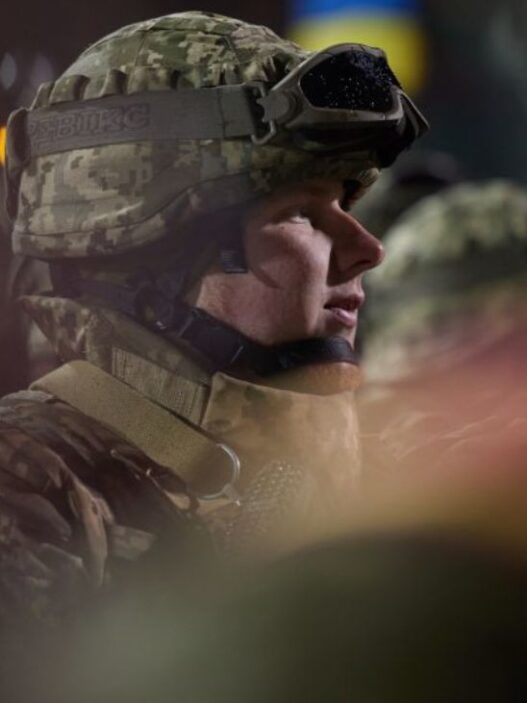
Foreign and security policy offers the strongest example of continuity. Sweden’s NATO membership, support for Ukraine and stronger defence enjoy broad backing across the political mainstream. Neither a Kristersson nor an Andersson government is likely to reverse Sweden’s strategic response to Russia’s invasion of Ukraine.
Russia nevertheless remains part of the election environment. In August, Sweden’s Security Service (Säpo) announced that it had disrupted an operation directed by Russia’s SVR foreign intelligence service. Säpo said the operation sought information about Swedish decision-making and could facilitate influence activities intended to polarise society and discredit Sweden, NATO and the EU. But Swedish authorities make an important distinction between Russian hostile activity and a coordinated campaign against Sunday’s election. The Swedish Psychological Defence Agency says Russia remains the principal threat when it comes to foreign malign information influence, while its current assessment is that Sweden and the election are not currently priority targets.
“Russia is preoccupied with other countries, and Sweden has a sufficiently high resilience.” – Ola Svenonius
Ola Svenonius’s assessment captures the distinction: Sweden faces a persistent Russian threat, but foreign interference has not become the defining dividing line of the election.
Why This Matters for Europe
Sweden is a different European actor from the country that voted four years ago. NATO membership has increased its importance to Baltic and northern European security, while support for Ukraine and higher defence spending have tied Swedish security more closely to its European partners. Sunday’s election is unlikely to undo that transformation. Instead, its European significance lies in who gets to shape Sweden’s position within that new strategic reality.
An Andersson-led government could make Sweden more active in European cooperation while maintaining its security commitments. A renewed Kristersson government could give the Sweden Democrats unprecedented executive influence, strengthening a more sovereignty-focused voice within Sweden’s European policy.
The election therefore offers both continuity and change: broad agreement over the security threats facing Sweden, but a much sharper contest over how the country should govern itself and exercise influence in Europe.
What to Watch Next
Polls close at 20:00 on Sunday. The Swedish Election Authority will then begin reporting preliminary results, but the political consequences may take considerably longer to become clear.
First, watch the balance between the two blocs and whether the Liberals stay safely above four per cent. Then watch the balance within the right: a strong Sweden Democrats result combined with weaker Moderates would strengthen Åkesson’s hand in negotiations. If the Tidö bloc prevails, the central question will be whether the Sweden Democrats enter government for the first time. If Andersson’s bloc wins, attention will instead turn to whether she can construct a stable parliamentary majority from parties with competing economic priorities.
Sweden may know who won the election on Sunday night. Who really gained power could be a more complicated question.
Sources
- Swedish Election Authority (Valmyndigheten) – Distribution of seats. Accessed 11 September 2026.
- Novus – Väljarbarometern, 9 September 2026. 9 September 2026.
- Swedish Security Service (Säpo) – Russian intelligence operation thwarted. 10 August 2026.
- European Council on Foreign Relations (ECFR) – After Tidö: What a centre-left Sweden would change for Europe. 3 September 2026.
- Reuters – Swedish PM Kristersson seeks new term, backing partnership with far right. 11 September 2026.
- EUobserver – Swedish election ‘not a priority’ for Moscow interference, but still a target for troll farms and disinformation. 8 September 2026.