







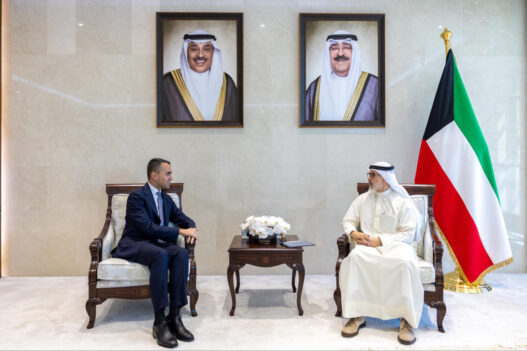
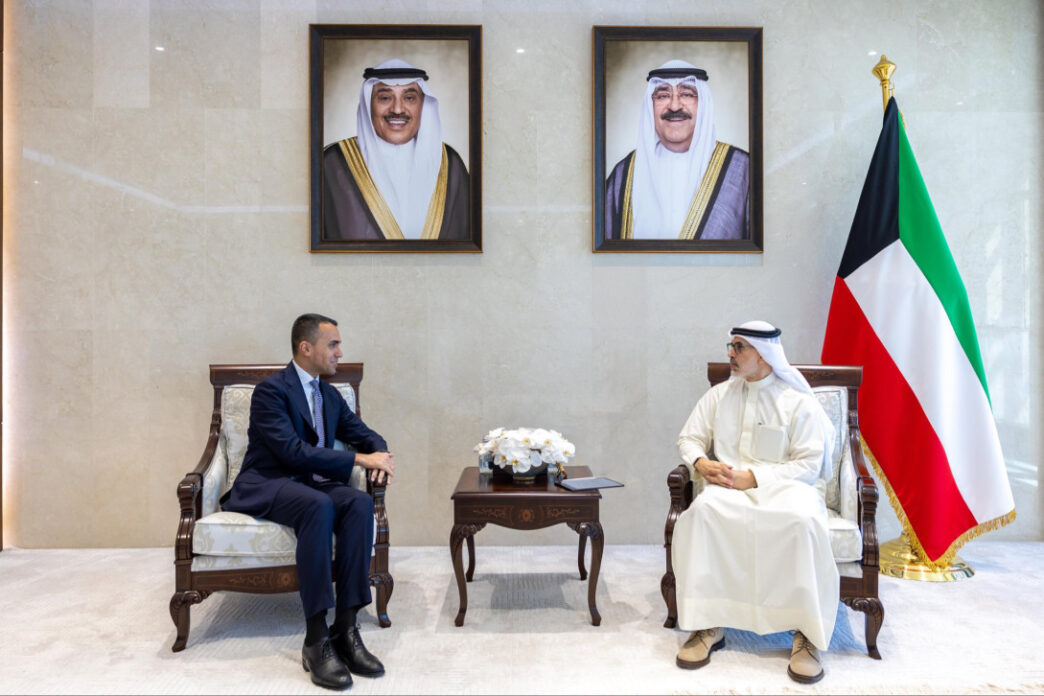
The EU has called for an agreement modelled on the Black Sea Grain Initiative to help reopen the Strait of Hormuz amid the Iran conflict, EU Special Representative for the Gulf Region Luigi Di Maio told Euronews. “After the beginning of the war in Ukraine, we managed, as an international community, to strike a deal between Russia and Ukraine to ensure humanitarian corridors in the Black Sea. We have to do the same with the Strait of Hormuz. We have to guarantee freedom of navigation in the international waters of the Strait of Hormuz,” he said. Di Maio added that EU High Representative Kaja Kallas had spoken with UN Secretary-General António Guterres to advance this diplomatic initiative.
The EU’s representative to the Gulf Cooperation Council is currently undertaking a broad regional tour as the EU-GCC strategic partnership gains momentum. Since the outbreak of the U.S.-Iran war, Europe has moved quickly to support Gulf states, including by providing equipment for self defense and condemning Iran’s attacks across the region. Ukraine has also become increasingly active in the Gulf, offering counter-drone expertise to regional partners in exchange for air defense support as Kyiv seeks to deepen its security ties in the Middle East. Ukrainian President Volodymyr Zelenskyy recently met with Syrian interim President Ahmad al-Sharaa following a visit to Turkey, resulting in a pledge to expand bilateral security cooperation. The EU has expressed support for Ukraine’s efforts to build these partnerships.
Regarding ongoing U.S.-Iran peace talks, Di Maio said the EU supports the “Islamabad initiative” and seeks “a structured solution to this conflict.” He also noted that, over the past year, the EU and Gulf states have been working to deepen their strategic partnership. The war in Iran, however, has transformed this effort into an even greater opportunity to deepen security and defense cooperation.
The Middle East is not the only region where Europe has been strengthening ties. Earlier this year, the EU and India signed a free trade agreement alongside a Security and Defence Partnership, while several European states have also concluded bilateral agreements with New Delhi. Relations between Japan and the EU have likewise reached unprecedented levels, evolving from a primarily trade-based relationship into a broad strategic partnership. This transformation was anchored by the 2019 Strategic Partnership Agreement and Economic Partnership Agreement, which together created one of the world’s largest economic areas.
More recently, in 2024, the EU and Japan launched the EU-Japan Security and Defence Partnership, one of the first such agreements between the EU and an Asia-Pacific country. The pact formalized deeper military and intelligence cooperation. In the economic sphere, Japan and Europe are also working to strengthen supply-chain resilience, secure access to critical technologies and raw materials, and coordinate international standards to reduce vulnerability to external shocks and economic coercion. In late 2024, the EU also signed a Security and Defence Partnership with South Korea.
These developments come at a pivotal moment for Japan. Tokyo’s foreign policy is focused on stabilizing East Asia, deterring China, and preserving freedom of navigation in the South China Sea, objectives that have traditionally depended on sustained U.S. engagement. However, the U.S. redeployment of military assets from the Pacific to support operations in Iran has raised concerns in both Japan and South Korea about Washington’s long-term commitment to the region. President Donald Trump’s recent decision to redeploy missiles from South Korea to the Middle East has further heightened these anxieties. As a result, Japan has continued to strengthen ties with Europe, viewing closer cooperation as a means of bolstering deterrence against China and drawing greater international attention to Indo-Pacific security.
Overall, Europe is steadily expanding and deepening its network of partnerships in pursuit of greater strategic autonomy. In many ways, this mirrors the United States’ post-World War II strategy of building a broad alliance system to project power and shape the international order. Whether Europe ultimately follows a similar trajectory will depend on the continued development of its military capabilities and the resilience of these emerging partnerships.
Sources:
EEAS, EEAS, EU Commission, Euronews, Euronews, Euronews, Japan Ministry of Foreign Affairs