






Updated: 1 May 2026
Summary
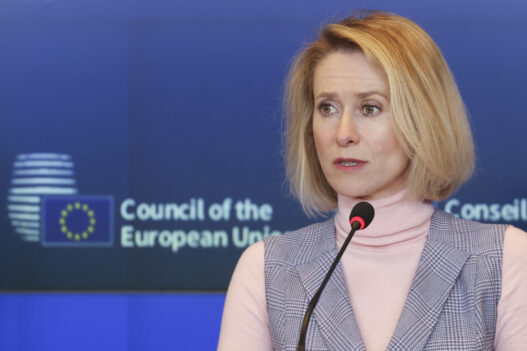
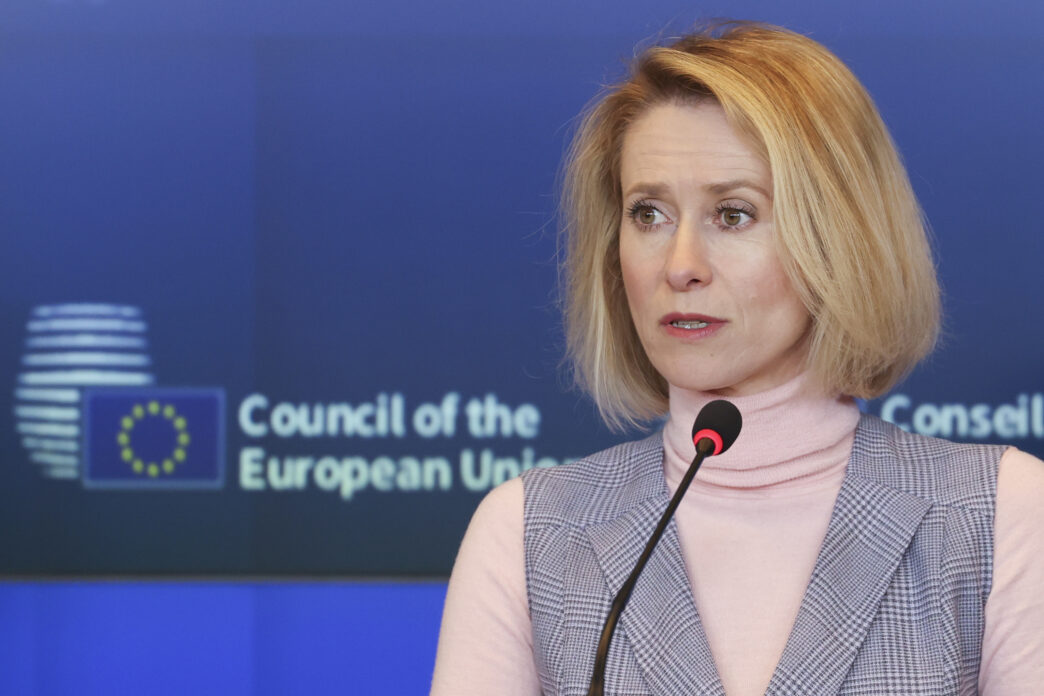
The Foreign Affairs Council (FAC) of 21 April 2026 met in Luxembourg under HR/VP Kaja Kallas across six simultaneous crisis files:
- Ukraine
- Iran/Strait of Hormuz
- Gaza/West Bank
- the South Caucasus
- Sudan
- and Syria.
On Ukraine, Kallas announced an imminent €90 billion macro-financial loan and the prospective unblocking of the European Peace Facility (EPF) weapons fund — both enabled by Hungary’s post-election change of government. Ministers called for fast-tracking the 20th Russia sanctions package and unblocking Ukraine’s accession negotiation clusters.
On Iran, a political agreement was reached to extend EU sanctions to violations of freedom of navigation in the Strait of Hormuz, with formal adoption deferred to May.
On Gaza, proposals to suspend the EU-Israel Association Agreement and impose qualified-majority trade restrictions on settlements both failed.
The EU Partnership Mission in Armenia (EUPM Armenia) was formally adopted ahead of June legislative elections.
On Georgia, firm language was delivered without any sanctions instrument.
The meeting’s strategic yield is asymmetrical: genuine unblocking on Ukraine, a deferred coercive turn on Iran, institutional paralysis on Gaza, and measured signalling elsewhere.
Context
The FAC is the EU’s principal ministerial forum for foreign and security policy, chaired by HR/VP Kallas under the Lisbon Treaty’s double-hat arrangement — a Commission Vice-President and a Council chair — a structural tension that blurs executive and intergovernmental accountability.
Hungary’s blocking of the EPF since 2023 is the most documented dysfunction of unanimity-based EU foreign policy: weapons reimbursements to member states supplying Ukraine were frozen for three years until an external electoral event resolved what EU institutional rules had created but could not correct. The EU Military Assistance Mission Ukraine trained over 90,000 Ukrainian soldiers through bilateral channels, demonstrating EU support routed around Council gridlock at a cost to institutional coherence. Three days after the FAC, on 23–24 April 2026, the 20th Russia sanctions package was formally adopted and entered into force on 24 April; it includes 120 new individual designations — the largest round in two years — as well as the first use of the anti-circumvention instrument (targeting Kyrgyzstan), new restrictions on crypto-assets including the digital rouble, and a ban on maintenance services for Russian LNG tankers.
Analysis
Hungary unblock: structural relief, not systemic reform. The 20th package’s adoption within 72 hours of the FAC confirms the “new momentum” was real — but does not alter the structural argument: unanimity rules remain unchanged, and the next veto by any member state will reproduce the same vulnerability; no institutional reform was agreed.
Gaza: political fracture, not procedural constraint. Spain’s Foreign Minister stated publicly that EU credibility “is being compromised” by inaction on Israel’s violations of international humanitarian law. Both proposals failed for substantive political reasons — a durable north-east/south-west divide. The contrast with the speed of Russia sanctions since 2022, or the Iran agreement reached at this same meeting, is not explained by legal differences alone.
Iran: political agreement as a substitute for deterrence. Formal adoption of Hormuz sanctions is deferred to May — a recurring structural pattern that limits real-time deterrence and allows renegotiation before legal instruments take effect. The IRGC ship seizures of 22 April occurred while the legal instrument was still being drafted — a concrete illustration of the deterrence gap that political agreement alone cannot close.
Georgia: electoral-cycle immunity. Strong language without sanctions follows an established precedent in which the imminence of elections defers accountability measures — a logic that, applied consistently, offers any government an incentive to use the electoral calendar as a shield against EU pressure.
The FAC of 21 April confirms a familiar pattern: the EU moves fast when united, slowly when divided, and not at all when structurally blocked.
Sources
- Kaja Kallas press conference, FAC Luxembourg, 21 April 2026
- A-points list (non-legislative activities), Council of the EU, 21 April 2026
- EEAS announcement / FAC agenda 21 April 2026
- EU Agenda media advisory FAC 21 April 2026
- Crowell & Moring: EU Adopts 20th Russia Sanctions Package, 27 April 2026
- Skuld: Maritime Security Update — Gulf Region / Strait of Hormuz and Red Sea