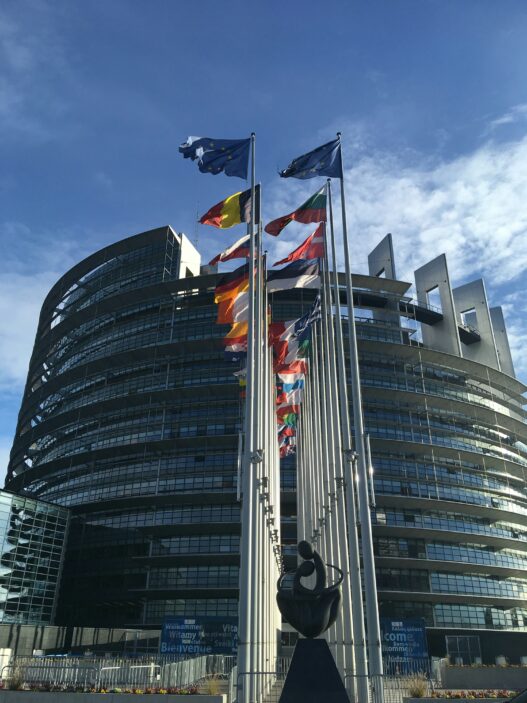












Intense debates within the EU on how to improve the competitiveness of European businesses have led to the Council’s approval, on 24 February, of a simplification of the CSRD (Corporate Sustainability Reporting Directive) and CS3D (Corporate Sustainability Due Diligence Directive). Specifically, this measure reduces both the reporting burden and the associated obligations for smaller enterprises.
The European Commission proposed this “Simplification Omnibus” at the beginning of the month in response to an increasingly unstable geopolitical environment that is threatening EU companies. In practice, enterprises with fewer than 500 employees, as well as larger firms that are not classified as “public interest entities”, are exempt from submitting their sustainability impact reports until 2028. Only EU companies employing more than 1,000 people and generating annual net revenue exceeding €450 million will be legally required to comply with these reporting obligations.
As Marilena Raouna, Deputy Minister for European Affairs of the Republic of Cyprus explains: “Simplification constitutes a top priority for the Cyprus presidency. With today’s decision, we are delivering on our commitment for a European Union which is more competitive. Through the package adopted, we are reducing unnecessary and disproportionate burdens on our businesses, with simpler, more targeted and more proportionate rules, both for our companies and our citizens. For a more autonomous Union, which also means a more competitive Union”.
Policy Background
The first significant call for simplification came with the Budapest Declaration in November 2024, which called for greater efficiency and flexibility in corporate sustainability reporting, particularly for SMEs. A year later, in December 2025, negotiations culminated in EU Directive 2026/47 (the “Detailed Omnibus Directive”), which amends both the CSRD and CS3D. After the Council’s approval, the Directive entered into force on 18 March 2026.
Criticism and Concerns
EU industry has been calling for such changes in light of increasing tariffs from the United States and intensifying competition from Chinese firms. Nevertheless, concerns and criticism have been raised by some campaigners and lawmakers, who fear a potential rollback of the EU’s green agenda. Similarly, the European Central Bank has warned the European Commission and Member States that: “Competitiveness stems from harmonisation, integration, and economies of scale, not from deregulation.”
Sources:
Council of the European Union, Reuters, European Parliament, EU News, Latham & Watkins LLP