







The Soviet Union and its foremost successor state, the Russian Federation, once dominated the chess world. In official world championship matches from 1948 until 1990, the Soviet Union produced every single World Champion, except Bobby Fischer in 1972.
Apart from hosting the most World Championship events, the Russian Chess Federation was ranked as the highest rated until February 2022. Now it sits in 4th, and no Russian player is rated in the top 20 players worldwide, for the first ever. Its players are banned from participating in tournaments under the Russian flag, and it has hosted no recognised FIDE (Chess’ governing body) tournament since.
In this article, I will discuss why Chess is representative of the decline of Russian cultural power on the global stage.
International Isolation
To understand why Russia lost the game of chess, it’s important to understand how it won it. 
Vladimir Lenin was a known chess enthusiast, playing often in exile before the Russian Revolution. In many ways, chess was the ideal revolutionary sport; it was suitable for mass participation and intellectually stimulating. The 1920s Soviet government set up an effective system of chess institutions and training schools, which could identify and develop talent early. This led to the USSR emerging from World War Two with a generation of future World Champions.
At its peak during the Cold War, Soviet chess was a state-backed cultural weapon; its schools, subsidies, and scientists fuelling its dominance. Chess was also an important tool in Soviet propaganda; its dominance portrayed an intellectual superiority over the West.
Russia inherited this dominance, but two events of international isolation shifted its cultural power towards the periphery. The first was the coronavirus pandemic in 2020. The pandemic caused a surge in online participation of chess globally, and alongside the huge success of The Queen’s Gambit, chess experienced a digital boom through 2021.
With chess expanding its player base globally and online, the formerly Soviet system of local schools and clubs left Russia at a disadvantage in chess culture. The rise of English-speaking content creators from across the world, such as GothamChess, Hikaru Nakamura, and the late Daniel Naroditsky, stood as a testament to that.
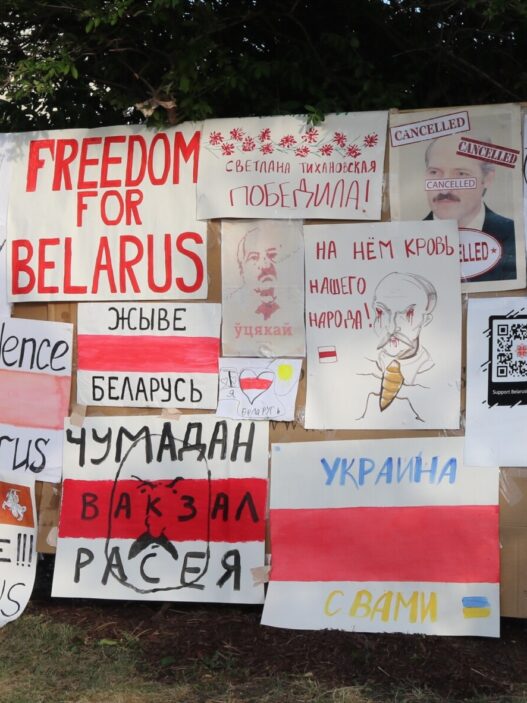
The effects of the coronavirus pandemic were certainly detrimental to Russian influence on chess, but the Russian invasion of Ukraine in 2022 was the final nail in the coffin. Apart from Russia and its chess players being restricted from participation in official chess tournaments, 44 of the top Russian players signed an open letter condemning the war in open defiance of President Putin.
However, Russian institutions didn’t seem to take much notice, banning the most popular chess site, chess.com, and coming out against efforts to sanction Russian chess players by other countries. These efforts not only put the Russian position at odds with the rest of the world but also imposed isolation on its top players and the wider player base from participation.
This rhetoric has continued until the present day and cemented Russia’s retreat and isolation from the mainstream of the chess world. I believe this is indicative of Russia’s wider participation and role in cultural events globally.
Controversial Governance
The second area where Russia is losing chess is in its head governing body, FIDE. Since 1995, the president of FIDE has been a Russian politician. First, it was Kirsan Ilyumzhinov, until 2018. Apart from being noted as eccentric at best and a sanctioned supporter of the Assad regime in Syria at worst, his tenure as the leader of the Chess world received a lot of criticism.
Criticism of his presidency came strongly from former World Champion and Russian dissident, Garry Kasparov, who said of his presidency:
“The event is taking place in the capital of the Russian republic of Kalmykia under the auspices of its president, Kirsan Ilyumzhinov, who is also the president of FIDE. He has created a vertical column of power that would be familiar to any observer of Russia today. He runs the chess world in the same authoritarian way he runs his impoverished republic.”
When looking at his election bids for FIDE president, it isn’t hard to put the pieces together of what was happening. The 2010 election was mired with accusations of foul play, and in 2011, he was pictured with Libyan dictator Muammar Gaddafi.
It is quite clear then that Ilyumzhinov was not being elected on his track record or transparency, which raises the question, whose interest did his presidency serve?
To answer that question, let’s look at the current FIDE president, Arkadiy Dvorkovich. A short look at his Wikipedia page will tell you that he was heavily involved in Russian economic development, an assistant to Vladimir Putin, and the Deputy PM of the Russian Federation from 2012 to 2018.
His only link to the game of chess is through his father, a former official. That again makes you wonder, who in the chess world is electing these people to be the head chess governing body worldwide?
I do not want to point the blame at Russian corruption, but his track record as the current FIDE president bears a certain hallmark. After his re-election in 2022, which was welcomed by the Kremlin, he went back on his criticism of the war in Ukraine by criticising sanctions. He has also overseen the abolishment of term limits for FIDE presidents and reinstated all Russian and Belarusian teams in official competitions. His leadership of FIDE has been strongly questioned by the EU in light of his personal statements on the war (outside of his FIDE duties), which raises the question of if FIDE is being used as a vehicle for Russian interests in chess.
Despite the grip Russia has over FIDE, FIDE has not been prospering in recent years. Recently, it has been heavily criticised by top players for its management of tournaments and ratings. Top-rated player Magnus Carlsen also withdrew from playing any further World Championship matches.
Chess may still be riding a recent wave, but FIDE and Russian chess aren’t on the surfboard. Non-FIDE-sponsored tournaments such as PogChamps have attracted millions of viewers, demonstrating further loss of control over chess in popular culture.
Conclusion
Chess is a leading example of how Russian cultural power is declining worldwide, firstly through its isolation over the war in Ukraine. As a pariah on the international stage, other countries have stepped up to fill the gap in areas left by Russia.
Certainly, poor governance practices can also be attributed to this decline. One only must look at the lack of adaptability to digitalisation during the pandemic, as well as its inability to drive chess culture and produce top players, to see that Russia has completely lost the standing once held by the Soviet Union.
This is important because it shows a real decline in Russian power since 2022. Countries and international organisations do not want anything to do with Russia, which continues to harm it economically, as well as fighting the Kremlin propaganda narrative that Russia is culturally and morally superior to the West.