






As Europe seeks to gain greater strategic autonomy from the United States amid shifting geopolitical dynamics and a more bellicose U.S. administration, India has emerged as a key partner in advancing this objective. Earlier this year, India and the EU signed a free trade agreement that deepened economic ties between the bloc and the subcontinent. At the EU–India Summit, the two sides also signed a Security and Defence Partnership, endorsed by High Representative and Vice President Kaja Kallas and India’s External Affairs Minister, Dr. S. Jaishankar, further strengthening bilateral security cooperation.
According to the European External Action Service (EEAS), the “partnership establishes a comprehensive framework that will structure EU–India dialogue and cooperation on security and defence, and deliver concrete results in areas such as maritime security, cyber, and counterterrorism.” This builds on India’s recent participation in joint maritime activities with EU naval forces, such as its engagement with the EU’s ESIWA+ (Enhancing Security Cooperation in and with Asia and the Indo-Pacific) project. The agreement also expands upon the annual Security and Defence Consultations and the Strategic Dialogue on Foreign and Security Policy launched in June 2025.
At the bilateral level, France has also recently expanded security ties with India as part of efforts to diversify its defence industrial base. The sixth India–France Annual Defence Dialogue, held this week, focused on expanding industrial collaboration. The two countries renewed their existing defence cooperation agreement for a further ten years and concluded arrangements for the reciprocal deployment of officers. In addition, Bharat Electronics Limited (BEL) and Safran Electronics & Defence signed a Memorandum of Understanding to manufacture French HAMMER (Highly Agile Modular Munition Extended Range) missiles in India. These air-to-ground munitions enable long-range strikes against heavily defended targets while allowing aircraft to remain at a safer distance.
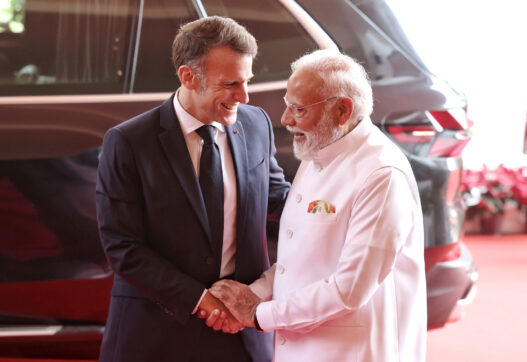
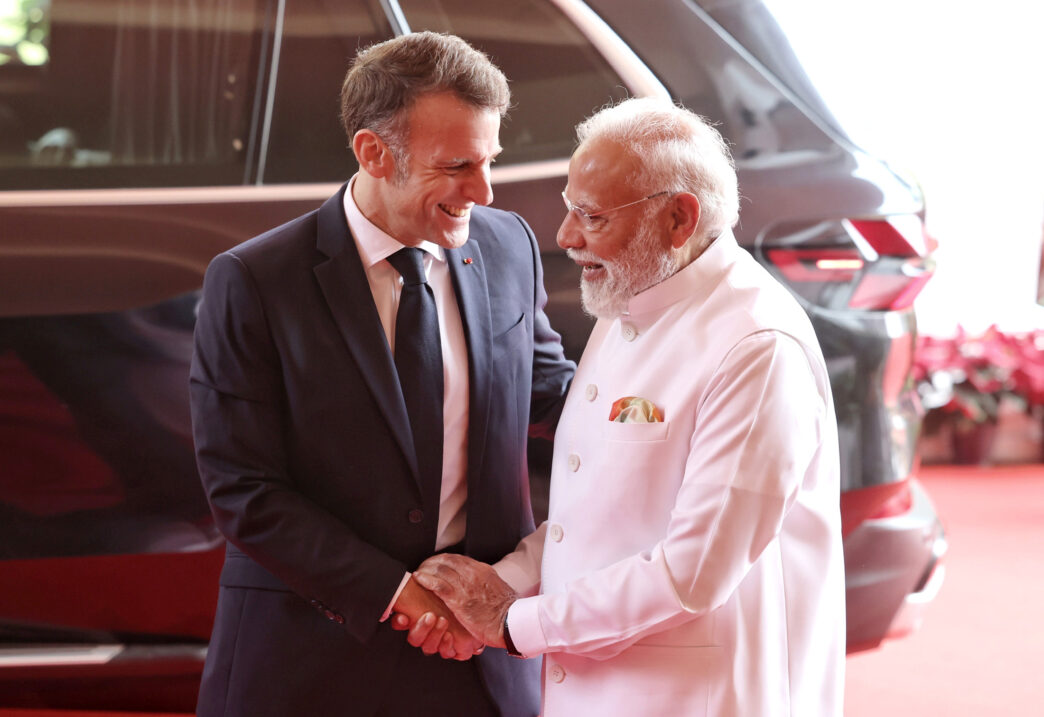
Indian Prime Minister Narendra Modi and French President Emmanuel Macron also virtually inaugurated the Airbus H125 production line in Vemagal, India, the country’s first private-sector helicopter assembly line. These developments align closely with the Defence Dialogue’s emphasis on co-development and co-production of military capabilities.
Overall, as Europe pursues greater strategic autonomy, India has emerged as a major economic and security partner. The agreements reached will advance both sides’ geopolitical interests, enabling India to gain increased access to advanced military technologies while allowing Europe to diversify defence production chains and reduce its reliance on the United States for key security and defence needs.
Sources
Airbus, DefenceIn, EEAS, European Commission, Safran, Times of India, Tribune India, Tribune India.