










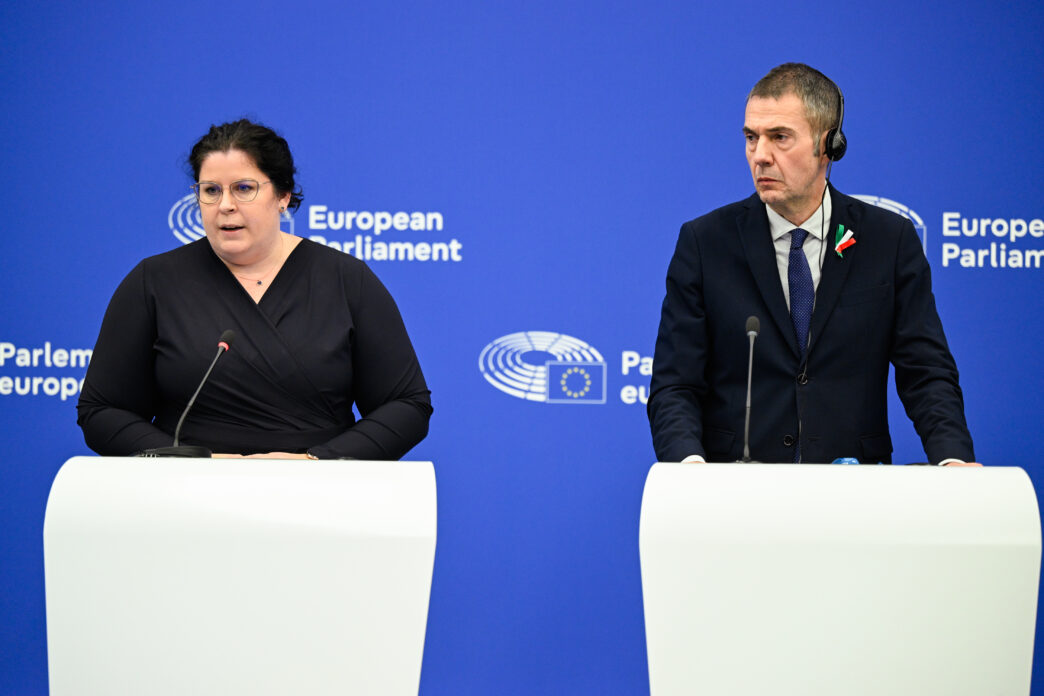
On 10 February 2026, the European Parliament approved new EU rules on the safe third country concept and the EU-wide list of safe countries of origin. While the Parliament’s vote marks an important step (408 in favour, 184 against and 60 abstentions), the text still requires formal adoption by the Council before it becomes law.
The reforms introduce a common list of safe countries — Bangladesh, Colombia, Egypt, India, Kosovo, Morocco and Tunisia — and presume EU candidate countries are safe for their own nationals. Member States can now apply accelerated procedures for asylum applications from these groups. The rules also introduce new criteria for Member States to determine whether a country can be considered safe for applicants who are not nationals, expanding flexibility in assessing asylum requests. These changes aim to standardise procedures across the EU, reduce disparities between national approaches, and provide a clearer legal framework for deciding (in)admissibility.
However, the most substantial innovation is that EU countries will be able to conclude agreements with third countries to examine requests for protection. Beyond this, Member States may declare an asylum application inadmissible under the safe third-country concept in three scenarios: if the applicant has a connection to the third country—such as family members, prior residence, or linguistic, cultural, or similar ties; if the applicant transited through the third country on the way to the EU and could have requested effective protection there; or if a bilateral, multilateral, or EU-level agreement exists with the third country for admitting asylum seekers, except in the case of unaccompanied minors. Implementing them will require partner countries to have sufficient institutional capacity, legal safeguards, and human rights protections, including access to judicial review and compliance with non-refoulement obligations.
However, the new EU framework does not automatically regularise existing bilateral schemes such as Italy’s protocol with Albania. Under the EU rules, the third country designated as safe is expected to assume responsibility for examining asylum claims on its own territory and under its own legal system. This differs from the Italian arrangement, in which procedures are conducted under Italian jurisdiction inside facilities located in Albania. As a result, the European legislation does not directly validate or legalise the bilateral model, which remains subject to judicial scrutiny under both EU and national law.
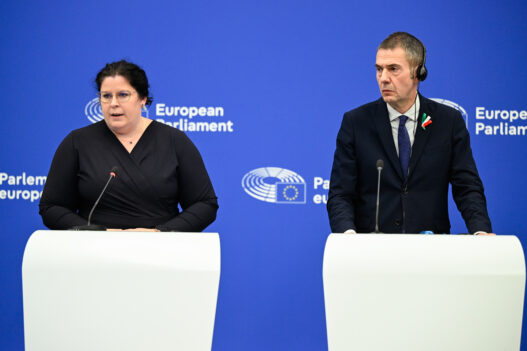
Italy has nonetheless been one of the most vocal supporters of the reform. Interior Minister Matteo Piantedosi described the Parliament’s vote as a great success for Rome, arguing that the EU framework reflects strategies already promoted by the Italian government. Also Italian MEP Nicola Procaccini likewise framed the EU developments as evidence of Italy’s influence on European migration policy.
If the Council formally adopts the text and Member States succeed in negotiating workable third-country agreements, the reform could mark a new phase in European migration governance—while leaving unresolved legal questions around existing bilateral models.
Sources:
- https://www.ansa.it/english/news/politics/2026/02/10/eu-has-adopted-italy-migrant-strategy-says-procaccini_7aeb27ff-fead-4054-8233-15e791a047b4.html
- https://www.europarl.europa.eu/news/en/press-room/20260205IPR33617/asylum-new-rules-for-safe-third-countries-and-eu-safe-countries-of-origin-list
- https://www.ansa.it/english/news/2026/02/10/ep-ok-for-list-of-safe-countries-great-success-for-italy-says-piantedosi_a080b981-e59f-4dcd-aacd-b277ddd35dee.html
- https://www.consilium.europa.eu/en/press/press-releases/2025/12/18/safe-third-country-council-and-european-parliament-agree-on-new-eu-law-restricting-admissibility-of-asylum-claims/
- https://ec.europa.eu/assets/home/emn-glossary/glossary.html?letters=e&classification=6.2&detail=safe+third+country