







Russia’s Winter Strikes Deepen Ukraine’s Energy Crisis as Kyiv Seeks Stronger Air Defence and International Support
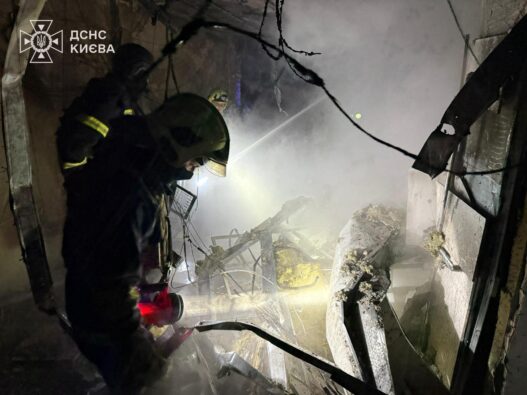
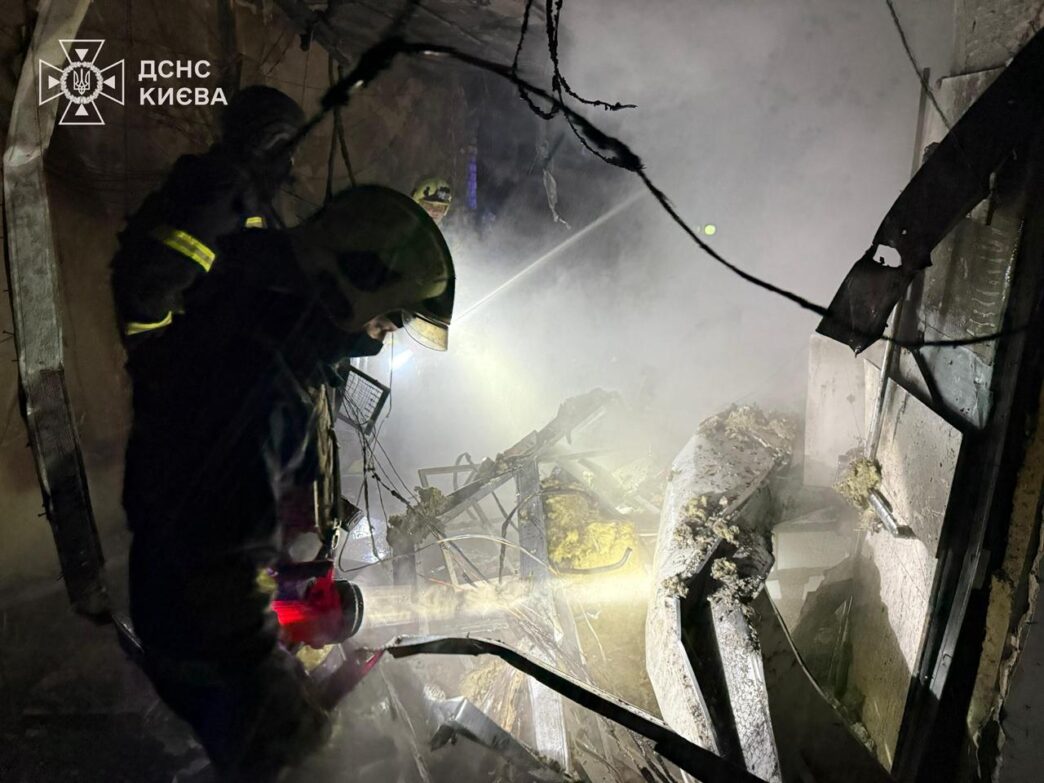
Russia carried out a massive aerial attack on Ukraine on January 24, launching nearly 400 missiles and drones at cities including Kyiv, Kharkiv, Dnipro, and Zaporizhzhia. The strikes killed at least one person and injured dozens more, while severely damaging Ukraine’s energy infrastructure. As a result, about 80% of the country experienced emergency power outages, worsening an already critical winter energy crisis.
Kyiv was hit especially hard. One person was killed, several others were injured, and thousands of apartment buildings lost heat. By January 25, around 15% of Kyiv’s residential buildings, more than 1,330, still had no heating, leaving many residents without warmth during freezing temperatures. Emergency heating shelters were set up across the city as repair crews worked to restore services.
The attacks are part of Russia’s ongoing strategy of targeting Ukraine’s power, heating, and water systems to pressure the population during winter. President Volodymyr Zelensky said that Russia has launched thousands of drones, bombs, and missiles in recent weeks and called on Western allies to provide more air-defence systems to protect Ukraine’s skies. He stated:
“Every massive attack by Russia can become devastating. That is why missiles for air defence systems are needed every day, and we continue working with the United States and Europe to ensure stronger protection of our skies.”
At the same time, diplomatic tensions rose between Ukraine and Hungary. Hungarian Prime Minister Viktor Orbán accused Ukraine of interfering in Hungary’s parliamentary elections, scheduled for April 2026, and threatened to block Ukraine’s EU membership. Orbán claimed Ukraine’s aim was
“to secure funds and force their way into the European Union as soon as possible, [but] as a member of the European Union, Hungary has the right to say no.”
Ukraine’s foreign minister, Andriy Sybiha, strongly rejected these claims, accusing Orbán of acting in Russia’s interests and undermining Ukraine’s European integration:
“Viktor Orban and his team do not care about the well-being and security of Hungarians living in Ukraine. […] By blocking Ukraine’s EU membership, Orban is fulfilling Putin’s wishes.”
Despite the attacks, Ukraine continued to receive international support. President Zelensky met with Lithuania’s president in Vilnius, where Lithuania pledged nearly 100 generators to help Ukrainian cities cope with power outages, along with continued military and energy assistance.
Overall, the January 24–25 attacks deepened Ukraine’s humanitarian crisis, leaving millions without reliable heat and electricity, while international political and military support remains crucial for Ukraine’s survival and defence.
Commentary, opinion and geopolitical contextualization by the author:
It is deeply troubling to see U.S. President Donald Trump divert the attention of the European Union and its member states away from Ukraine and toward Greenland. A NATO ally threatens to annex part of another NATO member, Denmark, only to backtrack and cheerfully announce a “deal” that appears to contain exactly what Trump could have achieved without all the theatrics.
Ukraine has no time for the imperial superpower fantasies of an old and increasingly erratic man in the White House, who not only governs his own country with an increasingly autocratic hand, epitomised by agencies such as ICE, but also repeatedly manipulates European leaders through a pattern of threats, delay, and sudden “deals.” The pattern is familiar: threaten, wait, and then announce a supposed breakthrough.
If someone demands your sandwich every day in the schoolyard, do you keep handing it over? No. At some point, you have to stand your ground. Trade war? No, we do not want one, but if it is imposed, we must meet it. Confrontation? No, but if it is forced, it must be faced. Appeasement has failed. Europe must now assert itself as a strong political actor and support Ukraine together with other middle powers, in line with the so-called “Carney Doctrine”: respect for international law and rules, not the law of the strongest. Otherwise, we’ll end up on the menu, as Canadian Prime Minister Mark Carney said in its speech at the World Economic Forum in Davos, “if you’re not at the table, you’re on the menu.”
Current trilateral talks between Ukraine, the United States, and Russia in Abu Dhabi, hosted by the United Arab Emirates, which itself has been accused of contributing to the devastating war in Sudan by supporting the Rapid Support Forces (RSF), are a mockery for Ukraine and its citizens. Trump will make another grand announcement, but there will be little substance behind it, beyond advancing Russia’s strategic interests. Ukrainians have heard these promises countless times; their immediate concerns are food, warmth, and survival.
Another initiative to proclaim himself as “the peacemaker” is Trump’s so-called “Board of Peace”. The “Board” is little more than political theatre. It risks generating more instability than peace in the world, driven by the ambitions of a would-be strongman rather than genuine diplomacy. Europe has no choice but to stand up to the bullies of the international schoolyard.
Sources:
Kyiv Independent, Kyiv Post, The Guardian, Billcara, World Economic Forum and European Relations.