








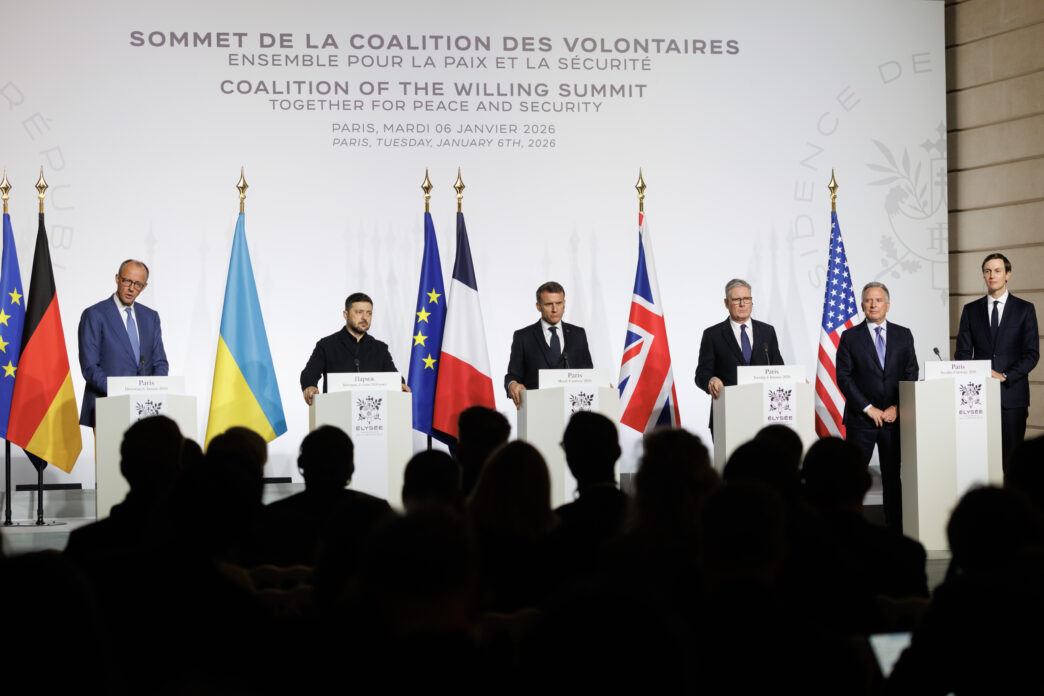
Paris Summit on Ukraine Security Guarantees: A step forward Toward Peace or Fragile, Transactional Promise by Washington?
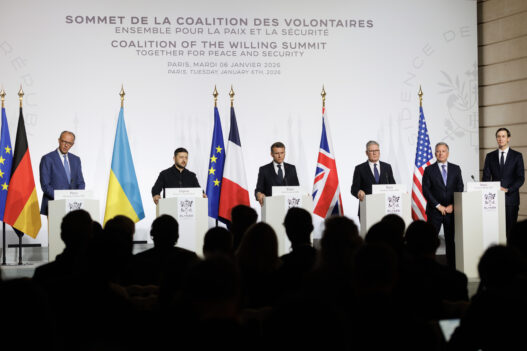
At a summit in Paris, the United States backed a coalition of Ukraine’s allies (the “Coalition of the Willing”) in committing to security guarantees intended to support Ukraine in the event of another Russian attack. US Special Envoy Steve Witkoff said that security guarantees for Ukraine are “largely finished” following a significant meeting involving leaders from around 35 countries, including European nations, Canada, the United States, the EU, and NATO. The talks focused on finalising postwar security arrangements for Ukraine in the context of a potential peace deal with Russia. He added:
“We think we’re largely finished with security protocols which are important so that the people of Ukraine know that when this ends, it ends forever.”
Witkoff also said that the United States wants to pursue parallel efforts to develop a major postwar economic and reconstruction agreement for Ukraine, potentially involving firms such as BlackRock, arguing that economic recovery is closely linked to lasting security.
At the meeting, participants pledged to continue equipping and training Ukraine’s front-line forces and to provide air, land, and sea support to deter future Russian aggression. A key development was the signing of a joint declaration by the United Kingdom, France, and Ukraine outlining plans for a postwar “Multinational Force.”
At the same time, Germany’s Chancellor Friedrich Merz did not sign the troop pledge. However, he signalled openness to further German involvement, including the possible deployment of troops in neighbouring countries. The United States has agreed to back the multinational force if it comes under attack. Under the plan, British and French troops would be deployed on the ground in Ukraine, supported by U.S. guarantees, to provide reassurance and assist in rebuilding Ukraine’s military. Britain and France are also expected to establish military hubs inside Ukraine to facilitate deployments and protect weapons and equipment. It is important to note that the United States did not explicitly endorse the joint statement.
The joint plan includes a U.S.-led ceasefire monitoring and verification mechanism to track violations and assign responsibility, long-term military assistance to Ukraine, a European-led multinational peacekeeping force, additional military aid and sanctions in the event of renewed Russian aggression, and expanded defence cooperation with Kyiv.
UK Prime Minister Keir Starmer said peace was “closer than ever,” while cautioning that complex negotiations remain and that Russian President Vladimir Putin has not shown readiness to compromise. French President Emmanuel Macron described the meeting as a significant milestone toward achieving robust and lasting peace.
Jared Kushner also attended the talks, emphasising that while peace is not guaranteed, it would not be possible without the progress made in Paris.
Russia has rejected the idea of NATO or European troops being stationed in Ukraine and has warned that such forces would be considered legitimate targets. Meanwhile, the United States has signalled its intention to lead a high-tech effort to monitor any future ceasefire line and determine responsibility for violations. European officials view the U.S. decision to provide a military backstop as a potential game-changer in negotiations.
Although the final statement was not formally endorsed by Washington and softened earlier language regarding direct U.S. military support, European officials said the presence and statements of U.S. envoys demonstrated clear American backing for the security framework, while also highlighting renewed transatlantic unity. While the statement signals progress on the surface, key issues remain unresolved, particularly territorial disputes and proposals for demilitarised zones.
Commentary and contextualization by the author:
It remains to be seen whether the Paris summit will deliver genuine progress toward peace for Ukraine, or whether these commitments amount to short-term, transactional promises by the Trump administration that could change following a phone call between Russian President Vladimir Putin and U.S. President Donald Trump.
The meeting also took place amid growing tensions between the United States and the European Union, as the U.S. president has increasingly insisted on acquiring Greenland, citing American security concerns and warning of growing Chinese and Russian influence in the Arctic. Trump appears to be drawing on the “Monroe Doctrine”1, which he has rebranded and reinterpreted, using a play on his first name as the “Donroe Doctrine,” to frame South America, Canada, and Greenland more explicitly as part of the U.S. sphere of influence. The recent capture of Venezuela’s authoritarian leader, Nicolas Maduro, is cited as an example of this interventionist approach, aligned with the broader “America First” policy framework.
This stance has unsettled traditional allies, as Greenland is part of Denmark. Denmark has stated that a U.S. military seizure of the island would effectively mark the end of NATO. EU partners have publicly expressed their support for Copenhagen. It therefore remains to be seen whether the United States may seek to link the Greenland issue to discussions on security guarantees for Ukraine. This move would be consistent with Donald Trump’s transactional, deal-making style.
Sources: Kyiv Post, Reuters, New York Post, AP News and Vox.
- The Monroe Doctrine, articulated in the 1823 State of the Union by U.S. President James Monroe, declares that the American continents are effectively separate from European interference. The doctrine was initially defensive and isolationist, but later justified U.S. intervention to protect American independence and regional stability. ↩︎