







Last November, the European Commission published the enlargement reports for 2025. The press release asserts that, “a larger Union means a stronger and more influential Europe on the global stage”. Yet whether a larger Union would automatically translate into a stronger one – in terms of decision-making efficiency, geopolitical influence, and security credibility – is far from obvious. EU enlargement will prove to be an opportunity only to the extent that potential new members demonstrate a durable commitment to collective decision-making, a clear alignment with the Union’s foreign and security policy, and potentially contribute to long-awaited internal reforms. In other words, the enlargement should strengthen, instead of dilute, the EU’s geopolitical coherence and capacity to act. A country-by-country assessment is necessary for the new enlargement round to catalyse the Union’s transformation into a credible geopolitical actor rather than deepen its internal fragmentation and risk paralysis. Hence, a successful enlargement demands a realistic understanding of both its risks and opportunities. To make this case, the article first distinguishes the internal and external challenges of enlargement, then explains why these simultaneously represent strategic opportunities. Finally, it turns its attention to the most realistic candidates, applying the general remarks to the specific cases of Albania, Montenegro, Ukraine and Moldova.
1) Challenges
The challenges posed by the enlargement are of two interconnected categories. Internally, the cohesion and decision-making efficiency of the Union are at stake, especially in sensitive and still widely intergovernmental areas such as common foreign and security policy (CFSP) and the EU long-term budget. Externally, new accessions will reshape the organisation’s borders, geopolitical posture and security environment. Since internal cohesion and efficient decision-making are instrumental to a solid and coherent external action, the two dimensions are closely tied together.
1.1 – Internal challenges
“The more, the merrier” rarely applies to decision-making, especially when members differ in their cultural and socio-economic backgrounds. The current ten aspiring members can be divided into four regions: Western Balkans (Serbia, Bosnia and Herzegovina, Kosovo, Albania, and North Macedonia), Eastern Europe (Ukraine, Moldova), the Middle East (Türkiye) and the Caucasus (Georgia). This number and diversity raise two issues.
First, enlargement must depend on a genuine and long-term commitment to the Union, avoiding new members who aspire to be part of the organisation not to pursue the collective interest, but their own. To put it simply, members could condition their consent on unilateral privileges, stalling decision-making processes that require unanimity. This is the case of CFSP, where the geopolitical role of the Union has been hindered by what has been described as “soft-hostage taking” of EU foreign policy. In essence, the expression refers to the practice of subtly linking the threat of exercising veto power against a CFSP decision to extract some concession in another unrelated negotiating context. The most evident case is that of Hungary, which has repeatedly used “its veto power in relation to key EU foreign policy decisions in the context of the Russia-Ukraine war […] to gain leverage in its rule of law conflict with the EU”. 
Beyond the issue of lasting good faith, the Union should also pay particular attention to the coherence of potential new members among themselves and with the current ones. Some candidate countries are predominantly Muslim (Türkiye, Albania, Bosnia and Herzegovina), prompting debates over Europe’s asserted “Christian heritage”. While freedom of religion is a cornerstone of the European Union, a greater religious diversity enhances the risk of identity politics. More concretely, unresolved regional ethno-national disputes deriving from the dissolution of the former Yugoslavia might resurface within the Union. Relations between Serbia and Bosnia and Herzegovina are impaired by the secessionist attempts of the Republika Srpska, while the status of Kosovo, which already divides Member States, marks the distance between Serbia and Albania. Thus, the risk of EU decision-making processes being hindered when consensus needs to be reached among Belgrade, Sarajevo, Tirana, and Pristina cannot be underestimated.
1.2 – External challenges
Choosing the right opponent is just as important as picking the right teammates. The war in Ukraine marked a significant turning point in European history. Three decades after the collapse of the Soviet Union, tides have shifted, and rearmament is high on the agenda of both the EU and Member States. In a context where the Western world has already been accused of “barking at the gates” of Russia, accepting new countries that were once in Moscow’s sphere of influence is an extremely delicate manoeuvre, which could provoke retaliation with hybrid tactics.
Beyond the obvious example of Ukraine, two other applications are critical, namely those of Chișinău and Tbilisi. While Moldova faces the breakaway state of Transnistria, Georgia, which suffered a Putin-led invasion in 2008, continues to deal with Abkhazia and South Ossetia. Separatist regions and frozen conflicts resemble pre-2022 Ukraine, and a definitive European turn by these countries could trigger similar consequences. The issue is not merely political, but also of a military nature, as Transnistria, Abkhazia and South Ossetia are widely regarded as being under Russian occupation. The Commission’s report about Moldova states that, “the EU remains fully committed to supporting […] the sovereignty and territorial integrity of Moldova”, but it remains unclear how this goal could realistically be achieved, and whether the EU is willing, or able, to take on security responsibilities. Furthermore, even if sovereignty were fully restored, Russian influence would remain pervasive.
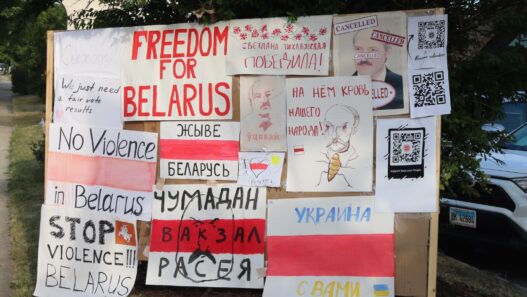
This leads us to another type of external challenge, that of foreign interference, especially when carried out through cyberattacks and disinformation campaigns aimed at shaping elections and public opinion. In the digital age, hybrid tactics can reach unprecedented sophistication, which Russia uses to erode faith in democracy by fueling polarisation and distrust in government, specifically targeting elections to support pro-Kremlin candidates or cast doubt on democratic legitimacy.
2) Enlargement as an opportunity
As former President of the European Central Bank Mario Draghi pointed out, 2025 will go down in history as the year the EU realised that its internal market does not itself guarantee strong leverage in international relations. Examples of the Union’s marginal geopolitical relevance can be found in the tariffs imposed by the United States of America, our closest ally and biggest commercial partner, or in the secondary role played in the Ukraine-related negotiations, despite the Union’s geographical position and financial support to the country. Brussels needs to gain geopolitical weight, or the Union will be toothless in a time of increasingly muscular international relations and unreliable partnerships.
With this in mind, the claim that enlargement should be avoided to protect the Union is flawed, since the risks connected to enlargement already affect the Union. A few examples will illustrate this. In 2024, polarisation between pro-European and pro-Putin factions culminated in the Romanian Constitutional Court annulling the first round of Romania’s presidential elections due to significant foreign interference and ordering a restart of the entire process. In 2025, numerous Russian-linked drone incursions violated EU Member States’ airspace, including Poland, Germany, and Belgium.
While refraining from enlargement would not reverse the EU’s current trajectory towards geopolitical marginalisation, the risk of highlighting the Union’s weaknesses and contradictions should be regarded as a necessary incentive to address them. What this means in practice is that, in addition to the essential respect for the “Copenhagen criteria” for accession, a particular weight should be given to two factors. First, a deep-rooted, society-wide and long-lasting drive to contribute to the Union. Second, a strong alignment with the EU’s foreign and security policy, without ambiguity. On the internal side, the candidates should be able to guarantee a fair participation in EU decision-making, and possibly be open to reforming the unanimity requirement in foreign policy. On the external side, states that the Kremlin tries to influence should be carefully considered in light of the Union’s ability to mitigate Russian interference. On the flip side, these are exactly the countries that could bring into the Union the kind of experience and geopolitical awareness that it needs. For instance, Ukraine now possesses invaluable military knowledge in crucial fields such as hybrid and drone warfare. Ukraine’s expertise is set to play a vital role in the European defence of the coming decades, starting with the proposal to establish an effective yet economically sustainable “drone wall” on the Union’s eastern flank.
3) The realistic candidates
The Commission’s press conference on the enlargement identified four realistic candidates for the next enlargement round, namely: Albania, Montenegro, Moldova and Ukraine. This allows us to set aside, for now, countries whose accession would pose deeper challenges, such as Serbia, Türkiye and Georgia.
3.1 – Albania and Montenegro
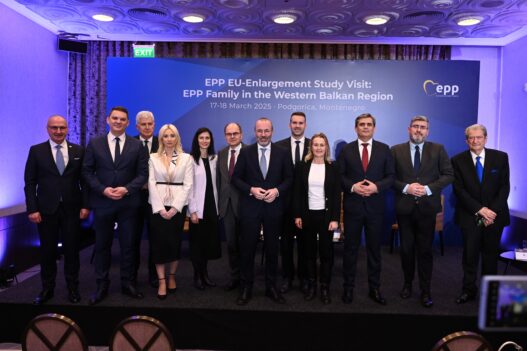
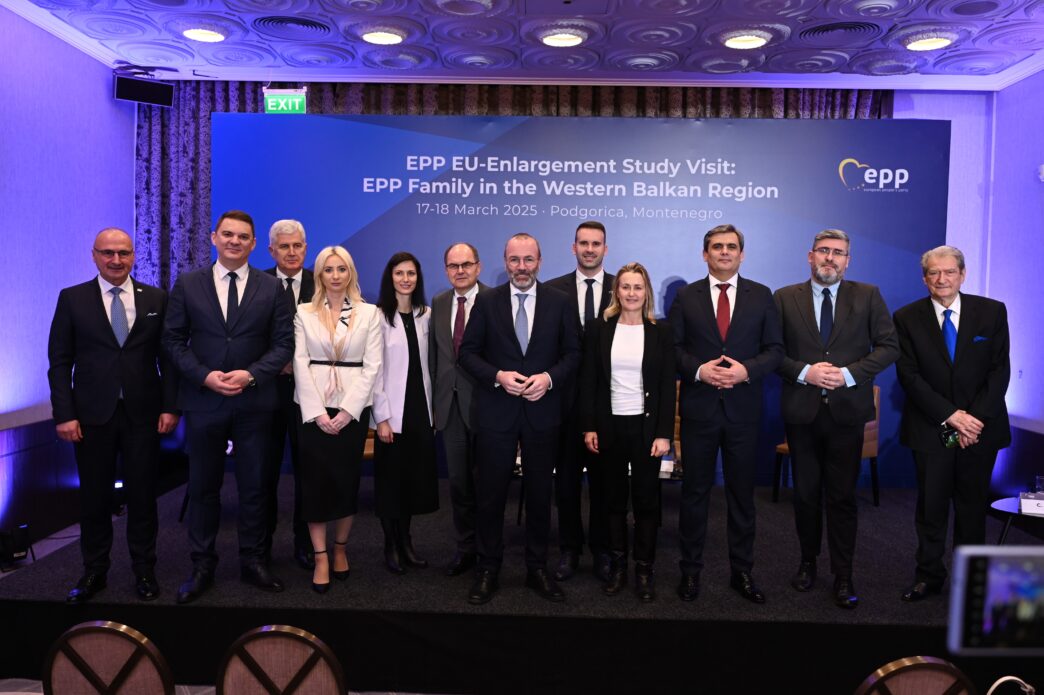
These two Western Balkan countries stand as the frontrunners for accession, as the negotiations with Podgorica could end this year and the ones with Tirana by 2027. The foreign policies ofMontenegroandAlbaniaalign closely with the Union’s one, and structured cooperation already exists in security and defence. At the 2025 MED Dialogues Western Balkan countries roundtable, representatives of both candidate countries expressed their enthusiasm for an imminent accession. For instance, Albanian Minister for Europe and Foreign Affairs, Ms Spiropali, defined her country as the most pro-EU one in Europe, highlighting how the war in Ukraine strengthened the determination to join the Union. The North Macedonian Deputy Minister of Foreign Affairs, Mr Zoran Dimitrovski, expressed the wish that accession could come as soon as possible, not only for his country, but for Moldova as well. The Montenegrin Minister of Foreign Affairs, Ervin Ibrahimović, stressed the contribution that his country could bring to the Union in terms of consensus-building and good-neighbourly relations, something that currently is and will continue to be much needed.1
Overall, the realistic enlargement to Albania and Montenegro presents more opportunities than risks. The two countries are pushing for the accession, and they have taken significant steps in that direction. Their foreign policy could be well integrated within the Union, and they are both situated in an area that, between EU Members and aspiring ones, has a positive posture towards the Union. Moreover, while Albania is a predominantly Muslim country, institutional secularism leaves little room for religion in politics, and the Commission’s report on Albania does not raise concerns comparable to those noted in the one on Türkiye.
As far as the external dimension is concerned, the Western Balkan region has historically been a target for Russian influence. Montenegro, the last country to separate from Serbia, has historically been close to Belgrade, and therefore to Moscow. The Russian influence on the country normally relies on the Pan-Slavic narrative, and is exercised through media, economic relations and religious affiliation, but in the past it did escalate into a direct intervention. In 2016, agents working for Serbia and Russia attempted a coup to prevent Podgorica from joining NATO. Yet, Moscow’s grip has weakened in recent years, and Montenegro has been regularly acting in consonance with EU policies. For instance, it fully aligned with sanctions and restrictive measures related to Russia’s war of aggression against Ukraine.
3.2 – Ukraine and Moldova
Ukraine and Moldova, whose bids were filed in the wake of Russia’s invasion and are usually treated jointly, are different in scale, symbolic weight, and geopolitical implications. Their governments are strongly pushing to bring their respective countries into the Union. President Sandu was re-elected alongside a referendum constitutionalising the Moldovan EU aspiration, while President Zelensky rejected the proposal of becoming a “semi or demi Member of the EU”, pursuing a “fully-fledged EU membership”.
Despite their governments’ commitment, enlargement requires unanimity, and the accession of Ukraine and Moldova will probably have to face the Hungarian veto. However, Prime Minister Orbán’s opposition might be another example of his hostage-taking tactic, and could therefore be overcome if Brussels were ready to pay the price tag. In addition, his wide obstructionism could actually trigger reforms on the enlargement procedure, as more countries are pushing for qualified majority voting to outflank Hungary.
Notwithstanding the procedural obstacles, the bids of Moldova and Ukraine cannot be ignored. In the eyes of Ukraine, the EU membership plays a crucial securitarian role. The question is then whether the EU is willing to take on this responsibility. On top of that, there is also the issue of what Ukraine will look like when it becomes a Member State, and the answer depends entirely on how the conflict will end. Should post-war Kyiv emerge with diminished pro-Russian elements, Ukraine will likely display widespread and enduring pro-EU sentiment.
Moldova, on the other hand, poses significant challenges and will most likely serve as the credibility stress test for EU enlargement policy. While it is true that a referendum was held – and won – to constitutionalise the path towards EU membership, it is also true that the referendum was decided by a very thin margin. Beyond the above-mentioned breakaway state of Transnistria, the autonomous region of Gagauzia remains, ten years after the first 2014 referendum, massively Eurosceptic. In addition, its former leader Yevgenia Gotsul has recently been sentenced to prison for funnelling Russian money to finance its political party. While the government’s commitment to joining the Union is remarkable, it is fundamental to avoid a shortsighted approach. As Moldovan society remains divided and exposed to Russian influence, in the long term a very different government could run the country. The 2025 report concluded that Moldova’s parliamentary elections of last September were “marred by serious cases of foreign interference, vote-buying schemes, illegal funding, and cyberattacks”, and that “extensive disinformation […] hindered voters’ ability to make an informed decision”. However, the Moldovan government went all-in with the EU integration, and letting down such a committed candidate could damage the Union’s credibility and signal unreliability to other aspiring states.
Conclusions
A Union that remains internally fragmented and externally hesitant will continue to have a poor strategic standing. Enlargement is challenging but, if handled properly, can be beneficial. In a time of geopolitical uncertainty, priority should be given to candidates that demonstrate a genuine commitment to collective decision-making and a foreign policy aligned with EU strategic objectives. Paraphrasing what the North Macedonian Deputy Minister of Foreign Affairs, Mr Zoran Dimitrovski, noted at the aforementioned MED forum, the European Union went from being a community of hope to being a community of fear. Provided that the candidate countries meet the internal and external requirements examined in this article, new members are likely to bring renewed enthusiasm and political momentum to the Union.
All four countries examined are passionately driven towards the EU. Moldova and Ukraine are the most sensitive cases, as they encroach on Moscow’s interests. The Union must meet pro-EU Moldovans’ expectations and counter Russian propaganda to prevent the rise of a Eurosceptic government in Chișinău that could act as a Trojan horse in Brussels. As far as Ukraine is concerned, Kyiv’s military experience and know-how are increasingly strategic as the US involvement in Europe’s defence, especially from Russia, is less certain.
In conclusion, enlargement is an opportunity that the Union cannot afford to miss. Candidates capable of contributing constructively to EU decision-making and aligning with its strategic objectives must be prioritised. If enlargement is handled with realism, safeguards, and strategic vision, the risks of today can become the foundation of a more united and influential European Union tomorrow. Ultimately, enlargement can strengthen the Union only if it reinforces internal cohesion and enhances the EU’s capacity to act collectively in foreign and security policy. The North Star of enlargement should be found in President Costa’s speech at the EU Enlargement Forum: “as we face external threats, particularly from Russia, the alignment of our candidates with the European Union’s common foreign and security policy is key […]. This is not just an economic partnership, it’s a strategic one, reinforcing our collective security and global influence”.
- corrected after publication ↩︎