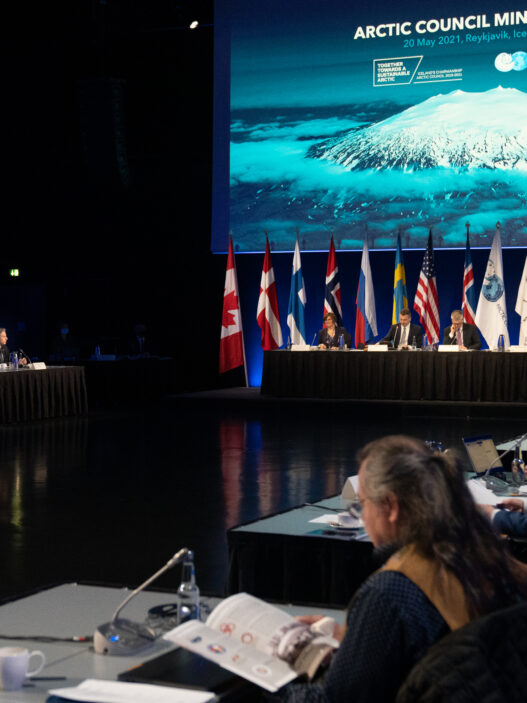






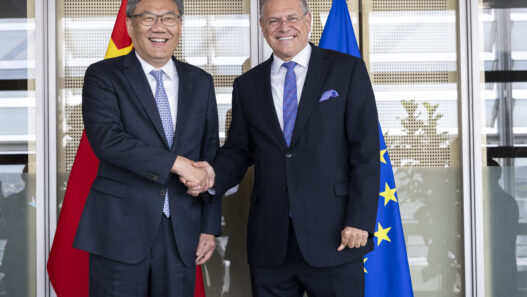


The European Council has agreed on EU’s commitment to remaining a reliable humanitarian donor amid global challenges
The conclusions highlight EU’s commitment to international humanitarian law and humanitarian principles
The Council called for a more coordinated Team Europe humanitarian diplomacy
It also welcomed the establishment of the “protect aid workers” mechanism
Source: European Council
More Quick Briefs:
·EU Enlargement·Geopolitics·Inside Europe·Western Balkans·Accession Treaty·EU membership·EU States·European Commission·European Parliament·European Union·Montenegro
·EU Enlargement·Geopolitics·Inside Europe·Western Balkans·Accession Treaty·EU membership·EU States·European Commission·European Parliament·European Union·Montenegro
Montenegro Advances in EU Accession Talks ↗︎
Montenegro and the EU provisionally closed two more negotiating chapters in Brussels on 6 November, leaving ten open as Montenegro aims to join the bloc in 2028.
→What changed: The two chapters cover the free movement of goods and rules on food safety, animal health and plant health
→Where talks stand: Montenegro has provisionally closed 23 of 33 chapters. The EU will continue to monitor how Montenegro applies its rules and can reopen chapters if needed
→What remains: The remaining chapters include key rule-of-law reforms. The European Commission says talks could conclude by the end of 2026 if Montenegro sustains reforms and EU member states agree
→Path to membership: The Commission’s roadmap points to June 2027 as a possible date for signing the accession treaty. The European Parliament must give its consent, and Montenegro and all EU member states must ratify the treaty before accession
→Sources: Council of the EU, Vijesti
·Middle East Relations·Iran War·Middle East
·Middle East Relations·Iran War·Middle East
Middle East Weekly Update ↗︎
Iran–US tensions intensify as diplomatic efforts continue amid renewed strikes and disruption in the Strait of Hormuz.
→The US conducted limited strikes against Iranian targets on 2 and 6 November, while Tehran warned of a wider response to further attacks
→Tanker attacks, reported mine explosions, and vessel seizures have heightened maritime security concerns. The waterway remains a major obstacle to negotiations
→Iran has submitted a nuclear proposal through Qatar and intensified discussions with Russia and Gulf countries. Qatar continues to mediate between Washington and Tehran
→Türkiye's ratification of the trilateral defence agreement with Saudi Arabia and Pakistan signals closer defence coordination amid regional instability
→President Trump's announcement regarding the proposed termination of annual military assistance to Israel introduces uncertainty into the long-standing bilateral security relationship
→Sources:
→US strikes near the Strait of Hormuz –AP
→Trump announces plans to phase out financial assistance to Israel – Al Jazeera
→Iran responds to US midterm election results – Al Jazeera
→Türkiye ratifies joint defence agreement – Al Jazeera
→Iran submits nuclear proposal – Reuters
→Iranian diplomatic engagement with Russia –Al Jazeera
→US-Iran mediation efforts continue – Reuters
→Transparency Note: Prepared with AI assistance.
·Russia·Ukraine·War in Ukraine·Russia·Ukraine
·Russia·Ukraine·War in Ukraine·Russia·Ukraine
Russia – Ukraine Weekly Update ↗︎
Russian strikes intensify ahead of Abu Dhabi peace talks as Ukraine’s energy infrastructure comes under renewed pressure.
→Russian missile and drone attacks have intensified, damaging power plants, substations and transport infrastructure across Ukraine as winter approaches
→The bombing of a humanitarian aid distribution centre in Komyshuvakha resulted in significant civilian casualties, highlighting the continued risks to frontline communities
→Kyiv continued targeting Russian infrastructure, including oil-refining and logistics facilities, while Russian authorities reported extensive drone interceptions and casualties in border regions
→Türkiye has explored further engagement between Moscow and Kyiv, while Trump has expressed optimism about a possible agreement. US-brokered trilateral talks are scheduled in Abu Dhabi for 10–11 November
→Germany and other European partners have called for a meaningful role in negotiations, particularly regarding Ukraine’s future security guarantees and the wider European security framework
→Sources
→Russian attacks in Zaporizhzhia - Reuters
→Erdogan seeks talks with Putin - Reuters
→Russia-Ukraine strikes target critical infrastructure - Al Jazeera
→President Trump meets Russian Envoy - NBC News
→Russian attacks on Kyiv’s energy infrastructure - Reuters
→Transparency Note: Prepared with AI assistance.
·Climate Policy·Energy Policy·Environmental Policy·United Nations·Australia·Clean Electricity·COP31·Council of the EU·European Union·Fossil Fuels·UNEP
·Climate Policy·Energy Policy·Environmental Policy·United Nations·Australia·Clean Electricity·COP31·Council of the EU·European Union·Fossil Fuels·UNEP
Fossil Fuels and Climate Finance Top COP31 Agenda ↗︎
Governments meet in Antalya from 9 to 20 November to discuss how to move away from fossil fuels and close the funding gap for countries adapting to climate change.
Updates
→Official Announcement: EU and Organisation of African, Caribbean and Pacific States reaffirm climate commitments at COP31, focusing on translating shared priorities into concrete action (Council of the EU)
→Analysis: Six key issues to watch at COP31 climate talks, including emissions reductions, climate finance and international cooperation (Rapporteur)
→News: Turkish villagers urge COP31 leaders to witness the environmental devastation caused by coal mining and energy production (Reuters)
→The summit: Turkey hosts COP31, while Australia leads the negotiations. Heads of state and government meet on 11 and 12 November
→Fossil fuels: Brazil’s outgoing COP presidency published a voluntary roadmap on 3 November. It calls for fossil fuel production and demand to fall as clean energy expands
→Adaptation finance: Developing countries received $28.2–31.7 billion in international public adaptation finance in 2024. The UN Environment Programme estimates they will need around $305 billion annually by 2035
→EU position: The EU will press governments to implement their national climate plans, accelerate the shift away from fossil fuels and expand the use of clean electricity
→Sources: Council of the EU, COP30 Presidency, UNEP, UNFCCC
→Transparency Note: AI-assisted. Reviewed by the Briefing Team.
·Diplomacy·Economic Policy·European Governance·National Politics·Technology and Digital Policy·Transatlantic Relations·“Associate Membership“·Canada·European Union·Mark Carney·SAFE·Unique Alliance·USA
·Diplomacy·Economic Policy·European Governance·National Politics·Technology and Digital Policy·Transatlantic Relations·“Associate Membership“·Canada·European Union·Mark Carney·SAFE·Unique Alliance·USA
No “Associate Membership“: But Canada Eyes Closer and “Tight”EU Alliance ↗︎
Canada is exploring an unprecedented new relationship with the European Union as Prime Minister Mark Carney seeks to reduce dependence on the United States and deepen economic and security ties with Europe.
Updates
→Analysis: EU-Canada alliance could serve as a blueprint for deeper European cooperation with Japan, South Korea and Australia (The Brussels Times)
→Update (31.10.2026): Video: Canadian Prime Minister Mark Carney describes Canada’s relationship with the EU as “tight” (YouTube)
→Update (30.10.2026): News: Cheese trade disputes complicate progress on the EU-Canada trade agreement (Rapporteur)
→Update (30.10.2026): Official Announcement: Canada becomes the 39th participating state in the EuroHPC Joint Undertaking, strengthening EU-Canada cooperation in high-performance computing (EuroHPC JU)
→Update (29.10.2026): News: EU and Canada seek to strengthen bilateral ties and reduce vulnerability to US political uncertainty (POLITICO)
→Update (29.10.2026): Analysis: EU-Canada summit raises questions over the substance of closer ties amid disagreements over associate membership terminology (EUObserver)
→Update (29.10.2026): News: Von der Leyen reaffirms support for Canada’s proposed associate membership amid EU debate (Rapporteur)
→Update (28.10.2026): Interview: Lead MEP Javier Moreno Sánchez downplays Canada’s associate membership label dispute ahead of EU-Canada summit (EUObserver)
→Update (28.10.2026): News: Germany proposes revised wording to break EU-Canada diplomatic deadlock (Rapporteur)
→Update (27.10.2026): Analysis: ECFR explores how the EU and Canada can build new global partnerships amid geopolitical fragmentation (ECFR)
→Update (27.10.2026): News: Germany blocks EU statement on Canada’s potential associate membership (Rapporteur)
→Update (25.10.2026): Analysis: Canada and Europe seek to reshape the global order amid differing visions for its future (POLITICO)
→Update (23.10.2026): News: Senior MEP calls for concrete action to strengthen EU-Canada relations (Euronews)
→Update (22.10.2026): News: EU and Canada strengthen ties amid Trump’s unpredictable foreign policy, with Britain watching closely (Euronews)
→Update (22.10.2026): News: Germany leads opposition to Canada’s proposed EU associate membership (POLITICO)
→Update (30.09.2026): News: EU and Canada to announce sweeping new partnership pact (POLITICO)
→Update (22.09.2026): News: EU and Canada to unveil new partnership, but it may not be ‘associate membership,’ says ambassador (POLITICO)
→Update (20.09.2026): News: Costa says EU wants ‘closest possible relationship’ with Canada (POLITICO)
→Update (18.09.2026): Analysis: EU-Canada partnership could become model for other democracies (Euronews)
→Update (17.09.2026): News: Details emerge on Canada’s EU associate membership offer (EUobserver)
→Update (17.09.2026): News: EIB chief heads to Ottawa as EU-Canada ties deepen (POLITICO)
→Update (17.09.2026): News: Trump calls potential EU-Canada associate membership a ‘hostile act’ (Financial Times)
→Update (17.09.2026): Address to the European Parliament by Mark Carney (YouTube)
→Update (16.09.2026): News: Canada keeps EU ‘associate membership’ label at arm’s length (Euractiv)
→Update (15.09.2026): Analysis: How far can EU-Canada alliance go? (Euronews)
→Update (14.09.2026): Commentary: Canada’s unique alliance with EU is already taking shape (EUobserver)
→News: Canada eyes EU associate membership amid US tensions (Euronews)
→Commentary: EU should offer Canada deeper defence ties (ECFR)
→Quick Brief
→Carney says Canada is not seeking EU membership, but wants a “unique alliance” that could bring the country substantially closer to the bloc
→Ideas under discussion include easier movement of goods, services and workers, alongside deeper cooperation in defence, AI, energy and critical minerals
→Canada is already moving closer to EU structures: it became the first non-European country to participate in the EU’s SAFE defence instrument in 2026
→The shift comes as Canada-US trade tensions intensify, pushing Ottawa to diversify beyond its traditionally dominant economic relationship with its southern neighbour
→Sources: Reuters, Prime Minister of Canada, Council of the European Union
→Transparency Note: Use of AI
·Inside Europe·Far-Right Ideology·Kraków·Poland·Police·Shooting·Six People Killed·Terrorism
·Inside Europe·Far-Right Ideology·Kraków·Poland·Police·Shooting·Six People Killed·Terrorism
Poland Investigates Deadly Kraków Shooting ↗︎
Polish prosecutors are investigating the 7 November shooting that killed six people in Kraków’s Main Market Square as a terrorist offence. The motive remains under investigation.
Updates
→News: Poland faces mounting political tensions after a deadly shooting deepens divisions across the country (France 24)
→News: Suspect in Krakow mass shooting dies in hospital, Polish police confirm (Reuters)
→The attack: A gunman drove into the square and opened fire, wounding 15 people in addition to those killed. Police shot and wounded the 24-year-old suspect
→Possible motive: Interior Minister Marcin Kierwiński said evidence pointed to the suspect’s interest in far-right ideology. As of 9 November, investigators had yet to question him because of his medical condition
→Wider investigation: Police found the bodies of the suspect’s parents and sister at the family home in Ostrowiec Świętokrzyski. Prosecutors are also investigating their deaths
→National mourning: Poland declared two days of national mourning on 8 and 9 November. A British man and an Austrian woman were among the six people killed in Kraków
→Sources: Polish Government, AP, The Guardian
→Transparency Note: AI-assisted. Reviewed by the Briefing Team.
·European Governance·Inside Europe·Security & Defence·Aviation Security·Border Security·Cybersecurity·DIsinformation·Hybrid Threats·Poland·Supermarket Refrigeration Systems·Weekly Briefing
·European Governance·Inside Europe·Security & Defence·Aviation Security·Border Security·Cybersecurity·DIsinformation·Hybrid Threats·Poland·Supermarket Refrigeration Systems·Weekly Briefing
European Security Faces Multiple Hybrid Threats ↗︎
Aviation bomb threats, suspected cyberattacks and security concerns along NATO’s eastern border have exposed vulnerabilities across Europe, although no coordinated campaign has been established.
Updates
→News: France blames Iran for cyberattacks targeting supermarket refrigeration systems (POLITICO)
→News: Bomb threats accompanied by the warning “The clock is ticking” disrupt television broadcasters across Europe, raising concerns over coordinated intimidation (Reuters)
→News: More European flights face bomb threats, raising concerns over aviation security (POLITICO)
→Aviation Security: Bomb threats disrupted flights across Europe, prompting diversions and heightened security measures. The European Commission strengthened information-sharing, while investigations continue into possible coordination behind the incidents
→Border Security: Poland reported suspicious movements near its border with Russia’s Kaliningrad region. Prime Minister Donald Tusk warned of possible provocations, but the intentions behind the activity remain unclear
→Cybersecurity: Suspected cyberattacks disrupted supermarket refrigeration systems in several European countries, exposing vulnerabilities in civilian infrastructure. Russian involvement has been suggested but remains unconfirmed
→Disinformation and Preparedness: Reports of Russian disinformation affecting NATO support in Montenegro and Albania highlight security challenges in the Western Balkans. Separately, European military exercises in Poland underline efforts to strengthen defence cooperation
→Sources: Rapporteur, POLITICO Europe, Reuters, France 24, POLITICO Europe, POLITICO Europe, EUobserver
→AI Transparency Note
·Eastern Europe·Russia·Bulgaria·Drone Strike·European Defense·Russian Threat
·Eastern Europe·Russia·Bulgaria·Drone Strike·European Defense·Russian Threat
Bulgaria Summons Russia’s Envoy After Drone Attack; Attacks Continue in Black Sea ↗︎
Following the drone attacks off the coast of Bulgaria on October 13, Russia's Ambassador to Bulgaria was summoned as 11 of the sailors from the sunken ship remain missing.
Updates
→News: EU offers financial support to strengthen the Black Sea region’s response to attacks (POLITICO)
→News: European Commission President Ursula von der Leyen plans visit to the Black Sea region amid a wave of deadly drone attacks (POLITICO)
→Update (03.11.2026): Analysis: Expanding Black Sea conflict tests NATO’s red lines and regional security commitments (Reuters)
→Update (28.10.2026): News: Bulgaria strengthens Black Sea defences after drones strike another vessel (Rapporteur)
→Update (24.10.2026): Parliamentary Vote: European Parliament votes on escalating Russian strikes affecting the EU, particularly the Black Sea region (EP Votes)
→Update (23.10.2026): News: Drone strikes another ship in the Black Sea near Romania, killing at least one sailor (POLITICO)
→Update (20.10.2026): News: NATO to deploy aircraft and drones over Black Sea following attacks on shipping (Reuters)
→Update (17.10.2026): News: Romania scrambles F-16 jets after detecting aerial targets near Snake Island (Romanian Ministry of Defence)
→Update (15.10.2026): News: Seven missing after tanker fire off Romanian coast (POLITICO)
→Update (14.10.2026): News: Romania proposes joint NATO Black Sea command with Bulgaria (Rapporteur)
→Update (13.10.2026): Commentary from Bulgaria: Time to stop deceiving ourselves - Russia poses a security threat to Bulgaria (Webcafe Bulgaria)
→Quick Brief:
→Eleven sailors are still missing after a drone attack off the coast of Bulgaria
→Two cargo ships were hit by drones during the night of October 13th according to Bulgarian officials
→In response to the incident Bulgaria summoned Russia's Ambassador
→Bulgaria does not explicitly accuse Russia of the attacks but its Prime Minister said this "benefits" Russia
→Source: Reuters
·Foreign Policy·Middle East Relations·Rule of Law·Security & Defence·Arab Israelis·Benjamin Netanyahu·Gadi Eisenkot·Israel·Naftali Bennett·Parliamentary Elections·Settler Violence·Yair Lapid
·Foreign Policy·Middle East Relations·Rule of Law·Security & Defence·Arab Israelis·Benjamin Netanyahu·Gadi Eisenkot·Israel·Naftali Bennett·Parliamentary Elections·Settler Violence·Yair Lapid
No Clear Winner in Israel Parliamentary Election: Arab Parties as Kingmakers for Coalition? ↗︎
Israel’s 27 October election tests Netanyahu’s leadership amid disputes over security, democratic freedoms, Arab political participation and growing international isolation.
Updates
→Commentary: Israel’s anti-Netanyahu opposition needs European support to help stabilise the Middle East (EUObserver)
→News: Israeli President Isaac Herzog selects opposition leader Gadi Eisenkot to form a new government, dealing a setback to Prime Minister Benjamin Netanyahu (The Guardian)
→News: Israeli President Isaac Herzog begins coalition talks as Benjamin Netanyahu and opposition leader Gadi Eisenkot compete to form a new government (AP)
→Update (29.10.2026): Report: Palestinians in Gaza and the West Bank see little hope for change following Israel’s election (The Straits Times)
→Update (28.10.2026): Analysis: Record turnout among Arab voters could increase their political influence in Israel (Reuters)
→Update (28.10.2026): News: Netanyahu expected to escalate violence as EU sanctions discussions remain on hold pending formation of a new Israeli government (EUObserver)
→Update (28.10.2026): News: Netanyahu and Eisenkot both claim the lead after Israel’s inconclusive parliamentary election (Reuters)
→Update (28.10.2026): Analysis: Israel faces renewed political uncertainty as competing coalition scenarios emerge following its parliamentary election (POLITICO)
→Update (27.10.2026): News: Israel’s opposition holds a narrow lead over Netanyahu’s bloc in initial election projections (Rapporteur)
→Update (27.10.2026): Poll Tracker: Israeli public broadcaster Kan provides an overview of party polling ahead of the 2026 Knesset elections (Kan News)
→Update (26.10.2026): Commentary: Former Israeli peace group leader warns that West Bank annexation policies could continue even if Netanyahu loses power (EUObserver)
→Update (26.10.2026): Explainer: Reuters profiles the leading candidates ahead of Israel’s parliamentary election (Reuters)
→Update (25.10.2026): Analysis: Israel’s election could challenge Brussels and Washington even under a more centrist leader (EUObserver)
→Update (25.10.2026): News: Israel to close West Bank crossings on election day as security crackdown intensifies (BBC)
→Update (24.10.2026): News: Israel expands military operations across the occupied West Bank after two soldiers killed, displacing around 1,200 Palestinians in Hebron (Reuters)
→Update (23.10.2026): Interview: Beth Oppenheim, Policy Fellow at the European Council on Foreign Relations (ECFR), argues that Netanyahu’s departure would not reverse Israel’s right-wing nationalist shift (EUObserver)
→Update (23.10.2026): News: Israeli forces begin demolishing Palestinian buildings in Hebron after two Israeli soldiers are shot dead (BBC News)
→Update (23.10.2026): Analysis: ECFR explores competing visions of Israel’s identity, security and political future (ECFR)
→Update (23.10.2026): Profile: Gadi Eisenkot offers security-focused alternative to Netanyahu ahead of Israeli elections (Reuters)
→Update (22.10.2026): Commentary: Israel’s security-driven shift challenges its liberal democracy ahead of elections (ECFR)
→Update (21.10.2026): Commentary: Netanyahu’s election campaign promotes fortress mentality amid Israel’s growing international isolation (Le Monde)
→Update (21.10.2026): Commentary: Can Israel break free of Netanyahu as Hungary did of Orbán? (EUobserver)
→Update (21.10.2026): News: Israelis abroad fly home to vote as opposition seeks to unseat Netanyahu (The Japan Times)
→Update (20.10.2026): News: Israel’s Ben-Gvir could gain electoral support as young voters turn to the far right (Reuters)
→Update (19.10.2026): Analysis: Deepfakes, bots and AI-driven disinformation raise concerns ahead of Israel’s elections (DW)
→Update (19.10.2026): Arab parties could hold balance of power in Israeli election as Ra’am fields Jewish candidate (Reuters)
→Quick Brief:
→Netanyahu faces former military chief Gadi Eisenkot’s centrist Yashar party and former premier Naftali Bennett’s Together list with Yair Lapid. Neither camp is assured a majority
→Leading contenders reject coalitions with Arab-led parties, despite their potentially decisive seats. This sidelines Arab Israelis and complicates government formation
→Settler violence exposes political differences: after settlers attacked European diplomats on 17 October, Eisenkot condemned “Jewish terror,” while Netanyahu’s office warned against premature conclusions
→War and fears over Israel’s democratic direction have driven some Israelis abroad. The election raises questions about security, civil liberties and international standing, though leadership change alone may not resolve them
→Sources: European Parliament Research Service, AP, Financial Times
→Transparency Note: Use of AI
·Europe in the world·EU·European Commission·European Union·ICC·USA
·Europe in the world·EU·European Commission·European Union·ICC·USA
The EU Backs ICC After US Sanctions ↗︎
The EU has joined growing international criticism of US pressure on the International Criminal Court after Washington sanctioned its president and a senior prosecutor.
Updates
→Commentary: Europe faces mounting pressure to defend the International Criminal Court as threats to its independence and effectiveness intensify (EUObserver)
→Update (22.10.2026): News: International Criminal Court wins EU’s Sakharov Prize (Rapporteur)
→Update (21.10.2026): News: ICC shortlisted for EU award as MEPs seek protection for judges against Trump sanctions (EUobserver)
→Update (14.10.2026): News: EU favours diplomacy over blocking statute to protect ICC from US sanctions (EUobserver)
→Update (13.10.2026): News: MEPs urge EU to protect ICC from US sanctions (POLITICO)
→Update (13.10.2026): Podcast: Can the EU shield the ICC from US sanctions? (EUobserver)
→Update (10.10.2026): Statement: EU High Representative responds to new US sanctions against the International Criminal Court (EU Council)
→Update (09.10.2026): News: US imposes new sanctions on International Criminal Court hours after former judge wins legal challenge (Reuters)
→Update (28.09.2026): News: EU lawmakers urge Commission to block US sanctions against ICC (POLITICO)
→Update (24.09.2026): News: Trump urges countries to quit ICC but few follow his lead (Reuters)
→Update (24.09.2026): Speech: Dutch PM Jetten tells UN ‘Hands off the ICC’ (YouTube)
→Update (22.09.2026): News: Pressure mounts on EU to shield ICC from new US sanctions (EUobserver)
→Update (20.09.2026): News: Trump administration prepares sanctions against entire International Criminal Court (Reuters)
→Update (09.09.2026): News: US pressures NATO allies to oppose ICC (POLITICO)
→Quick Brief:
→EU leaders backed the International Criminal Court after the US imposed sanctions on its president and a senior official
→Secretary of State Marco Rubio accused the ICC of targeting officials from countries that reject its jurisdiction
→The EU, Germany and the Netherlands defended the court's independence and right to operate without political pressure
→Washington has vowed to further weaken the ICC's ability to pursue cases involving Americans and other non-member states
→Source: POLITICO
→Transparency Note: Use of AI
·National Politics·Security & Defence·Elections·Liberals·Magdalena Andersson·Sweden·Ulf Kristersson
·National Politics·Security & Defence·Elections·Liberals·Magdalena Andersson·Sweden·Ulf Kristersson
Sweden: After Slight Win of Andersson, Ringqvist Fails too to Form Government, Coalition Deadlock Continues ↗︎
Sweden votes on 13 September in an increasingly close contest between the centre-left opposition and Prime Minister Ulf Kristersson’s governing bloc, amid concerns over foreign disinformation.
Updates
→News: Sweden’s Centre Party reportedly leans towards Ulf Kristersson’s centre-right coalition after the Sweden Democrats drop their cabinet demands, but remains divided as Magdalena Andersson offers an alternative government (Reuters)
→Update (26.10.2026): News: Sweden’s Centre Party leader returns mandate to form a government to parliamentary speaker amid coalition deadlock (Reuters)
→Update (19.10.2026): News: Sweden’s Centre Party leader Elisabeth Thand Ringqvist tasked with exploring government formation (Reuters)
→Update (15.10.2026): News: Swedish parliament rejects Magdalena Andersson as prime minister (Swedish Parliament)
→Update (28.09.2026): News: Andersson fails to form Swedish government despite centre-left majority (Euronews)
→Update (25.09.2026): News: Sweden receives record number of challenges to election result amid vote-tampering allegations (Euractiv)
→Update (23.09.2026): Interview: Magdalena Andersson calls for stronger Swedish role in EU foreign policy (POLITICO)
→Update (21.09.2026): Analysis: 11 lessons for Europe from the far right’s failure in Sweden (POLITICO)
→Update (17.09.2026): Analysis: How Sweden’s far right stopped winning (Reuters)
→Update (17.09.2026): News: Sweden’s left wins razor-thin election victory (POLITICO)
→Update (15.09.2026): Analysis: Sweden Democrats’ ‘era of deportations’ leaves lasting mark across Europe (EUobserver)
→Update (15.09.2026): Analysis: Elisabeth Thand Ringqvist emerges as Sweden’s most powerful woman (POLITICO)
→Update (14.09.2026): Interview: Expert warns Sweden faces ‘very messy’ political situation after election (YouTube)
→Update (14.09.2026): News: Preliminary results give Swedish opposition three-seat majority (AP)
→Update (14.09.2026): Analysis: Sweden’s election remains very close (Euractiv)
→Update (13.09.2026): News: Early poll suggests Swedes reject far-right party in election (EUobserver)
→Update (11.09.2026): Analysis: Sweden’s fractured left holds narrow lead ahead of election (Reuters)
→Update (10.09.2026): Analysis: Sweden’s election could bring far right into heart of government (Reuters)
→Update (10.09.2026): News: Sweden warns Russia is targeting elections in France and Germany with disinformation (POLITICO)
→Update (09.09.2026): Analysis: Swedish Voter Barometer (Novus)
→Quick Brief:
→Swedes will elect the Riksdag as well as regional and municipal councils on 13 September, with Prime Minister Ulf Kristersson seeking another term
→The centre-left led by Social Democrat Magdalena Andersson remains ahead, but the governing right-wing bloc has narrowed the gap significantly in recent polls
→The Liberals could be decisive: a recent Novus poll puts them at 4.3%, just above the 4% threshold needed to remain in parliament - potentially improving Kristersson’s chances of retaining power
→The election also takes place under heightened security concerns. Swedish authorities say Russia is not prioritising the vote, but pro-Russian networks have already spread fabricated claims about electoral fraud
→Sources: EUobserver, Reuters, Swedish Election Authority
→Transparency Note: Use of AI
·Economic Policy·Inside Europe·Housing Crisis·Maricarmen Abascal·Matrid·Pedro Sánchez·Protests·Spain
·Economic Policy·Inside Europe·Housing Crisis·Maricarmen Abascal·Matrid·Pedro Sánchez·Protests·Spain
Snap Elections on 29 November in Spain: Between Housing Crisis and Deadly Train Crash ↗︎
The eviction of an elderly pensioner in Madrid has sparked wider debate over Spain’s housing crisis, while a deadly train crash, growing concerns over public safety and political disputes ahead of the upcoming election have intensified pressure on the government.
Updates
→Analysis: Spanish Prime Minister Pedro Sánchez faces setbacks in his efforts to win over Generation Z voters (Rapporteur)
→News: Spanish opposition leader Alberto Núñez Feijóo calls for Spain to withdraw from hosting the 2030 FIFA World Cup if Morocco is awarded the final (POLITICO)
→Analysis: Spanish Prime Minister Pedro Sánchez seeks to capitalise on opposition to US President Donald Trump at home and abroad (Rapporteur)
→Analysis: EU support for Morocco’s Western Sahara position remains conditional, while Spain’s upcoming election could prove decisive for the territory’s future (EUObserver)
→News: Spanish Prime Minister Pedro Sánchez’s Latin American allies skip Madrid summit (Rapporteur)
→News: Spanish Prime Minister Pedro Sánchez pledges to restore public trust in railway safety following deadly train crash (Rapporteur)
→News: Deadly rail disaster reignites Spain’s political crisis ahead of national elections (Rapporteur)
→News: Growing support for the radical right among young Spaniards signals shifting political attitudes (Rapporteur)
→Commentary: Spain’s deepening political divisions put public trust in democracy to the test (The Brussels Times)
→News: Spain’s conservative People’s Party (PP) and far-right Vox agree to coordinate Senate candidates in 23 constituencies ahead of November elections (EFE, PP)
→Update (25.10.2026): News: French-inspired youth protests turn violent in Barcelona, with 128 arrested, including 72 minors (Euronews, EFE)
→Update (23.10.2026): News: Alberto Núñez Feijóo pledges sweeping conservative reforms if he wins Spain’s November 29 election (POLITICO)
→Update (21.10.2026): News: Spain’s Vox rallies international allies ahead of elections (Rapporteur)
→Update (20.10.2026): News: Spain grants amnesty to Catalan separatist leaders ahead of November election (Catalan News)
→Update (20.10.2026): News: Spain’s conservatives hold coalition talks with far-right Vox (POLITICO)
→Update (19.10.2026): Commentary: Why Spain’s left failed to unite ahead of November’s snap election (EUobserver)
→Update (14.10.2026): News: Spain’s ruling Socialists lead state-run poll amid snap election speculation (Reuters)
→Update (14.10.2026): Polling: Spain’s latest voting intention trends (POLITICO)
→Update (12.10.2026): Interview: Spanish Socialist MEP sees no alternative to Sánchez as housing and immigration dominate snap election (EUobserver)
→Update (09.10.2026): Podcast: Sánchez’s snap election gamble raises questions about Spain’s political future and its implications for Europe (ECFR)
→Update (08.10.2026): News: Maricarmen, the 87-year-old woman whose eviction sparked major protests in Spain, dies in hospital (Euronews)
→Update (08.10.2026): News: Spain’s far-right Vox, led by Santiago Abascal, gains ground in election polls (POLITICO)
→Update (07.10.2026): News: Spanish unions call general strike for November 11, weeks before snap parliamentary election (Reuters)
→Update (06.10.2026): Analysis: Spanish election threatens political balance in Brussels as Sánchez’s Socialists face potential losses (POLITICO)
→Update (05.10.2026): Analysis: Sánchez bets on housing agenda to keep far right out of government in Spain’s snap election (EUobserver)
→Update (05.10.2026): News: Sánchez calls snap Spanish election for November 29 (POLITICO)
→Update (03.10.2026): News: Tens of thousands protest across Spain over deepening housing crisis (The Guardian)
→Update (02.10.2026): News: Sánchez loses key housing crisis vote after eviction of 87-year-old woman (BBC)
→Update (30.09.2026): Podcast: Did Spain’s government address protesters’ demands on housing? (EUobserver)
→Update (29.09.2026): News: Spain moves to stem housing protests (Rapporteur)
→Quick Brief:
→Maricarmen Abascal was evicted on 23 September from the Madrid apartment where she had lived for more than 70 years, turning her case into a symbol of Spain’s housing crisis
→The eviction prompted protests in Madrid, amid wider concerns over rising rents and access to affordable housing
→The property owner has agreed to let Abascal return under a new eight-year rental contract, with rent capped at 30% of her net income. She still has to approve the agreement formally
→Prime Minister Pedro Sánchez explicitly referred to Maricarmen’s case while calling for parliamentary support for new housing measures aimed at strengthening tenant protection and addressing Spain’s housing crisis
→Sources: BBC, Reuters, El País
→Transparency Note: Use of AI