










The global trading system is undergoing a significant transformation. As the traditional multilateral trading system is under unprecedented strain, the European Union is pursuing a strategic shift in its commercial policy. Amid escalating tariff tensions from the United States, growing economic dependencies on China, and persistent structural economic growth challenges at home, Brussels is increasingly turning to bilateral and regional free trade agreements (FTAs). Among these agreements, this shift is more evident in the landmark trade deal concluded with India, an agreement poised to enhance the trade flows across Europe and Asia.
The EU’s renewed push for free trade agreements is therefore not simply an effort to liberalise trade or expand market access; it reflects a broader strategic policy. Growing trade tensions with the United States have exposed the risks of depending heavily on limited economic partners; likewise, deeper economic engagement with China has highlighted vulnerabilities in critical supply chains and industrial continuity. At the same time, Europe’s limited growth prospects have increased the need for new markets and sustainable economic partnerships. Against this backdrop, India has emerged as a particularly important diversification partner, offering the EU an opportunity to strengthen trade ties with the world’s fastest-growing major economy while reducing strategic vulnerabilities. The EU’s evolving trade policy thus places economic growth and geopolitical autonomy alongside commercial gains.
Transatlantic Trade Under Pressure
To understand the EU’s renewed trade strategy, one must first look across the Atlantic and at the changing dynamics of Transatlantic ties. The transatlantic trade and investment relationship remains one of the largest in the world. In 2025, the combined EU-US trade in goods and services reached €1.77 trillion, accounting for 30% of global trade and 43% of global Gross Domestic Product (GDP). Within this total, EU-US trade in goods was worth €910 billion in 2025, and total EU-US trade in services was worth around €865 billion. With regard to trade in goods, the EU had a surplus of €198 billion, and with regard to trade in services, the EU had a deficit of over €178 billion. The EU’s major and dominant goods exports to the US included mechanical appliances and electrical equipment, pharmaceutical products, and vehicles and aircraft, while its top imports were oil, gas, and coal, mechanical appliances and electrical equipment, and pharmaceutical products. Trade in services accounted for approximately €817 billion in 2024, with a €148 billion deficit for the EU, driven by exports in business services, Information and Communications Technology (ICT), and transport, versus imports in intellectual property rights, business services, and ICT.
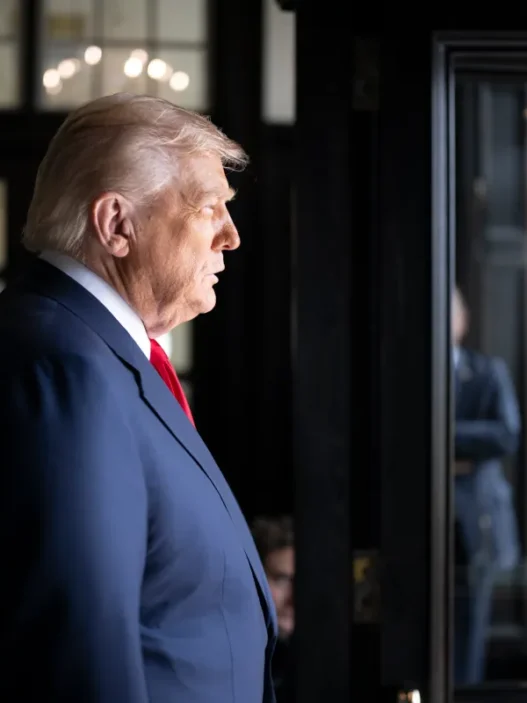
Despite this significant interdependence, economic and political relations have become increasingly volatile. In spring 2025, under President Donald Trump, the US increasingly imposed tariffs in response to what the administration described as trade imbalances with the EU. Although both sides reached a delicate political agreement in Turnberry, Scotland, setting a 15% tariff ceiling for most EU goods while retaining previous duty levels on aircraft, chemicals, and natural resources, the deal continues to remain under considerable pressure. Further points of tension subsequently emerged, especially with respect to regulatory fines and digital taxation. Following the EU’s antitrust fines on major American tech giants, including an €890 million ($1 billion) fine against Google, and discussions surrounding the Digital Services Taxes, the Trump administration threatened to retaliate with 100% retaliatory tariffs. President Trump warned on Truth Social that “the United States of America is not a ‘PIGGYBANK’ for Europe, nor will we allow it to be!” Adding to that, another geopolitical pressure has emerged targeting individual member states, including warnings to cut off trade with Spain over the NATO spending targets and restrictions on using strategic military bases during the ongoing US-Israel war with Iran. President Trump also threatened a 10%-25% levy on imports from eight European nations (including France, Germany, the UK, Denmark, Norway, Sweden, the Netherlands, and Finland) unless they supported his plan to acquire Greenland. In response, European powers like France and Germany urged the EU to prepare unified countermeasures if the tariffs were implemented. This indicates how geopolitical disputes can spill over into trade policy. While the EU relies on robust defense mechanisms such as counter-tariffs, WTO dispute settlement processes, and its Anti-Coercion Instrument (the so-called “trade bazooka”), the legal framework that allows the EU to block single-market access through sweeping tariffs, investment curbs, and trade restrictions if sovereign choices are threatened, its preferred path remains continued negotiation, economic cooperation, and market diversification. 
Reducing Europe’s Dependence on China
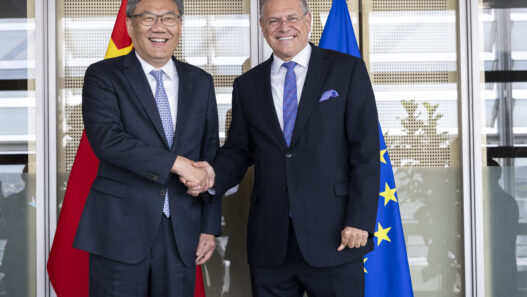
Noting the underlying strategic risks, the European Commission has declared its trade relationship with China “not sustainable.” The EU’s record trade deficit with China, estimated at approximately €350 billion to €360 billion, or roughly €1 billion per day, has heightened concerns among European leaders that industrial overdependence and low-cost imports could threaten domestic manufacturing. This vulnerability extends deep into critical industrial and manufacturing supply chains. In 2025, manufactured goods accounted for 97.3% of EU imports from China, with machinery and vehicles comprising 54.4% of these imports, followed by other manufactured goods at 33% and chemicals at 9.8%. The EU also remains heavily dependent on China for key clean-energy technologies, with 98% of its solar panel imports sourced from China. For critical raw materials, China processes and refines over 90% of global polysilicon production, refines 60% to 70% of the world’s lithium, and refines over 90% of the rare earth elements used in permanent magnets, while Europe imports 97% of its magnesium from China. When Beijing restricted rare earth exports in 2025, several European manufacturers faced production delays, and some opted for structural shutdowns. In response to this vulnerability, European Commission President Ursula von der Leyen has laid out plans to propose a new law requiring EU companies to diversify their supply sources, stating that businesses had previously de-risked at far too slow a pace. Rather than working towards complete “decoupling,” Europe’s economic security strategy focuses on “de-risking”, relying on legislative tools like the Critical Raw Materials Act, the Net-Zero Industry Act, and the Chips Act to build economic and strategic safeguards and resilience without totally cutting off commercial ties.
India Emerges as a Strategic Trade Partner
Amid this evolving geopolitical environment of conflicts and weaponization of trade, the EU and India announced a historic Free Trade Agreement on January 27, 2026, concluding nearly two decades of negotiations. The deal, popularly known as the “mother of all deals”, establishes a free trade area bringing together nearly two billion people and about 25% of global GDP, representing a significant milestone in Europe’s geopolitical and economic strategy. Highlighting the crucial importance of this achievement, European Commission President Ursula von der Leyen stated, “We have delivered the mother of all deals. This is a tale of two giants – the world’s second- and fourth-largest economies. Two giants who choose partnership in a true win-win fashion.” In the World Economic Forum Annual Meeting in Davos, Switzerland, von der Leyen noted that the world is “more fractured and more fractious than ever,” adding that a strategy for a “new Europe” is emerging. She also added that the pact sends a “signal to the world that rules-based cooperation still delivers great outcomes.” India’s Ministry of Commerce and Industry similarly noted that the agreement demonstrates the “political will and shared vision to deliver a balanced, modern, and rules-based economic and trade partnership”. The deal serves as a resilient response to growing protectionist trends among countries.
Building on bilateral goods trade that reached €120 billion in 2024 (with €71 billion in EU imports and €49 billion in EU exports), alongside €59.7 billion in services trade in 2023, the agreement seeks to expand bilateral commerce by reducing tariffs and lowering the cost of accessing each other’s markets. Overall coverage reaches 96.6% of tariff lines for India and 99.3% for the EU, with the EU eliminating tariffs on over 90% of tariff lines (91% by value) and India eliminating tariffs on 86% of lines (93% by value). These reductions are expected to make exports more competitive by lowering import costs and easing entry into previously protected markets. European exporters are projected to save approximately €4 billion annually in duties, while EU goods exports to India could double by 2032. Key beneficiary sectors include agri-food, chemicals, pharmaceuticals, machinery, medical devices, avionics, and automotive industries for the EU, alongside fisheries, chemicals, textiles, footwear, and pharmaceuticals for India..
The agreement’s agricultural provisions illustrate the balance between expanding export opportunities and protecting politically sensitive domestic industries. India will progressively reduce tariffs on European wines from as high as 150% to 20% for premium wines and 30% for medium-range wines, while duties on spirits will fall to 40%. These concessions could improve the competitiveness of European beverages in the Indian market. At the same time, the EU has excluded sensitive agricultural products, including beef, poultry, rice and sugar, from tariff liberalisation, reflecting the importance of safeguarding domestic producers. This selective approach demonstrates that the agreement seeks to expand bilateral trade without requiring either side to open every agricultural sector to greater competition.
Furthermore, a mobility framework provides for the temporary entry and stay of specific categories of professionals, including business visitors, employees transferred within multinational companies, contractual service suppliers, and independent professionals working under eligible service contracts. These provisions are subject to sector-specific commitments and applicable entry requirements; they do not establish general freedom of movement between India and the EU. A dedicated Digital Trade chapter incorporates source code protection rules and online consumer protections against unsolicited direct marketing.
The deal garnered strong political support across Europe, and this continues to remain robust. Speaking in Delhi on September 4, 2026, Indian Commerce Minister Piyush Goyal confirmed that all 27 European Union member states support the agreement: “All 27 European Union member states support the FTA between India and the European Union and want to complete the formalities to bring the pact into force at the earliest.” During his visit to India, Belgian Prime Minister Bart De Wever framed the agreement as a necessary realization point for Europe. Pitching the Port of Antwerp-Bruges as a primary gateway for Indian exports, he highlighted the need for Europe to address its growing economic dependence on China. He described the situation as a “rude awakening” for Europe, underscoring the importance of diversifying supply chains and strengthening trade partnerships.
Building a Broader Trade Network
The EU’s engagement with India is part of its wider effort to diversify trade partnerships and reduce dependence on a limited number of markets and suppliers. Its previous trade agreements with Japan and Vietnam in Asia, along with the recent ones with Chile and the Mercosur bloc in South America, reflect efforts to expand market access and strengthen supply chains. The EU–Mercosur agreement, which began provisional application on May 1, 2026, is an important step in this direction, creating opportunities to deepen trade with Argentina, Brazil, Paraguay and Uruguay and to gain access to critical minerals.
At the same time, the UK, outside the EU, is also strengthening its economic ties with India through the UK–India Comprehensive Economic and Trade Agreement, which entered into force on July 15, 2026.
Together, these developments show how European economies are seeking to broaden their trade relationships amid growing geopolitical and economic uncertainty. For the EU, closer ties with India stand out for its combination of a vast consumer market, strong growth prospects, and strategic importance in the Indo-Pacific, offering the EU opportunities to expand trade while diversifying its economic and geopolitical partnerships. These efforts complement its existing agreements and form part of a broader approach to reducing economic vulnerabilities.
Trade as an Engine for European Growth
Domestic economic conditions provide another important explanation for the EU’s renewed emphasis on trade agreements. According to the International Monetary Fund (IMF) projections, the Euro Area economy is expected to slow from 1.4 percent in 2025 to 0.9 percent in 2026 and 1.2 percent in 2027. Lingering energy costs, high public debt, aging demographics, and structural productivity challenges continue to restrict internal growth and expansion. While free trade agreements cannot independently resolve these underlying issues, they can complement domestic economic reforms by expanding market access, attracting investment, and strengthening supply-chain resilience. By opening access to high-growth partner economies like India, securing critical raw materials from Latin America, and diversifying away from single-source manufacturing hubs, the European Union is using trade policy as a strategic anchor to navigate an increasingly fragmented global economy.