








Operation Overview
On 3 January 2026, the United States forces conducted a pre-dawn military operation in Caracas, Venezuela, combining limited airstrikes with a special-forces raid. The operation resulted in the detention of Nicolás Maduro and his wife, who were transferred to the United States to face long-standing federal indictments for narco-terrorism and drug trafficking in New York.Ordered by President Trump, the operation relied on 2020 US indictments issued in 2020, which treat Maduro as a criminal suspect rather than a legitimate head of state.
The operation triggered a cautious and divided reaction within the European Union. While the EU has consistently considered Maduro an illegitimate leader, the use of unilateral military force on foreign territory raised concerns regarding international law, sovereignty, and precedent. An emergency UN Security Council briefing was held in New York under ‘Threats to international peace and security,’ following a letter from Venezuela and a request by Colombia, supported in particular by Russia and China.
Legal and Political Context
The EU has refused to recognise Maduro’s presidency, including the contested 2024 election, and has imposed sanctions on officials for democratic backsliding and human-rights abuses. In parallel, the US has pursued criminal cases against Maduro since 2020, forming the legal basis now invoked to justify his forcible transfer to US territory.
EU institutional response
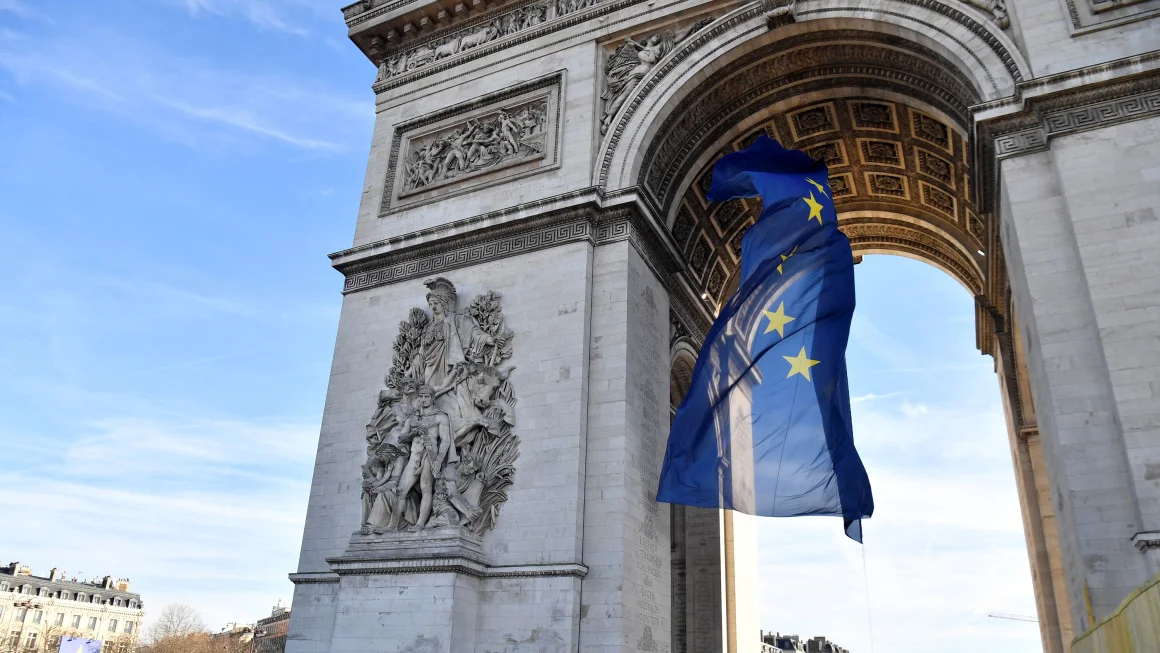
At EU level, High Representative Kaja Kallas reiterated that Nicolás Maduro “lacks democratic legitimacy,” while stressing the need for restraint and strict respect for international law and the UN Charter. A 4 January EEAS statement, backed by 26 states (except Hungary), delegitimised Maduro and rejected use of force, calling for a Venezuelan-led democratic transition.
Member States’ Positions
France, a UN Security Council member, condemned the operation as violating the principle of non‑use of force, while noting Maduro’s human-rights abuses and stressing Security Council oversight. Germany called for caution, citing legal complexity and the need for EU coordination. Spain rejected both Maduro’s legitimacy and the method of his removal, urging de-escalation and mediation. Italy viewed the operation as understandable given Maduro’s regime, but aligned with EU language on international law. Hungary did not endorse the joint statement and kept a more ambiguous stance.
Operation Overview
Overall, the EU response reflects a dual and carefully calibrated message: firm political delegitimisation of Maduro combined with institutional unease over unilateral military enforcement of criminal jurisdiction. The emphasis on international law and sovereignty illustrates the EU’s effort to preserve normative consistency, avoid endorsing force, and contain transatlantic friction while keeping open pathways for a negotiated post-Maduro transition.
This episode also reflects a wider shift in US policy in the hemisphere: the capture of Maduro, statements on Venezuela’s future, and signals regarding Greenland show a renewed willingness to use military force. This approach could deepen divisions in Latin America, draw criticism from the Global South, and challenge NATO’s political and normative unity in Europe beyond the Venezuelan case.
Sources
EEAS, UN Security Council, UN Secretary-General, Public Sénat, White House – Briefing Room, Reuters, US Department of Justice